CG Policy · 2025
In this section7 topics
Corporate Governance Policy
Has a Corporate Governance Policy
Yes
Policy Description
Pranda Jewelry Public Company Limited is committed to conducting its business based on the principles of good corporate governance by cultivating awareness and ethics in the work of the Board of Directors, executives, and employees at all levels. The company also places great importance on operating its business efficiently, transparently, and sustainably, which will lead to benefits for all groups of stakeholders involved. The key principles of the company's good corporate governance include: responsibility for one’s decisions and actions and the ability to explain or justify those decisions; responsibility in performing duties with sufficient competence and efficiency; honesty and integrity; fair and equitable treatment of all stakeholders; transparency in operations that can be audited and the transparent disclosure of information to all relevant parties; ethics and a code of conduct in business operations; having a vision to create long-term value for the organization; and social responsibility.
To ensure that the company is trustworthy to shareholders and all groups of stakeholders, and to support the sustainable creation of value for the business in line with the expectations of all stakeholders as well as society as a whole, the Board of Directors has established a written policy on good corporate governance in the “Corporate Governance Manual” since the year 2000. The Board of Directors is responsible for reviewing this policy regularly every year, with continuous development and improvement. This includes considering the evaluation criteria of the Corporate Governance Report of Thai Listed Companies (CGR) conducted by the Thai Institute of Directors Association (IOD), as well as adhering to the Corporate Governance Principles and Guidelines for Listed Companies (2012) issued by the Stock Exchange of Thailand (SET CG Principles & Guidelines). The company also follows the Good Corporate Governance Code for Listed Companies 2017 (CG Code) issued by the Securities and Exchange Commission of Thailand (SEC). These principles are appropriately applied in the company’s corporate governance practices. The “Corporate Governance and Code of Conduct Manual” has been communicated to all directors, executives, and employees so that they are aware of and comply with it.
In 2025, the Board of Directors approved the review of the Corporate Governance and Code of Conduct Manual, which is the 11th revised edition. The key points of the revisions are as follows:
In addition to the aforementioned key principles of good corporate governance, the Board of Directors also places importance on complying with the Good Corporate Governance Code for Listed Companies 2017 (CG Code). This code consists of eight core principles of best practice, which can be summarized as follows:
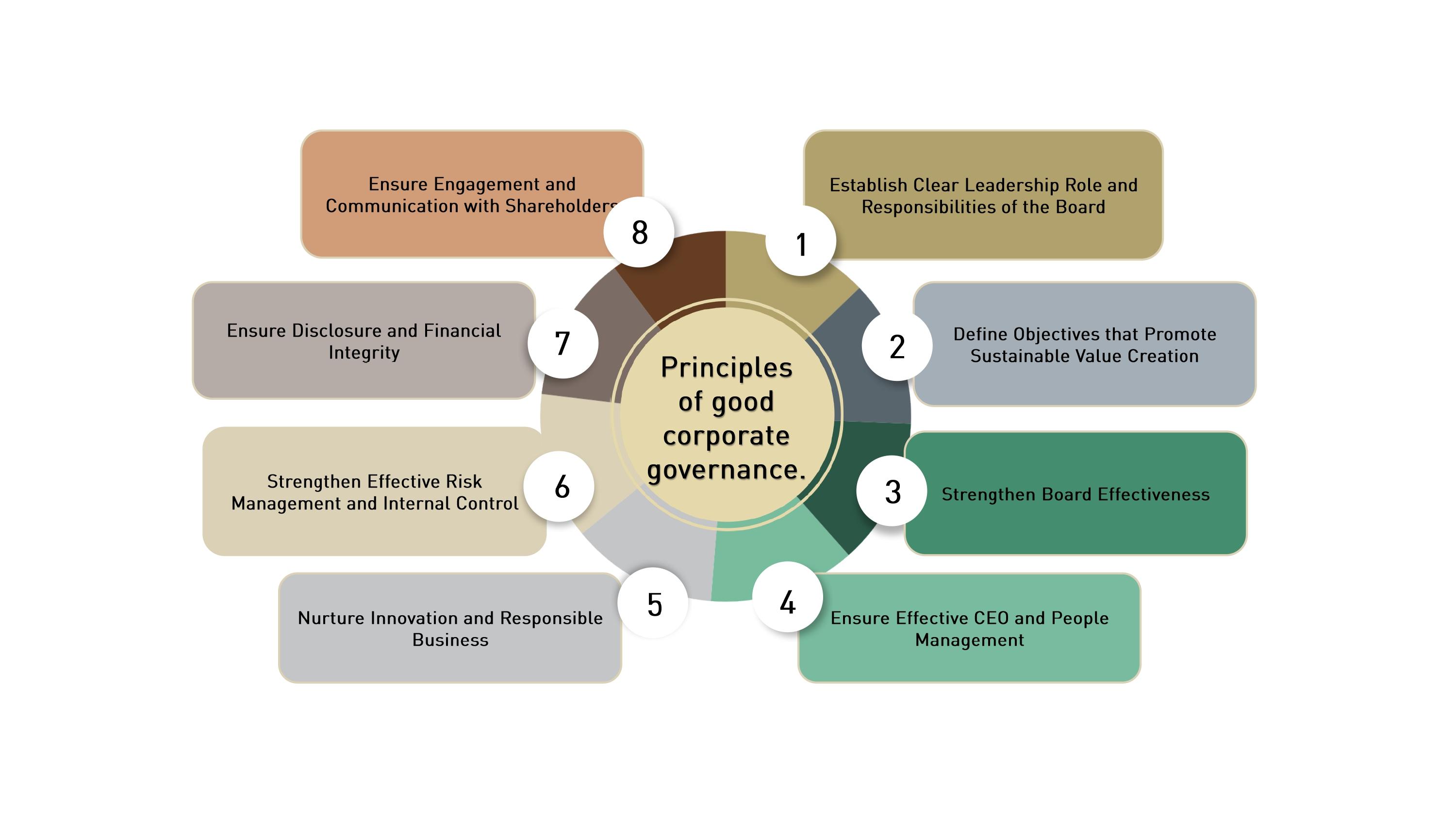
Principle 1: Establish Clear Leadership Role and Responsibilities of the Board.
The board of directors understands its role and is aware of its responsibility as a leader who must supervise the organization to have good management, encompassing: Set objectives and goals (2) Set strategies, operating policies, allocate important resources to achieve objectives and goals and (3) Monitor, evaluate and oversee the reporting of operating results
Creating sustainable value for the business The board of directors supervises the business to lead to a competitive governance outcome and good performance, taking into account the long-term impact, conducting business ethically, respecting the rights and being responsible to shareholders and stakeholders, benefiting society, and developing or reducing negative impacts on the environment, and being able to adapt to changing factors.
The board of directors has a duty to ensure that all directors and executives perform their duties with responsibility, caution (Duty of Care) and honesty towards the organization (Duty of Loyalty) and ensure that operations comply with the law, regulations and resolutions of the shareholders' meeting.
The board of directors understands the scope of duties and responsibilities of the board of directors and clearly defines the scope of assignment of duties and responsibilities to the Chairman of Group Executive Committee and management, and monitors the work of the Chairman of Group Executive Committee. And the management performs its assigned duties.
Principle 2 : Define Objectives that Promote Sustainable Value Creation
The Board of Directors sets the main objectives and goals of the business (Objectives) to be sustainable, consistent with creating value for the business, customers, stakeholders and society as a whole.
The board of directors ensures that the objectives, goals, and strategies of the business are consistent with the achievement of the objectives and main goals of the business, with the appropriate and safe use of innovation and technology.
Principle 3: Strengthen Board Effectiveness
The board is responsible for determining and reviewing the structure of the board in terms of size, composition and proportion of independent directors that are appropriate and necessary to lead the organization towards its main objectives and goals.
The board selects an appropriate person as the chairman of the board and ensures that the composition and operation of the board are conducive to independent decision-making.
The Board of Directors shall ensure that the selection and selection of directors is transparent and clear in order to obtain a board with qualifications that are in line with the specified composition.
In proposing the remuneration of the board of directors for shareholders’ approval, the Board of Directors shall consider the structure and rate of remuneration to be appropriate for the responsibilities and to motivate the board of directors to lead the organization to achieve both short-term and long-term goals.
The board of directors shall ensure that all directors are responsible for their duties and allocate sufficient time.
The board of directors shall have a framework and mechanism to supervise the policies and operations of subsidiaries and other businesses in which the company has significant investments, at a level appropriate to each business, and ensure that the subsidiaries and businesses in which the company has invested have a common understanding.
The Board of Directors shall arrange for an annual performance evaluation of the Board of Directors, committees, and individual directors.
The Board of Directors shall ensure that each Board of Directors and individual directors have knowledge and understanding of their roles, duties, nature of business, and laws related to business operations, and shall support all directors to receive regular development of skills and knowledge for performing their duties as directors.
The Board shall ensure that the Board operates smoothly, has access to necessary information, and has a Corporate Secretary with the necessary knowledge and experience to support the Board’s operations.
Principle 4: Ensure Effective CEO and People Management
The Board of Directors shall ensure that the selection and development of Chairman of Group Executive Committee and chief executives are carried out to provide them with the knowledge, skills, experience and characteristics necessary to drive the organization towards its goals.
The Board of Directors supervises the establishment of an appropriate compensation structure and evaluation.
The Board understands the structure and relationships of shareholders that may affect the management and operations of the business.
The Board monitors the management and development of personnel to ensure that they have the appropriate amount of knowledge, skills, experience, and motivation.
Principle 5: Nurture Innovation and Responsible Business
The Board of Directors places importance on and supports the creation of innovations that create value for the business along with creating benefits for customers or related parties, and is responsible for society and the environment.
The board of directors oversees that the management conducts business with social and environmental responsibility and reflects this in the operational plan to ensure that all departments of the organization operate in accordance with the objectives, main goals and strategies of the business.
The board of directors oversees that the management allocates and manages resources efficiently and effectively, taking into account the impact and development of resources throughout the value chain, in order to achieve the objectives and main goals sustainably.
The Board shall establish a framework for the supervision and management of corporate IT that is consistent with the needs of the business, including overseeing the use of IT to increase business opportunities and develop operations and risk management so that the business can achieve its main objectives and goals.
Principle 6: Strengthen Effective Risk Management and Internal Control
The board of directors shall supervise the company to have a risk management system and internal control that will enable it to achieve its objectives effectively and to comply with relevant laws and standards.
2 The Board of Directors must establish an Audit Committee that can perform its duties effectively and independently.
The committee shall monitor and manage conflicts of interest that may occur between the Company and its management, the Board of Directors or shareholders, including preventing the improper use of the Company’s assets, information and opportunities, and conducting transactions with persons related to the Company in an inappropriate manner.
The board of directors oversees the preparation of clear anti-corruption policies and practices and communicates them to all levels of the organization and to external parties for practical implementation.
The board of directors ensures that the business has a mechanism to receive complaints. and action in case of clues
Principle 7: Ensure Disclosure and Financial Integrity
The Board of Directors is responsible for overseeing the system for preparing financial reports and disclosing important information to be accurate, adequate, timely, and in accordance with relevant rules, standards, and practices.
The committee monitors the adequacy of financial liquidity and debt repayment capability.
In a situation where the business is experiencing financial problems or is likely to experience problems, and ensuring that the business has a plan to resolve the problems or other mechanisms that can resolve the financial problems, taking into account the rights of stakeholders.
The Committee shall consider preparing the Sustainability Report as appropriate.
The Board of Directors shall supervise the management to establish a unit or person responsible for investor relations that is responsible for communicating with shareholders and stakeholders appropriately and timely.
The Board promotes the use of information technology in the dissemination of information.
Principle 8: Ensure Engagement and Communication with Shareholders
The board of directors ensures that shareholders participate in important decisions of the company.
The board of directors ensures that the operations on the shareholders' meeting day are smooth, transparent, and efficient. And facilitate shareholders to exercise their rights.
The board of directors ensures that the disclosure of meeting resolutions and the preparation of meeting minutes for shareholders are accurate and complete.
More details can be found in the “Corporate Governance and Code of Conduct Manual”, which is available on the company’s website at www.pranda.com under the “Investor Relations” section, in the topic “Corporate Governance.”
Policy Document Link
https://shorturl.asia/yq0OE
Policy & Practices — Board of Directors
Introduction
The Board of Directors plays a significant role in overseeing the management of the Company. The Board serves as a leader in determining the organization’s direction and strategic framework, including establishing the vision, mission, business policies, and key objectives of the Company, its subsidiaries, and affiliated companies, with the aim of achieving sustainable long-term growth.
The Board of Directors supervises the Company’s business operations to ensure that they are conducted efficiently, transparently, and in accordance with the principles of good corporate governance, while taking into consideration the interests of the Company, shareholders, and all stakeholders in a balanced and fair manner.
In performing its duties, the Board of Directors adheres to key corporate governance principles in order to build confidence among shareholders. Such confidence arises when the Company is managed in accordance with the following four principles:
Respect for Shareholders’ Rights and Equitable Treatment of Shareholders The Board of Directors recognizes the importance of protecting the fundamental rights of shareholders and ensuring that all shareholders are treated equally and fairly, while providing opportunities for shareholders to participate in decision-making on significant matters of the Company.
Accountability of the Board of Directors The Board of Directors performs its duties with responsibility, transparency, and accountability, while overseeing that the Company’s operations comply with applicable laws, regulations, rules, and relevant policies.
Transparency and Disclosure The Board of Directors places importance on the disclosure of accurate, complete, and timely information that is useful to shareholders, investors, and stakeholders, in order to strengthen confidence and transparency in the Company’s business operations.
Fair Treatment of Stakeholders The Board of Directors recognizes the rights and interests of all stakeholder groups, including shareholders, employees, customers, business partners, competitors, communities, and society, by adhering to ethical standards and social responsibility.
In addition, the Board of Directors has established that the Company’s business operations shall be conducted in accordance with the Code of Business Conduct, which emphasizes the core principles of Integrity, Transparency, and Fairness toward all related parties. In performing its duties, the Board of Directors complies with the legal responsibilities of directors (Fiduciary Duties), which include the following key principles:
Duty of Care – exercising knowledge, competence, and prudence in making decisions for the best interests of the Company.
Duty of Loyalty – acting honestly and in good faith, prioritizing the interests of the Company and avoiding conflicts of interest.
Duty of Obedience – ensuring that the Company’s operations comply with applicable laws, the Company’s objectives, and its regulations.Furthermore, the Board of Directors monitors and oversees the performance of board committees and the management team to ensure that the Company’s operations are carried out efficiently and achieve the organization’s strategic objectives. This is intended to create sustainable value for the business and maximize benefits for the Company, shareholders, and all stakeholders under the principles of good corporate governance.
Has Policy & Guidelines for the Board
Yes
Board Guidelines
| Guideline | Other — Please Specify | Detail | Document Link | Page Number in Report |
|---|---|---|---|---|
| Nomination of Directors | The Board of Directors places importance on the nomination and selection process for directors by establishing clear and transparent procedures in compliance with applicable laws, regulations, and principles of good corporate governance. The objective is to ensure that individuals appointed as directors possess appropriate qualifications, knowledge, expertise, and experience that are consistent with the nature of the Company’s business and its strategic direction. The Board of Directors has appointed the Nomination and Remuneration Committee to be responsible for determining the criteria and process for the nomination of directors, as well as screening and considering qualified candidates. In doing so, the Committee takes into account an appropriate Board Composition, including the knowledge, expertise, skills, experience, and qualifications necessary for effective oversight of the Company’s business. The Company has also developed a Board Skills Matrix to serve as a framework for assessing the qualifications, knowledge, competencies, and experience of directors, as well as identifying existing and required skills within the Board. This ensures that the Board structure remains balanced and capable of effectively supporting the Company’s strategic direction and corporate governance. In addition, the Company places importance on Board Diversity, taking into consideration diversity in terms of experience, expertise, gender, age, and business perspectives. Such diversity enhances the effectiveness of the Board’s oversight and strengthens strategic decision-making. Following the nomination and screening process, the Nomination and Remuneration Committee will propose qualified candidates to the Board of Directors for approval and/or submit the nominations to the shareholders’ meeting for consideration and appointment as directors in accordance with the relevant procedures and requirements. In identifying suitable candidates for directorship, the Nomination and Remuneration Committee may consider individuals from various sources to ensure that the most qualified candidates are selected. These sources may include:
This process aims to enable the Company to appoint individuals with appropriate knowledge, capabilities, experience, and qualifications to serve as directors, thereby enhancing the effectiveness of corporate governance and supporting the Company’s sustainable growth in the long term. | https://shorturl.asia/yq0OE#page=45 | 45 | |
| Determination of Director Remuneration | The Company has established a policy on the remuneration of the Board of Directors to ensure that compensation is appropriate, transparent, and commensurate with the roles, duties, and responsibilities of the Board. The objective is to attract and retain individuals with the knowledge, capabilities, and relevant experience required to effectively perform their duties and to support the sustainable creation of long-term value for the Company. Director remuneration must be considered and approved by the shareholders’ meeting. Remuneration may be provided in both monetary and non-monetary forms. Director remuneration is classified into two categories as follows:
Remuneration of Executive Directors who participate in the management of the Company is disclosed together with executive remuneration in accordance with the disclosure requirements applicable to listed companies under the regulations of the Stock Exchange of Thailand and the Securities and Exchange Commission of Thailand. Director Remuneration Determination ProcessThe Board of Directors has appointed the Nomination and Remuneration Committee to review and recommend policies, criteria, and the structure of director remuneration. The Committee is responsible for proposing appropriate remuneration levels to the Board of Directors for consideration and approval before submission to the shareholders’ meeting for final approval. In determining the remuneration of directors, the Company takes into consideration several key factors, including:
Remuneration Determination Criteria
| https://shorturl.asia/yq0OE#page=44 | 44 | |
| Independence of the Board of Directors from the Management | The Company places significant importance on good corporate governance and ensures that the Board of Directors maintains an appropriate level of independence from the management team. This enables the Board to effectively oversee the Company’s operations with transparency and accountability while safeguarding the best interests of the Company and its shareholders. The Board structure is designed to include an appropriate balance between executive directors and non-executive directors in order to ensure effective checks and balances in the oversight of management. The Board of Directors includes independent directors in both number and qualifications in accordance with the criteria prescribed by the Securities and Exchange Commission of Thailand and the Stock Exchange of Thailand. This ensures that independent directors are able to perform their duties objectively and provide opinions and oversight independently, free from undue influence from management or other interested parties. The Board of Directors is responsible for determining the Company’s key policies and strategic direction, including the vision, mission, corporate strategies, organizational policies, business plans, and budgets. The Board also oversees the preparation of financial reports and ensures that the Company’s financial accountability and disclosures are accurate, complete, and transparent. In addition, the Board monitors and reviews the Company’s performance against the approved strategic plans and assigns management to implement such strategies and policies effectively. Meanwhile, the management team is responsible for the day-to-day operations and the execution of the Company’s business activities. Management is tasked with establishing operational plans and business targets that are aligned with the vision, mission, strategies, and policies set by the Board of Directors, while ensuring compliance with applicable laws, regulations, company rules, and the business plans approved by the Board. The Company has clearly defined the roles and responsibilities of the Board of Directors and the management team in order to ensure a proper separation between policy oversight and operational management. This governance framework supports effective corporate governance practices and promotes the Company’s sustainable growth in the long term. | https://shorturl.asia/yq0OE#page=78 | 78 | |
| Director Development | The Company recognizes the importance of continuously enhancing the knowledge, capabilities, and competencies of the Board of Directors to ensure that directors are able to effectively perform their duties and provide proper oversight of the Company’s operations. The Board of Directors therefore establishes policies and practices to support the continuous development of directors. The Board ensures that each director has adequate knowledge and understanding of their roles and responsibilities as directors, the nature of the Company’s business operations, as well as relevant laws and regulations governing the Company’s business. In addition, the Company supports all directors in regularly enhancing their knowledge and professional skills necessary for the effective performance of their duties. The Company encourages and facilitates directors to participate in training programs, seminars, and professional development activities organized by reputable institutions, including those arranged by the Thai Institute of Directors Association, the Securities and Exchange Commission of Thailand, and the Stock Exchange of Thailand, as well as other relevant professional organizations. Such development programs aim to ensure that directors remain well-informed about relevant laws, regulatory requirements, governance standards, emerging risks, and the evolving business environment. This enables the Board to effectively oversee the Company’s operations and make well-informed decisions in alignment with good corporate governance practices. In addition, the Company provides directors with relevant corporate information, including updates on business performance, operational developments, industry trends, and regulatory changes, to ensure that directors have sufficient information to support the effective discharge of their responsibilities. Through these initiatives, the Company seeks to strengthen the effectiveness of the Board of Directors and promote sound corporate governance practices that support the Company’s sustainable growth. | https://shorturl.asia/yq0OE#page=45 | 45 | |
| Board Performance Evaluation | The Company recognizes the importance of evaluating the performance of the Board of Directors as a key mechanism for reviewing the effectiveness of the Board and its sub-committees. The evaluation process also serves as a tool to further enhance the Company’s corporate governance practices and improve the effectiveness of the Board’s oversight. The Board of Directors requires that the performance evaluation of the Board and its sub-committees be conducted at least once a year. The evaluation covers both individual director performance and the overall performance of the Board and its sub-committees, in order to reflect the effectiveness of each director as well as the collective performance of the Board. The evaluation is conducted in two forms as follows:
The Company adopts the Board Self-Assessment evaluation form, which is aligned with the guidelines recommended by the Stock Exchange of Thailand and tailored to suit the Company’s business characteristics and governance structure. The evaluation framework includes a scoring system to measure the level of effectiveness in the Board’s performance. As part of the evaluation process, the Company Secretary is responsible for distributing and collecting the evaluation forms from each director for the individual self-assessment. The results are then compiled and submitted to the Nomination and Remuneration Committee for review and summary. For the evaluation of the Board as a whole and its sub-committees, the Nomination and Remuneration Committee is responsible for conducting the assessment and summarizing the results. Following the completion of the evaluation process, the Nomination and Remuneration Committee presents the evaluation results and related observations to the Board of Directors. The Board then reviews the findings and uses them as a basis for improving and enhancing the effectiveness of the Board’s performance and governance practices on an ongoing basis. This evaluation process forms an integral part of the Company’s commitment to good corporate governance and supports the Board of Directors in effectively fulfilling its oversight responsibilities and guiding the Company’s long-term sustainable growth. | https://shorturl.asia/yq0OE#page=44 | 44 | |
| Corporate Governance of Subsidiaries and Associated Companies | The Board of Directors is responsible for overseeing the establishment of appropriate frameworks and mechanisms for governing the policies and operations of the Company’s subsidiaries, associates, and other entities in which the Company has made significant investments. Such governance frameworks are designed to be appropriate for the nature and scale of each entity’s business. The Board also ensures that subsidiaries, associates, and other investee companies clearly understand and consistently apply these governance policies and operational guidelines. Guidelines 1. Establish a policy for supervising subsidiaries, including: 1.1 The level of appointment of persons to be directors, executives or persons with controlling power in subsidiaries, which shall be specified in writing. 1.2 Define the scope of duties and responsibilities of persons representing the Company in accordance with Section 1.1 and have the Company’s representatives oversee compliance with the subsidiary’s policies. In cases where the subsidiary has other investors, the Board of Directors shall set a policy for the representatives to perform their duties to the best of their ability for the benefit of the subsidiary and in accordance with the parent company’s policies. 1.3 The subsidiary has an internal control system that is appropriate and sufficiently stringent, and all transactions are conducted in accordance with the law and relevant criteria. 1.4 Disclose information on financial status and operating results, transactions with related persons, and acquisition or disposal of assets. Other significant transactions, capital increase, capital reduction, dissolution of subsidiaries, etc. 2. If it is a significant joint investment in other businesses, such as having a voting shareholding ratio of 20 percent but not exceeding 50 percent and the amount of investment or additional investment is significant to the company, in case of necessity, the board of directors shall ensure the preparation of a Shareholders’ Agreement or other agreement to provide clarity on the authority to manage and participate in important decision-making, monitor performance, and use it as information to prepare the company’s financial statements in accordance with standards and deadlines. | https://shorturl.asia/yq0OE#page=83 | 83 | |
| Other guidelines regarding the board of directors | Orientation of New Directors | The Company places importance on preparing newly appointed directors to ensure that they are able to perform their duties effectively and have a clear understanding of their roles, duties, and responsibilities, as well as the nature of the Company’s business operations. Therefore, the Company has established a Director Orientation Program to provide newly appointed directors with essential information necessary for the effective performance of their duties from the beginning of their tenure. Following the appointment of a new director by the shareholders’ meeting, the Company will arrange an orientation session, coordinated by the Company Secretary, who will provide key information to the newly appointed director. The orientation program covers important topics including: Roles, duties, and responsibilities of the Board of Directors and its sub-committees
In addition, the Company provides newly appointed directors with key documents and relevant information as part of the orientation program. These include the Company’s Memorandum of Association, Articles of Association, the charters of the Board of Directors and its sub-committees, and minutes of the Board of Directors’ meetings from the previous year. The orientation materials also include the Director Handbook for Listed Companies and the Principles of Good Corporate Governance issued by the Stock Exchange of Thailand, as well as the Corporate Governance Code for Listed Companies 2017 issued by the Securities and Exchange Commission of Thailand. In addition, newly appointed directors are provided with the Company’s Corporate Governance Policy and Code of Business Conduct, as well as relevant laws and regulations applicable to the Company’s business operations. | https://shorturl.asia/yq0OE#page=47 | 47 |
| Other guidelines regarding the board of directors | Tern of Position | Tenure of the Directors is to be in accordance with the Public Limited Companies Act, the Articles of Association and the Resolution of the Board of Directors. Accordingly, the Annual General Meeting shall hold the termination of the Directors for ratio of 1 of 3. In case number of the Directors are not able to be categorized into 3 parts, the termination will be taken place at least to 1 out of 3 Directors who will be terminated on the first year. For the second year, after the Company registration, the draw will be used instead and for the following years, the Director with the longest tenure will be terminated from the position. However, the terminated Director on particular tenure may be resumed upon selection. | https://shorturl.asia/yq0OE#page=41 | 41 |
| Other guidelines regarding the board of directors | Succession Plan of the Top Management | The Board of Directors assigns the Nomination and Remuneration Committee to conduct succession plan and review development plan of the Chairman of Executive Board and Managing Director including Top Management in order to be prepared as continuous plan for the successor in case Managing Director or Top Management in specific position are retired or unable to perform duties for running the business continuously. The Chairman of Executive Board and Managing Director including Top Management shall hold his/her own succession plan to gain trust from stakeholders including shareholders, clients or employees that the Company business will be succeeded by sustainability and growth policy with code of conduct. The Chairman of Executive Board is to present the performance results following succession plan to the Nomination and Remuneration Committee and the report to the Board of Directors for acknowledgement at least once a year. | https://shorturl.asia/yq0OE#page=51 | 51 |
| Other guidelines regarding the board of directors | Limitations of the Number of Companies for the Appointment of Director Position of the Directors and | Appointment of Director Position in other Companies In order for the Directors to dedicate time and efforts to perform duties, the Board of Directors sets up the number of listed companies for each director to be appointed not more than 5 entities, as stated in Good Corporate Governance Policy. The Director shall inform to the meeting of the Board of Directors for acknowledgement prior to holding position in other listed companies. Appointment of Director Position in other Companies of the Chairman of Group Executive Committee and the Top Executives. The Company sets up policy on appointment of director position in other companies of the Chairman of Group Executive Committee and the top executives for not more 5 listed companies in order to spend sufficient time in running business operations of the Company and shall not be entitled as partnerships or hold director position in other juristic being in the same business nature and competitive to the business, either for own benefits or others, unless notifying to the Annual General Meeting prior to an approval of the appointment. | https://shorturl.asia/yq0OE#page=51 | 51 |
| Other guidelines regarding the board of directors | Information Disclosure and Transparency | Information Disclosure The Company places high importance to the disclosure of significant information concerning to the Company with thorough, adequate, updated, timely, transparent and constant basis by treating the information neither negative nor positive. The disclosure of information of the Company is in accordance with the regulations of the Stock Exchange of Thailand (SET) and the Securities and Exchange Commission (SEC) both financial and non-financial information. The information is published through the SET’s electronic system (SETLink) to the Stock Exchange of Thailand including periodic reports namely financial statements, form 56-1 One Report and information disclosure of material events namely purchase and sale of assets, related transactions, associates, capital increase, capital decrease, initial public offering (IPO), treasury stock, payment or no payment of dividend, etc. The information is published in both Thai and English via the Company’s website along with quarterly announcement of business performance in order that the shareholders and stakeholders will be informed with reliable and adequate information for further consideration. Responsible Persons for Information Disclosure
| https://shorturl.asia/yq0OE#page=28 | 28 |
| Other guidelines regarding the board of directors | Report of the Board of Directors | The Board of Directors is responsible for the consolidated financial statements of the Company and its subsidiaries, as well as the financial information disclosed in the financial statements. The Board recognizes the importance of ensuring that financial reporting is accurate, transparent, and reliable so that shareholders and stakeholders can make informed decisions based on such information. The Company has therefore established an effective internal control system and financial reporting process covering appropriate supervision, review, and verification of financial information. This is to ensure that the Company’s financial statements are prepared accurately and completely in accordance with the Thai Financial Reporting Standards and that adequate information is disclosed to the public in a timely manner. In the preparation of the Annual Registration Statement / Annual Report (Form 56-1 One Report), the Board of Directors oversees the disclosure of both financial and non-financial information to ensure that such information is complete, transparent, and in compliance with the requirements of relevant regulatory authorities. The report reflects the Company’s operating results, financial position, risk management, and business direction appropriately. Such reporting is also aligned with the Company’s objectives, key goals, strategies, and business policies to ensure that shareholders and stakeholders receive clear, accurate, and comprehensive information regarding the Company’s operations and corporate governance. | https://shorturl.asia/yq0OE#page=52 | 52 |
| Other guidelines regarding the board of directors | Report of the Securities Holding of the Board of Directors | The Company places importance on overseeing the use of information and the trading of the Company’s securities by directors, executives, and related persons in order to prevent the misuse of inside information and to maintain transparency in business operations. The Company has therefore established a Code of Business Conduct covering the confidentiality of information, reliability, and availability of information, including clear guidelines regarding the use of inside information in the trading of the Company’s securities. The Company requires directors to disclose and report their holdings of the Company’s securities to the Securities and Exchange Commission of Thailand within the timeframe prescribed by applicable laws and relevant regulations. Directors are also required to report any changes in their securities holdings whenever such changes occur. In addition, to further enhance transparency in corporate governance, directors are required to notify the Company of any changes in their securities holdings by submitting a copy of the report to the Board of Directors on the same day that the report is filed with the Securities and Exchange Commission of Thailand. This enables the Board to be fully informed of such changes in a timely manner. These practices reflect the Company’s commitment to conducting business with transparency, good corporate governance, and compliance with applicable laws, rules, and regulations of the relevant regulatory authorities. | https://shorturl.asia/yq0OE#page=108 | 108 |
| Other guidelines regarding the board of directors | Report on Vested Interests of the Directors | The Company places great importance on good corporate governance and the transparent management of conflicts of interest. The Company has therefore established clear policies and guidelines regarding the reporting of directors’ and executives’ interests to ensure that business decisions are made with transparency, fairness, and in the best interests of the Company and its shareholders as a whole. The Company requires directors and executives to report their own interests, as well as those of their related persons, to the Company in accordance with the criteria prescribed by applicable laws and regulations, particularly Section 89/14 of the Securities and Exchange Act B.E. 2535 (1992). Such reports must be submitted to the Company Secretary, who is responsible for collecting and maintaining the information in an organized manner. Upon receipt of the report of interests, the Company Secretary will submit a copy of the report to the Chairman of the Board of Directors and the Chairman of the Audit Committee within seven business days from the date the Company receives the report. This enables the Board to be informed of relevant information and to consider it appropriately in supervising or making decisions on matters that may involve potential conflicts of interest. This practice forms part of the Company’s corporate governance framework aimed at promoting transparency, accountability, and business operations in accordance with good governance principles, as well as compliance with applicable laws, regulations, and best practices for listed companies. | https://shorturl.asia/yq0OE#page=138 | 138 |
Code of Conduct
Introduction
Has a Business Code of Conduct
Yes
Code of Conduct Description
The Board of Directors has established a written Business Code of Conduct to serve as a framework for conducting business in an ethical, transparent, and responsible manner in line with the principles of good corporate governance. The Code aims to ensure that directors, executives, and employees at all levels understand the ethical standards that the Company upholds in its business operations and use them as guidelines for performing their duties appropriately and responsibly toward all stakeholders.
The Company designates the Business Code of Conduct as one of its key policies promoting integrity and corporate governance. Directors, executives, and employees at all levels are encouraged to strictly adhere to the Code. The Company also regularly communicates and promotes awareness of the Code throughout the organization in order to foster an organizational culture that emphasizes integrity, transparency, and social responsibility.
The Company’s Business Code of Conduct is incorporated in the Good Corporate Governance Principles and Business Code of Conduct Handbook (12th Revised Edition). The handbook has been communicated and distributed to employees at all levels within the organization to ensure proper understanding and compliance. In addition, the document is publicly disclosed on the Company’s website (www.pranda.com) under the Investor Relations section, within the topic “Corporate Governance”, to ensure transparency and accessibility for all stakeholders.
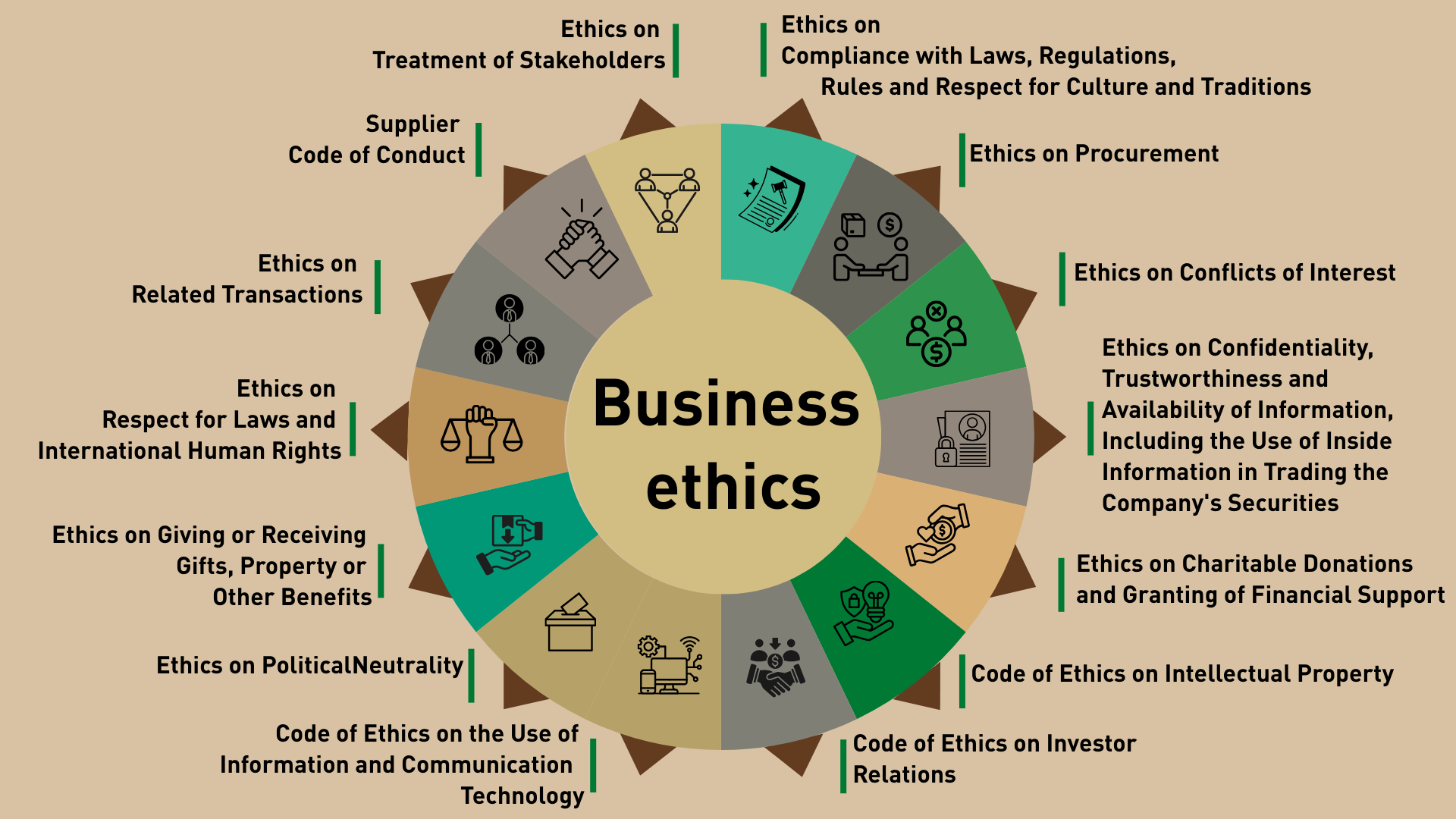
The Business Code of Conduct covers key areas related to ethical business practices, including fair treatment of stakeholders, prevention of conflicts of interest, compliance with laws and international human rights principles, protection of confidential information and appropriate use of information, prevention of corruption and improper benefits, political neutrality, investor relations practices, and responsible business conduct with suppliers and business partners.
The Company is committed to continuously monitoring and promoting compliance with the Business Code of Conduct to ensure that its business operations are conducted in accordance with good corporate governance principles, thereby strengthening stakeholder confidence and supporting the Company’s sustainable growth in the long term.
In 2025, the Company did not identify any violations of its Business Code of Conduct.
Code of Conduct Link
https://shorturl.asia/yq0OE#page=96
Page Number in Report
96
Code of Conduct Practices
| Guideline | Detail | Document Link | Page Number in Report |
|---|---|---|---|
| Prevention of Misuse of Inside Information | The Company places great importance on conducting its business with transparency, fairness, and accountability, while prioritizing the best interests of the Company and its stakeholders. The Board of Directors has therefore established a Conflict of Interest Policy and Code of Conduct to serve as a guideline for directors, executives, and employees of the Company and its subsidiaries to perform their duties with integrity and to avoid any actions that may result in conflicts between personal interests and the interests of the Company. The Company requires that all business decisions be made in the best interests of the Company. Directors, executives, and employees must not use their authority, influence, or position to seek personal gain or conduct transactions with the Company or its subsidiaries involving themselves, related persons, or close family members, except where such interests have been properly disclosed and the transactions have been duly considered and approved in accordance with the Company’s procedures. In conducting business and entering into transactions, the Company requires that such activities be carried out on an arm’s length basis, with fair and reasonable terms and pricing comparable to those applied to external parties. In cases where a potential conflict of interest may arise, the individual concerned must disclose the matter to their supervisor or the authorized decision-making body and must abstain from participating in the consideration or approval of such transactions. Furthermore, directors, executives, and employees of the Company and its subsidiaries are required to devote their full working capacity to the Company and must not engage in external business activities that are unrelated to the Company’s interests during working hours. They must also refrain from disclosing or using confidential information of the Company for personal benefit or for the benefit of their family members or associates, and must avoid financial interests or relationships with external parties that may result in conflicts of interest or impair their ability to perform their duties effectively. The Company has also established additional control measures, including the requirement for directors, executives, and employees to submit a Conflict of Interest Disclosure Report on an annual basis and whenever circumstances arise that may potentially create a conflict of interest during the year. Such reports must be submitted through the appropriate supervisory channels, and the Company Secretary is responsible for maintaining these records with strict confidentiality. In the case of related party transactions, the Board of Directors and management carefully review and consider such matters with transparency, independence, and sound judgment under appropriate ethical standards, taking into account the best interests of the Company and its shareholders. | https://shorturl.asia/yq0OE#page=106 | 106 |
| Anti-corruption | The Company conducts its business in accordance with the principles of good corporate governance, transparency, integrity, and ethical business practices. The Company places great importance on preventing and combating corruption in all forms. The Company has established an anti-corruption policy covering any acts involving solicitation, offering, giving, receiving, or promising to give any assets or other benefits to government officials, business partners, or any other persons in order to induce them to perform their duties improperly, or to obtain or retain undue business advantages, whether directly or indirectly, except in cases permitted by applicable laws, regulations, or relevant customs and practices. The Company has established anti-corruption policies and guidelines in its Code of Conduct and Anti-Corruption Measures Manual, which serve as operational guidelines for directors, executives, and employees at all levels. These policies are communicated and disclosed through the Company’s website at www.pranda.com | https://shorturl.asia/LtTGP | |
| Whistleblowing and Protection of Whistleblowers | In order to ensure that the Company conducts its business in accordance with the principles of good corporate governance and that all stakeholders are treated fairly and equitably, the Company has established channels for receiving complaints, whistleblowing reports, as well as suggestions or feedback from all stakeholder groups. Such reports may relate to any actions that may cause or potentially cause adverse impacts or damage to stakeholders arising from the Company’s business operations or from the conduct of the Company’s employees. This includes, but is not limited to, violations of laws or the Company’s Code of Conduct, inaccurate financial reporting, deficiencies in the internal control system, behaviors that may indicate corruption, unfair treatment, or actions performed without due care and prudence. The Company has provided multiple channels for submitting complaints and whistleblowing reports. Employees may submit reports through the internal whistleblowing or complaint boxes within the organization, while external stakeholders may report through the Company’s website at www.pranda.com under the “Investor Relations” section, “Corporate Governance” topic, through direct communication channels, or by sending a letter clearly marked as a “Confidential Document” so that the Company may proceed with the investigation in accordance with its established procedures. The Company places great importance on the protection of whistleblowers. Information relating to the whistleblower will be kept strictly confidential, and appropriate measures are in place to protect whistleblowers from retaliation, intimidation, or unfair treatment resulting from their report. In addition, all complaints will be reviewed and investigated in a transparent and fair manner in accordance with the Company’s established procedures, in order to strengthen stakeholders’ confidence and promote a corporate culture founded on integrity, transparency, and accountability | https://shorturl.asia/yQqYf | |
| Preventing the Misuse of Inside Information | The Company places great importance on the proper management and supervision of inside information in order to prevent the misuse of such information for improper benefit, whether for personal gain or for the benefit of others. Accordingly, the Company has established policies governing the use of inside information and securities trading by directors, executives, employees of the Company and its subsidiaries, as well as persons who have access to or possess inside information, including their related persons. Clear guidelines, restrictions, and disciplinary measures have been defined and communicated through the Company’s Intranet system to ensure that personnel at all levels are aware of and strictly comply with these requirements. Persons who have access to inside information are required to comply with the provisions of the Securities and Exchange Act regarding unfair practices in securities trading, particularly Sections 240, 241, and 242. They must also adhere to the Company’s internal guidelines on maintaining confidentiality, refraining from disclosing non-public information, complying with the Company’s securities trading blackout period, and reporting their securities holdings and changes in such holdings in accordance with the applicable regulations. In addition, the Company classifies business information, contractual information, agreements with counterparties, and other significant corporate information as confidential information that must be protected. The Company’s personnel are strictly prohibited from disclosing or using such information for their own benefit or for the benefit of others, whether directly or indirectly, during their employment or after their employment has ended. Supervisors at all levels are responsible for overseeing the proper use and disclosure of corporate information and for preventing the leakage of important information prior to its official public disclosure. With respect to communications with investors, the Company has established disclosure practices through the Investor Relations function to ensure that information is communicated accurately, completely, and equitably. A Quiet Period is also imposed prior to the public disclosure of the Company’s financial statements in order to prevent the release of information that may affect the Company’s share price and to ensure that the Company’s disclosure practices remain transparent, fair, and in compliance with the regulations of the Stock Exchange of Thailand. | https://shorturl.asia/yq0OE#page=108 | 108 |
| Prevention of money laundering | The Group is committed to conducting its business with integrity, transparency, and in compliance with applicable laws and regulations. The Company is determined to ensure that its operations are not involved in or used as part of any money laundering activities or the financing of terrorism in any form. Accordingly, the Group has established clear policies and guidelines on anti-money laundering and counter-terrorism financing to serve as a framework for business operations. Directors, executives, and employees at all levels are required to strictly comply with relevant laws, regulations, and requirements at both the domestic and international levels. The Company also promotes awareness among its personnel to monitor and prevent transactions that may be related to money laundering or terrorism financing. Employees are encouraged to report or provide information to the relevant authorities if any suspicious or unlawful activities are identified. In addition, the Company requires that financial transactions and asset records be properly documented, accurately recorded, and maintained in a manner that is transparent and verifiable, in compliance with applicable legal and regulatory requirements. These measures support transparency and reinforce the Group’s commitment to responsible and sustainable business practices. | https://shorturl.asia/yq0OE#page=167 | 167 |
| Giving or receiving gifts, entertainment, or business entertainment | The Board of Directors places great importance on conducting business with transparency and adherence to ethical business practices. The Company has therefore established guidelines regarding the giving or receiving of gifts, assets, hospitality, or other benefits in order to prevent actions that may lead to conflicts of interest or may influence the business decisions of the Company’s personnel. The Company allows directors, executives, and employees at all levels to give gifts, provide hospitality, or offer business entertainment where appropriate in accordance with customary business practices, with a value not exceeding THB 3,000. They may also receive gifts, hospitality, or business entertainment where appropriate in accordance with customary business practices, with a value not exceeding THB 10,000, provided that such actions cannot be interpreted as an attempt to improperly influence business decisions. In this regard, the Company’s personnel must not solicit, offer, accept, or promise to give or receive any gifts, assets, or other benefits in any manner that may influence decision-making or result in improper conduct in the performance of their duties. The Company has stipulated these practices in the Anti-Corruption Manual and communicated them to directors, executives, and employees to acknowledge and strictly adhere to, in order to promote a transparent organizational culture free from corruption and in line with the principles of good corporate governance. | https://shorturl.asia/LtTGP#page=26 | 26 |
| Compliance with laws, rules and regulations | The Board of Directors places great importance on conducting business in accordance with the principles of good corporate governance and strict compliance with applicable laws, regulations, rules, and requirements in every country and jurisdiction where the Company operates. The Company has therefore established compliance guidelines as part of its Code of Conduct, which serve as a framework for directors, executives, and employees at all levels to consistently adhere to in their business operations. The Company’s personnel are required to study, understand, and comply with all relevant laws, regulations, operational procedures, and applicable requirements related to the Company’s business activities. They are also expected to perform their duties with integrity, honesty, and fairness toward all stakeholders. In addition, the Company respects cultural diversity, local traditions, and customs in the areas where it operates, ensuring that its business practices are appropriate and aligned with the social context of each locality. In cases where any actions that may violate laws, regulations, or the Company’s policies are identified, the Company’s personnel are encouraged to report complaints or whistleblowing information through the channels established by the Company. This enables the Company to investigate and address such matters appropriately, while reinforcing transparent, responsible, and ethical business practices in line with good corporate governance principles. | https://shorturl.asia/yq0OE#page=105 | 105 |
| Use and maintenance of data and assets | The Board of Directors places great importance on the appropriate use and protection of the Company’s information and assets to ensure that business operations are conducted efficiently, transparently, and in a manner that builds confidence among stakeholders. The Company has therefore established guidelines on information confidentiality, data integrity, and data availability, as well as the use of inside information in securities trading. These guidelines are set out in the Good Corporate Governance Principles Manual and the Code of Conduct, which serve as a framework for directors, executives, and employees of the Company and its subsidiaries to strictly adhere to. The Company requires that inside information, business information, important documents, and company assets be properly safeguarded and used appropriately. The Company’s personnel and related parties, such as legal advisors and financial advisors, are required to maintain the confidentiality of information and documents that must not be disclosed to external parties. They must not use such information for personal gain or for the improper benefit of related persons or any other parties. This obligation to maintain confidentiality continues to apply even after the individual has ceased to be a director, executive, or employee of the Company. The Company is committed to promoting responsible use of its assets and information by its personnel in order to support efficient business operations, protect the Company’s interests, and strengthen the confidence of all stakeholders. | https://shorturl.asia/yq0OE#page=108 | 108 |
| Anti-competitive | The Group recognizes its responsibility to conduct business with transparency, fairness, and accountability toward shareholders, investors, customers, business partners, and society. The Company adheres to the principles of free and fair competition and strictly complies with competition laws in every country where it operates. The Group is committed to refraining from any actions that may restrict, distort, or unfairly exclude competition, and will not misuse market dominance throughout its value chain, including manufacturing, sourcing of gemstones and precious metals, distribution, and retail of jewelry products. The Company acknowledges that violations of competition laws could result in significant impacts on the Company’s financial position, corporate reputation, shareholder confidence, and the long-term sustainability of its business. Therefore, to ensure consistent and clear practices across the organization, the Group has established an Anti-Unfair Competition Policy to prevent monopolistic behavior and promote fair market competition in compliance with applicable competition and antitrust laws in the jurisdictions where the Company operates. Under this policy, directors, executives, and employees of the Company and its subsidiaries are required to strictly comply with the established guidelines. These include setting product and service prices fairly in accordance with market mechanisms and avoiding predatory pricing practices intended to eliminate competitors. The Company also strictly prohibits any form of collusion with competitors that may restrict competition, such as price fixing, bid rigging, or market allocation. In addition, the Company avoids engaging in unfair trade practices or abusing bargaining power in ways that could limit the opportunities or choices of business partners. The Company continuously communicates this policy and related guidelines to executives and employees to enhance awareness and understanding of competition laws and ethical business practices. Through these measures, the Company aims to ensure that its operations are conducted transparently and fairly while strengthening the confidence of stakeholders and supporting sustainable business growth in the long term. | https://shorturl.asia/yq0OE | 159 |
| Cyber security | The Board of Directors places importance on information technology management and information security to support the Company’s business operations. The Company primarily engages in the manufacturing, distribution, and retail of fine jewelry, and aims to ensure that its operations are conducted efficiently, transparently, and in alignment with the organization’s vision and business strategies, both in the present and in the future. To this end, the Company has established policies for the allocation and management of information technology resources to ensure that employees and relevant personnel can appropriately utilize information and communication technology (ICT) systems to support operations across all business processes of the Company. In addition, the Company has established cybersecurity policies and measures to safeguard the organization’s critical information assets, including business data, customer information, business partner data, and operational information. The Company emphasizes the protection of information confidentiality, integrity, and availability, as well as the prevention of unauthorized access, alteration, or disclosure of information. The Company has also implemented appropriate operational guidelines and control measures, such as role-based access control, data backup procedures, monitoring of information technology risks, and continuous development of employees’ awareness and understanding of information security. These measures aim to ensure that information technology systems are used securely and efficiently. | https://shorturl.asia/yq0OE#page=137 | 137 |
| Environmental management | The Board of Directors recognizes the importance of conducting business alongside environmental responsibility and has therefore established an environmental policy to guide the management and control of environmental impacts arising from the Company’s operations. The Company primarily engages in the manufacturing, distribution, and retail of fine jewelry. In this regard, the Company acknowledges the importance of natural resource conservation, efficient energy utilization, and minimizing environmental impacts that may affect employees, communities, and relevant stakeholders. The Company has implemented environmental management practices that emphasize the prevention and reduction of environmental impacts arising from operational processes, the efficient use of resources and energy, and the promotion of participation among executives, employees, and all relevant parties in complying with environmental policies and measures on a continuous basis. These practices support the Company’s commitment to sustainable business operations. In addition, the Company conducts annual assessments and verification of greenhouse gas emission reductions in order to monitor performance and enhance environmental management practices to achieve the Company’s emission reduction targets. The results of these assessments are also used to further improve operational processes and increase efficiency in environmental management. The Company has also been certified for its Carbon Footprint for Organization (CFO) by the Thailand Greenhouse Gas Management Organization (Public Organization). This certification reflects the Company’s systematic approach to measuring, managing, and reporting greenhouse gas emissions in accordance with nationally recognized standards. The Company is considered one of the early adopters within the gemstone and jewelry industry to obtain this certification, demonstrating its strong commitment to concrete environmental management practices and its contribution to climate change mitigation. The Company is committed to conducting its business in accordance with the principles of sustainable development and relevant international standards. The Company is a participant of the United Nations Global Compact and has been certified under the ISO 9001:2015 and ISO 14001:2015 standards. In addition, the Company has received certification from the Responsible Jewellery Council and has been recognized under the Green Industry Program at Level 3. These recognitions reflect the Company’s commitment to responsible business practices toward the environment, society, and all stakeholders. | https://shorturl.asia/yq0OE#page=141 | 141 |
| Human rights | The Board of Directors places great importance on conducting business in compliance with laws and internationally recognized human rights principles, while upholding transparency and social responsibility. The Company has incorporated human rights principles into its Code of Conduct to ensure that directors, executives, and employees at all levels recognize and strictly adhere to these principles. This commitment is rooted in the Company’s vision and shared values, which emphasize ethical business conduct, respect for human dignity, and consideration for all stakeholders. The Company has demonstrated its commitment to internationally recognized human rights principles by becoming a participant of the United Nations Global Compact and adopting its principles on human rights, labor, environment, and anti-corruption as guidelines for conducting business. In addition, the Company has established a Human Rights Policy to serve as a framework for ethical business conduct under the principles of good corporate governance and the Company’s Code of Conduct. The Company is committed to strictly complying with applicable laws, regulations, and relevant international standards. To ensure that the Company’s operations are free from human rights violations, the Company has established human rights practices covering key areas, including labor rights, consumer and customer rights, business partner rights, as well as community and environmental rights. The Company promotes a fair and safe working environment that respects human dignity and supports responsible business practices that consider social and environmental impacts. Furthermore, the Company has developed and implemented a comprehensive Human Rights Due Diligence (HRDD) process to assess and manage potential human rights risks related to its business operations and supply chain. This process aims to prevent and mitigate potential impacts and establish appropriate remedial measures where necessary. The Company remains committed to continuously improving its human rights management practices in order to build trust among employees, business partners, customers, communities, and all stakeholders, while supporting sustainable business operations in the long term. | https://shorturl.asia/yq0OE#page=104 | 104 |
| Occupational health and safety | The Board of Directors places great importance on conducting business while ensuring the well-being, safety, and quality of life of employees. The Company has therefore established policies on quality, occupational health, safety, and environmental management to guide its operations and organizational development in an efficient and sustainable manner. The Company recognizes the importance of product quality, energy and environmental conservation, addressing climate change challenges, and creating a safe and healthy working environment for employees as integral parts of responsible business operations. Executives at all levels play an important role in supervising, supporting, and serving as role models in the development and maintenance of the Company’s quality, occupational health, safety, and environmental management systems. The Company provides adequate resources to support these initiatives and encourages employees at all levels to participate in implementing the policies and safety measures. In addition, the Company communicates the performance and outcomes of its quality, occupational health, safety, and environmental management practices to employees and relevant stakeholders on a regular basis. The Company emphasizes accident prevention and risk reduction in the workplace and has set a safety target of Zero Fatality for workplace accidents. Continuous safety measures and practices are implemented to create a safe and suitable working environment for all employees. Furthermore, the Company received the Outstanding Establishment Award for Labor Relations and Welfare at the National Level for 2025, reflecting the Company’s commitment to promoting strong labor relations, providing appropriate employee welfare, and enhancing employees’ quality of life. The Company’s Bangkok headquarters has received this award consecutively for the 14th year, while the Nakhon Ratchasima branch has received the honorary award consecutively for the 16th year. These recognitions demonstrate the Company’s ongoing commitment to effective human resource management and employee care alongside sustainable organizational development. | https://shorturl.asia/yq0OE#page=130 | 130 |
Promoting Compliance with the Code of Conduct
Promotes Compliance by Directors, Executives and Employees
Yes
Description
The Company places great importance on promoting compliance with good corporate governance principles and the Code of Business Conduct among the Board of Directors, executives, and employees at all levels. This ensures that business operations are conducted with transparency, accountability, and in accordance with recognized corporate governance standards. The Company has therefore established systematic processes to communicate and promote adherence to the Code of Business Conduct throughout the organization.
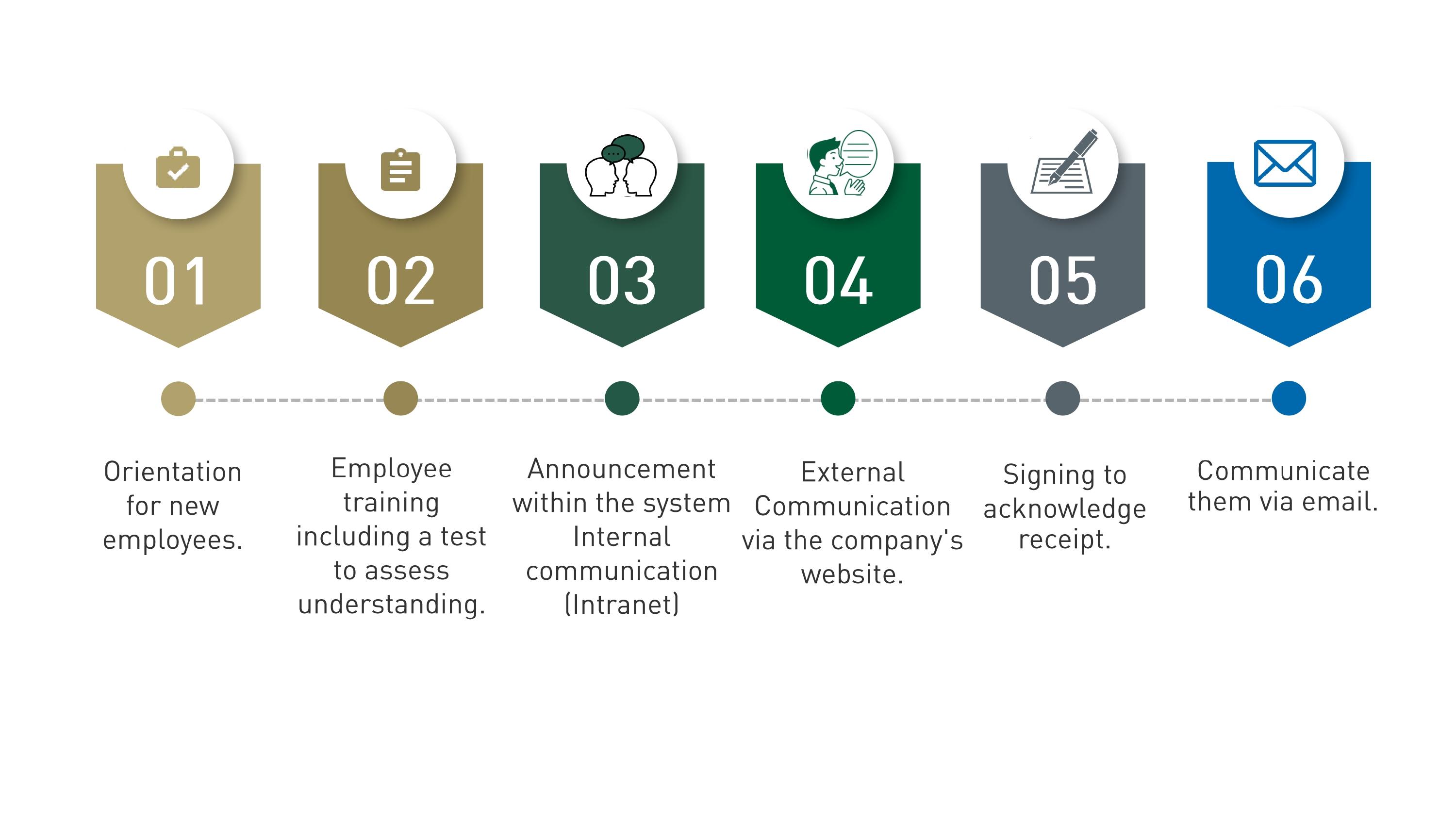
The Company communicates its corporate governance policy and Code of Business Conduct to all executives and employees across the organization. Employees are required to formally acknowledge and agree to comply with these policies, which serve as a framework guiding the conduct and responsibilities of the Board of Directors, executives, and employees at all levels. The Company also encourages the integration of good corporate governance principles and the Code of Business Conduct into day-to-day management and operational practices across all business processes.
In addition, the Company promotes an organizational culture grounded in integrity, transparency, and responsibility toward stakeholders. This includes treating stakeholders fairly and equitably, performing duties to the best of one’s ability for the benefit of the Company, and conducting business with honesty, transparency, and accountability. Employees are encouraged to carry out their responsibilities with professionalism and to uphold ethical standards in all business activities.
These practices help strengthen confidence among shareholders, investors, stakeholders, and all related parties, while reinforcing good corporate governance and ethical business conduct as integral parts of the Company’s organizational culture and sustainable business operations.
During 2025, there were no violations of the Company’s Code of Business Conduct.
Process Document Link
https://shorturl.asia/yq0OE#page=3
Page Number in Report
3
Anti-Corruption Networks & Projects
Joined or Declared Intent to Join Anti-Corruption Networks
Yes
Networks & Projects Joined
| Network / Project | CAC Certified |
|---|---|
| Thai Private Sector Collective Action Against Corruption: CAC | Y |
| United Nations Global Compact (UNGC) | |
| Participation of anti-Corruption networks and initiatives |
Material Changes & Developments in CG
Reviewed the CG Policy or Board Charter in the Past Year
Yes
Material Changes or Developments in the Past Year
Yes
Policy Review — Description
The Board of Directors recognizes the importance of strengthening the Company’s corporate governance practices to ensure long-term sustainability. The Board therefore reviews the appropriateness and adequacy of the Company’s corporate governance policies and business code of conduct on an annual basis to ensure alignment with the Company’s business operations and changing environments, including relevant laws, regulations, and best practices.
At the Board of Directors’ Meeting No. 5/2025 held on November 12, 2025, the Board reviewed and approved the Corporate Governance and Code of Conduct Manual (11st revised edition), with the key revisions and additions summarized as follows:
Added channels for complaints and whistleblowing through the Company’s website at www.pranda.com
under the Investor Relations section, “Corporate Governance,” and expanded reporting channels by including additional email contacts, namely the Audit Committee, Managing Director – Marketing, and Managing Director – Supply Chain and Logistics.
Revised and enhanced the criteria for determining the remuneration of the Group Chief Executive Officer.
Introduced a Sustainable Supply Chain Management Policy.
Introduced a Biodiversity Policy.
Introduced a Privacy Policy.
Introduced a Cookie Policy.
Revised the Personal Data Protection Policy in its entirety.
Introduced an acknowledgment process for the Corporate Governance Policy and Code of Conduct through Google Forms.
Introduced a new format for reporting conflicts of interest for directors, executives, and employees at the level of manager and above up to Assistant Managing Director through Google Forms.
Subsequently, at the Board of Directors’ Meeting No. 1/2026 held on February 25, 2026, the Board approved a further review of the Corporate Governance and Code of Conduct Manual (12th revised edition). The key updates include:
Introduction of procedures for handling violations of the Code of Conduct and related corrective and preventive actions.
Introduction of a policy on unfair competition and prevention of trade monopolies.
Implements the CG Code for Listed Companies
No
CG Code — Description
The Board of Directors has considered the Guidelines on Corporate Governance for the Listed Companies in 2017 issued by the Securities and Exchange Commission (SEC) by determining roles and duties of corporate leaders upon the implementation of good corporate governance to create sustainable values to the business. The assessment based on CG Code principles is conducted by comparison with operational policy towards good corporate governance and business context. The Board of Directors has advised that the Company has policy, measures and work procedures in compliance with CG Code principles which are applicable for the growth directions of the Company.
Hence, the pending issues raised in 2025 are the Company has Independent Director holding a Director position for more than 9 years. As the Board of Directors and the Nomination and Remuneration Committee are concerned to knowledge, competency and business experience of the Independent Directors including ability to act as an Independent Director as well as freedom of expressions, therefore, an Independent Director can hold the position for more than 9 years; existing total number of 1 Director.
However, there are 2 Independent Directors holding terms less than 9 years. Hence, each Independent Director has demonstrated and proved towards maintaining characteristic of being independent and having no conflict of interests and/or any significant interest with the Company.
Other CG Performance & Outcomes
The Company conducts its business in accordance with internationally recognized principles of good corporate governance. It has adopted the Corporate Governance Code (CG Code) issued by the Securities and Exchange Commission (SEC) as a guiding framework for its operations. The Company has implemented the CG Code in all material aspects, taking into consideration its business context, organizational structure, and operational nature.
The Company applies the CG Code in a manner that balances adherence to international best practices with the flexibility required for effective management. This approach ensures the efficiency of corporate governance, risk management, and the creation of sustainable value for all stakeholders.
Furthermore, the Company regularly reviews and assesses its compliance with the CG Code to continuously enhance its governance standards in line with evolving best practices and the expectations of both domestic and international investors.
In addition, the Company consistently participates in the Corporate Governance Report of Thai Listed Companies (CGR), conducted by the Thai Institute of Directors (IOD), as a benchmarking tool to further strengthen its governance practices toward international standards.
In 2025, the Company reported no material breaches of its Code of Conduct, reflecting the effectiveness of its corporate governance framework and a strong organizational culture grounded in integrity, transparency, and accountability.
The Company received a 5-star rating (“Excellent”) in the Corporate Governance Report of Thai Listed Companies (CGR) for 2025, marking the ninth consecutive year of achieving this highest distinction. The Company is among 374 listed companies that scored 90 points or above, out of a total of 844 companies participating in the assessment. Within the consumer products sector, which comprises 66 listed companies, the average score was 78%, while the Company achieved an “Excellent” rating, reflecting governance standards that are significantly above the industry average.
In addition, based on market capitalization, within the group of companies with a market cap not exceeding THB 1,500 million, the Company is among 73 companies that achieved scores of 90 points or higher, out of 333 companies in the same category. These results underscore the Company’s continued commitment to strong corporate governance practices and its ongoing efforts to elevate governance standards in line with international best practices.

In addition to adhering to good corporate governance principles, the Company has consistently received external recognition for the quality of its governance practices. In 2025, the Company was awarded a 5-coin rating (100 full score – “Excellent”) in the Annual General Meeting (AGM) Quality Assessment of listed companies conducted by the Stock Exchange of Thailand.
This achievement reflects the Company’s strong commitment to conducting shareholder meetings with transparency, fairness, and equal treatment of all shareholders. The Company ensures comprehensive and timely disclosure of information prior to the meeting, facilitates shareholder participation, provides opportunities for shareholders to raise questions and express opinions freely, and conducts meetings efficiently in compliance with all relevant regulations and best practices.