

Sustainability · 2025
In this section60 topics
- Sustainability Policy4 items
- Sustainability Goals & UN SDGs3 items
- Policy Review3 items
- Business Value Chain1 item
- Stakeholder Analysis2 items
- Environmental Sustainability — Overview2 items
- Environmental Policy & Guidelines5 items
- Environmental Policy Review4 items
- Energy Management — Overview1 item
- Energy — Plan & Guidelines3 items
- Energy — Electricity Consumption2 items
- Energy — Fuel Consumption2 items
- Energy — Targets3 items
- Energy — Performance & Outcomes3 items
- Water Management — Overview1 item
- Water — Plan & Guidelines4 items
- Water — Withdrawal, Discharge & Consumption5 items
- Water — Targets3 items
- Water — Performance & Outcomes3 items
- Waste Management — Overview1 item
- Waste — Plan & Guidelines4 items
- Waste — Generation, Disposal & Recycling2 items
- Waste — Targets3 items
- Waste — Performance & Outcomes3 items
- Greenhouse Gas — Overview1 item
- GHG — Plan & Guidelines3 items
- GHG — Emissions2 items
- GHG — Emissions Verification3 items
- GHG — Principles & Standards2 items
- GHG — Targets2 items
- GHG Targets — Net Zero1 item
- GHG — Performance & Outcomes3 items
- Environmental Legal Incidents2 items
- Other Environmental Management1 item
- Social Sustainability — Overview1 item
- Social Policy & Guidelines4 items
- Social Policy Review3 items
- Social — Principles & Standards Practised1 item
- Human Rights Due Diligence3 items
- Employee Management — Overview1 item
- Employees — Plan & Guidelines5 items
- Employees — Workforce4 items
- Employees — Remuneration & Provident Fund2 items
- Employees — Training & Development2 items
- Employees — Occupational Health & Safety2 items
- Employees — Labour Relations2 items
- Employees — Employee Representation3 items
- Employees — Targets2 items
- Employees — Performance & Outcomes3 items
- Customer Management — Overview1 item
- Customers — Plan & Guidelines4 items
- Customers — Satisfaction Results2 items
- Customers — Targets2 items
- Customers — Performance & Outcomes2 items
- Community & Social — Overview1 item
- Community & Social — Plan & Guidelines5 items
- Community & Social — Targets2 items
- Community & Social — Performance & Outcomes2 items
- Other Social Management2 items
- Law Violation Incidents2 items
Sustainability Policy
Introduction
The Company is committed to conducting its business in a stable and sustainable manner by establishing sustainability management policies that align with its business direction and strategies. The Company operates under the framework of Environmental, Social, and Governance (ESG) principles to create long-term value for all stakeholders, while ensuring compliance with relevant laws, regulations, and international standards. The Company also adheres to global sustainability principles, such as the Ten Principles of the United Nations Global Compact (UN Global Compact), and supports the United Nations Sustainable Development Goals (Sustainable Development Goals: SDGs).
Environmental
The Company places importance on conducting its business while protecting natural resources and minimizing environmental impacts. This is achieved through efficient management of energy, water, waste, and pollution, as well as greenhouse gas management and biodiversity conservation. These efforts aim to promote efficient resource utilization and maintain ecological balance.Social
The Company conducts its business with a strong sense of social responsibility, upholding respect for human rights and labor rights. It ensures a safe and appropriate working environment and continuously promotes employee development and capability building. The Company also considers the rights of customers, business partners, and other stakeholders, while supporting community and social development.Governance
The Company operates under the principles of good corporate governance, guided by strong business ethics and a strict anti-corruption stance in all forms. In addition, the Company maintains effective risk management and internal control systems, promotes sustainable supply chain management, and fosters innovation and technological development to enhance the organization’s competitiveness.
Has a Sustainability Policy
Yes
Policy Description
The Company conducts its business with social responsibility, adhering to respect for human rights and labor rights. It provides a safe working environment, promotes occupational health and safety, and continuously develops the capabilities of its personnel. At the same time, the Company supports career creation for disadvantaged persons and persons with disabilities, as well as promotes the dual education system in the field of gems and jewelry.
In addition, the Company places importance on the rights of consumers and customers by striving to deliver high-quality products. It manages relationships with business partners with transparency, fairness, and responsibility, while also collaborating to improve and enhance the quality of life of communities and society in a sustainable manner.
In addition, the Board of Directors will monitor and ensure efficient resource allocation, taking into account the impact and development of resources throughout the value chain, in order to achieve sustainable objectives and main goals.
The Company has established systematic practices and management processes for sustainability to ensure that its operations are aligned with the defined policies. The full details of the sustainability policies and practices are disclosed on the Company’s website.
Policy Document Link
https://shorturl.asia/IQUFz
Sustainability Goals & UN SDGs
Has Sustainability Goals
Yes
Goals Description
The Company has established its business strategy with a focus on achieving sustainable growth by expanding operations in both the Original Design Manufacturer (ODM) segment and the Original Brand Manufacturer (OBM) segment. In the ODM segment, the Company leverages its experience and expertise to enhance the capabilities of its business partners through design and manufacturing services. At the same time, the Company continues to develop and strengthen its own brands under the OBM model, creating products that are distinctive, outstanding, and closely aligned with market demands.
In parallel, the Company aims to elevate its production processes by fostering a corporate culture that emphasizes working with passion and dedication. It continuously develops the capabilities of its personnel and promotes the well-being of employees, which is reflected in the creation of high-quality jewelry characterized by exceptional craftsmanship and refinement.
In terms of marketing, the Company continues to develop its brands and integrate its sales channels through an omnichannel approach, while also strengthening collaboration with business partners. Supported by efficient management systems, the Company maintains an appropriate balance of revenue contributions between the ODM and OBM segments.
The Company operates its business in accordance with the principles of good corporate governance and with responsibility toward society and the environment. It integrates ESG principles with the practices of the United Nations Global Compact and the Sustainable Development Goals (SDGs), combining its business expertise with the creation of value for all stakeholders. This approach supports stable, responsible, and sustainable long-term growth.
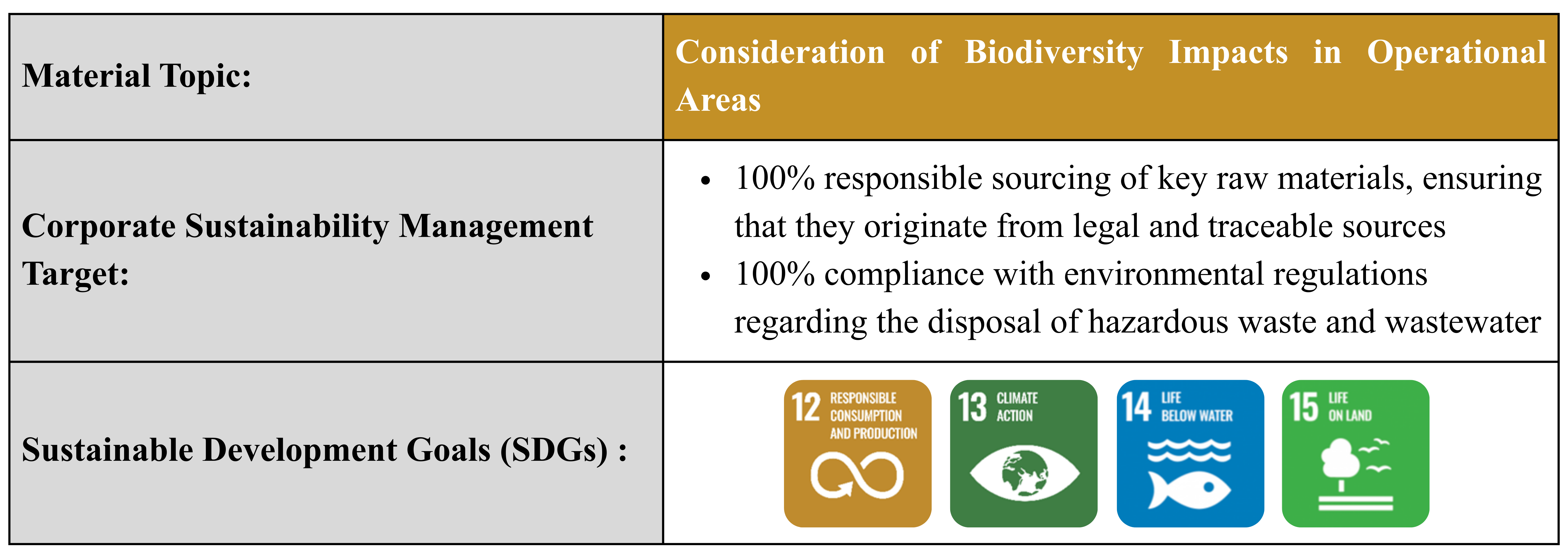
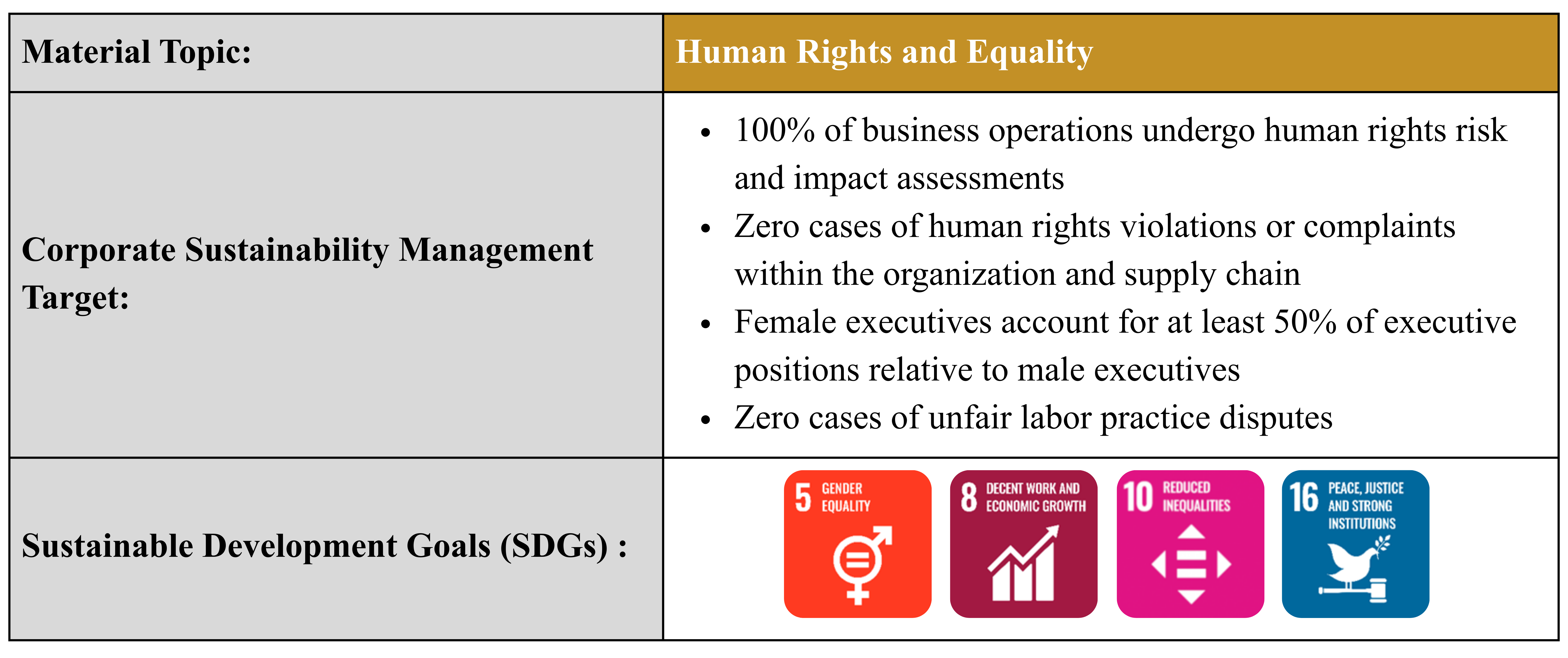
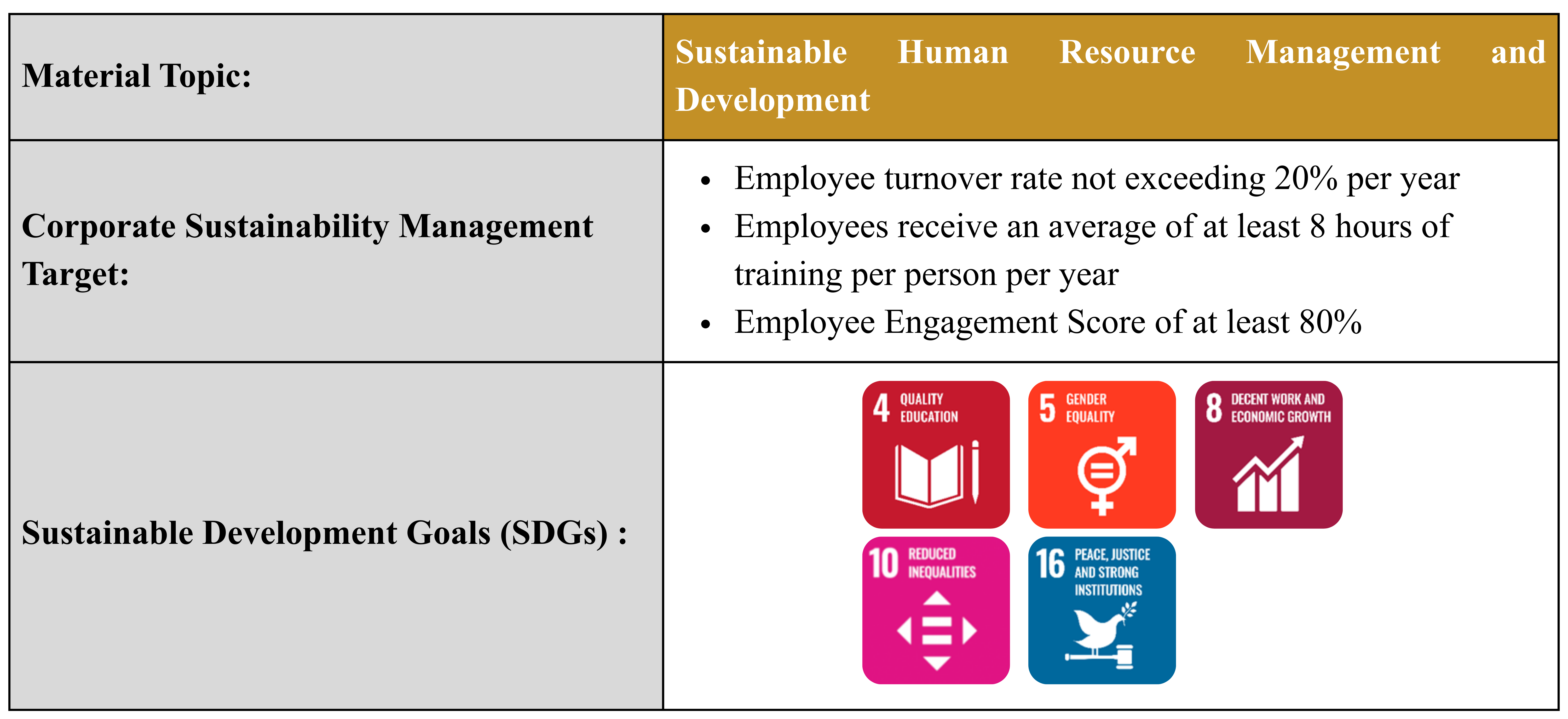
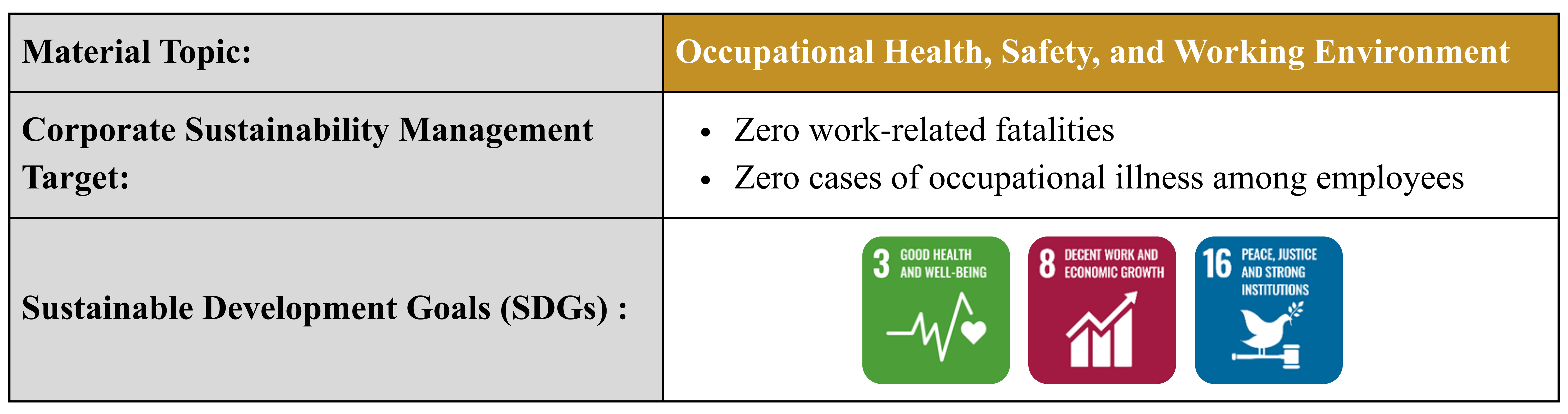
Sustainability management goals.
Environmental
Social
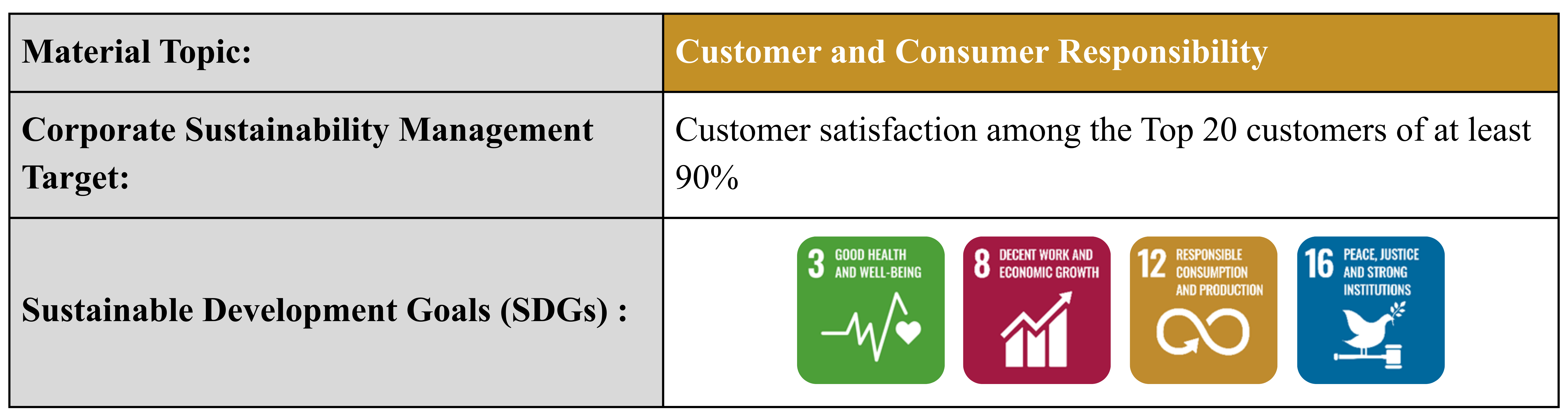
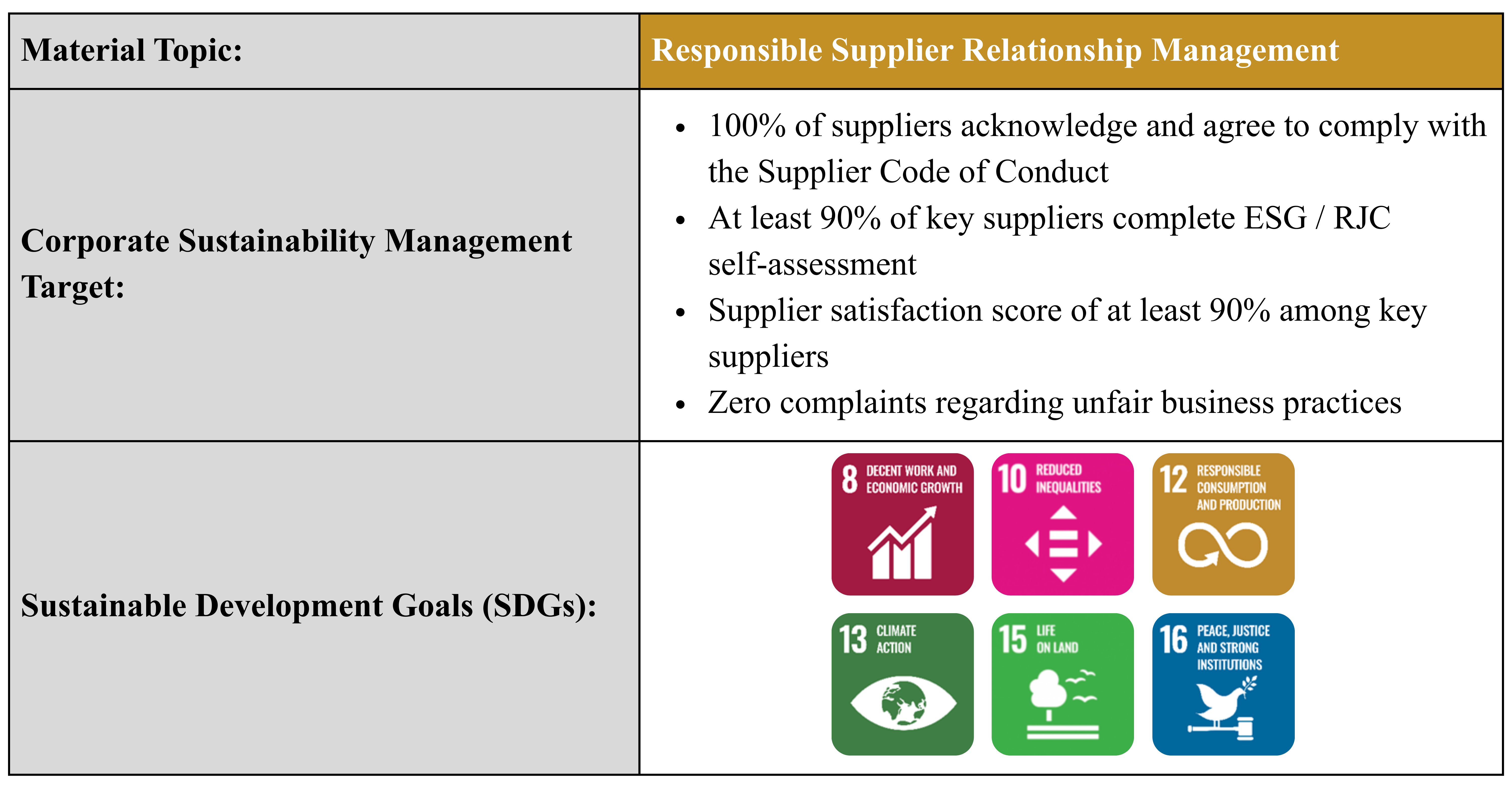
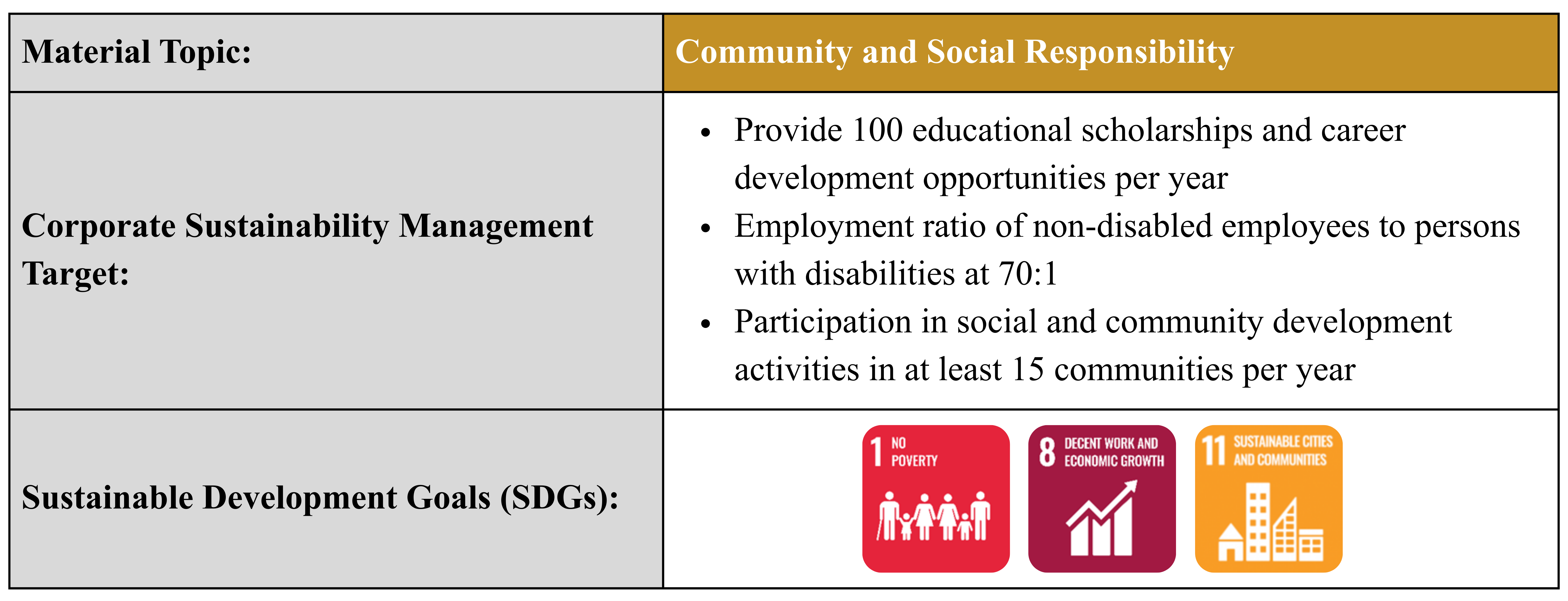
Governance
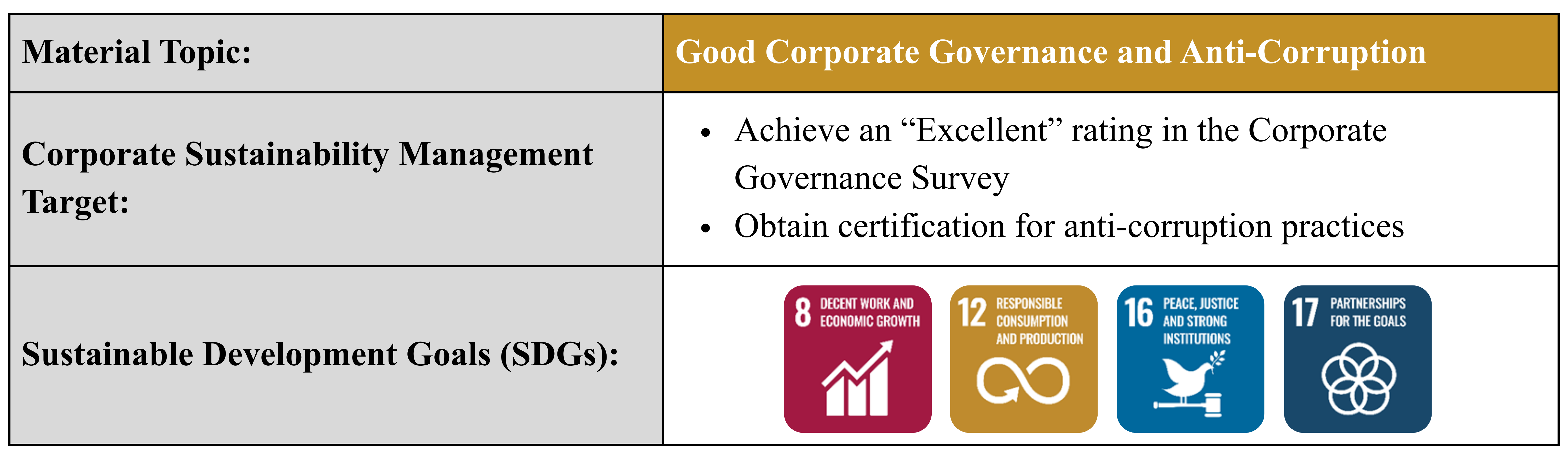
UN Sustainable Development Goals
| SDG Goal |
|---|
| Goal 1 No Poverty |
| Goal 1 No Poverty |
| Goal 3 Good Health and Well-being |
| Goal 3 Good Health and Well-being |
| Goal 4 Quality Education |
| Goal 4 Quality Education |
| Goal 5 Gender Equality |
| Goal 5 Gender Equality |
| Goal 6 Clean Water and Sanitation |
| Goal 6 Clean Water and Sanitation |
| Goal 7 Affordable and Clean Energy |
| Goal 7 Affordable and Clean Energy |
| Goal 8 Decent Work and Economic Growth |
| Goal 8 Decent Work and Economic Growth |
| Goal 9 Industry, Innovation and Infrastructure |
| Goal 9 Industry, Innovation and Infrastructure |
| Goal 10 Reduce Inequalities |
| Goal 10 Reduce Inequalities |
| Goal 11 Sustainable Cities and Communities |
| Goal 11 Sustainable Cities and Communities |
| Goal 12 Responsible Consumption and Production |
| Goal 12 Responsible Consumption and Production |
| Goal 13 Climate Action |
| Goal 13 Climate Action |
| Goal 14 Life below Water |
| Goal 15 Life on Land |
| Goal 16 Peace, Justice and Strong Institutions |
| Goal 16 Peace, Justice and Strong Institutions |
| Goal 17 Partnerships for the Goals |
| Goal 17 Partnerships for the Goals |
Policy Review
Policy Reviewed This Year
Yes
Policy Changed This Year
Yes
Review Details
In 2025, the Company reviewed its sustainability policies and targets. The key change was the establishment of environmental targets, with a focus on achieving net zero greenhouse gas emissions by 2050.
Business Value Chain
Value Chain Description
The Company’s business value chain reflects the interconnected roles of key stakeholders across all activities throughout its operations, from upstream to downstream. It encompasses the entire process, including product development and prototype creation, raw material sourcing and procurement, manufacturing, as well as marketing and distribution. Through efficient and standardized management systems, the Company is able to create high-quality craftsmanship characterized by precision and refinement, while effectively meeting diverse market demands. Value is created at every stage of the process and delivered to stakeholders at all levels, from suppliers and business partners to employees and customers.
The Company’s value chain is not solely focused on increasing the value of its products and services. It also emphasizes the responsible management of potential impacts on stakeholders, including employees, suppliers, communities, and society as a whole. This approach ensures that benefits are shared in a balanced, transparent, and sustainable manner. From a strategic perspective, the Company places strong emphasis on continuously developing its value chain to strengthen its competitive advantage. At the same time, it maintains high standards of product quality, customer satisfaction, and responsibility toward society and the environment, which form the foundation for long-term success and sustainable growth.
Stakeholder Analysis
Introduction
The Company conducts stakeholder analysis and prioritization by considering the impacts of its operations on each stakeholder group, alongside assessing potential risks and approaches to managing stakeholder relationships that may affect business operations. This process ensures that the Company can appropriately and effectively respond to the needs and expectations of stakeholders in a balanced manner.
The Company has established clearly defined responsible units and operational guidelines aligned with its policies and organizational direction. In addition, the needs and expectations of stakeholders are reviewed at least once a year, and response approaches are continuously improved to reflect changing circumstances and contexts.
For 2025, the Company has classified its stakeholders into six groups and prioritized them as follows:
(1) Employees
(2) Customers
(3) Suppliers and Creditors
(4) Communities and Society
(5) Shareholders
(6) Competitors
This approach enables the Company to systematically and transparently manage relationships with stakeholders in all dimensions, while supporting long-term growth.
Material topics
To ensure that the Company’s sustainability operations achieve their objectives in line with sustainable development principles, deliver measurable outcomes, and appropriately respond to stakeholders’ expectations, the Company conducts assessments of both the positive and negative impacts arising from its business operations. The Company also prioritizes issues that are considered material to the organization.
This process is carried out by the Sustainability Working Team and is reviewed and approved by the Corporate Sustainability Development Committee as well as the Board of Directors. This ensures that the identification and prioritization of material issues are conducted carefully, transparently, and in alignment with the Company’s strategic direction.
By 2025, the company will focus on sustainability issues, considering three main areas:
Environmental Dimension
1. Efficient energy management
2. Water resource management
3. Waste, pollution, and production process management
4. Greenhouse gas emission management and reduction
5. Consideration of the impact on biodiversity in areas related to operations
Social Dimension
1. Respect for human rights and equality
2. Sustainable human resource management and development
3. Safety, occupational health, and working environment
4. Responsibility towards customers and consumers
5. Responsible relationship management with business partners
6. Responsibility towards the community and society
Governace Dimension
1. Good corporate governance and anti-corruption
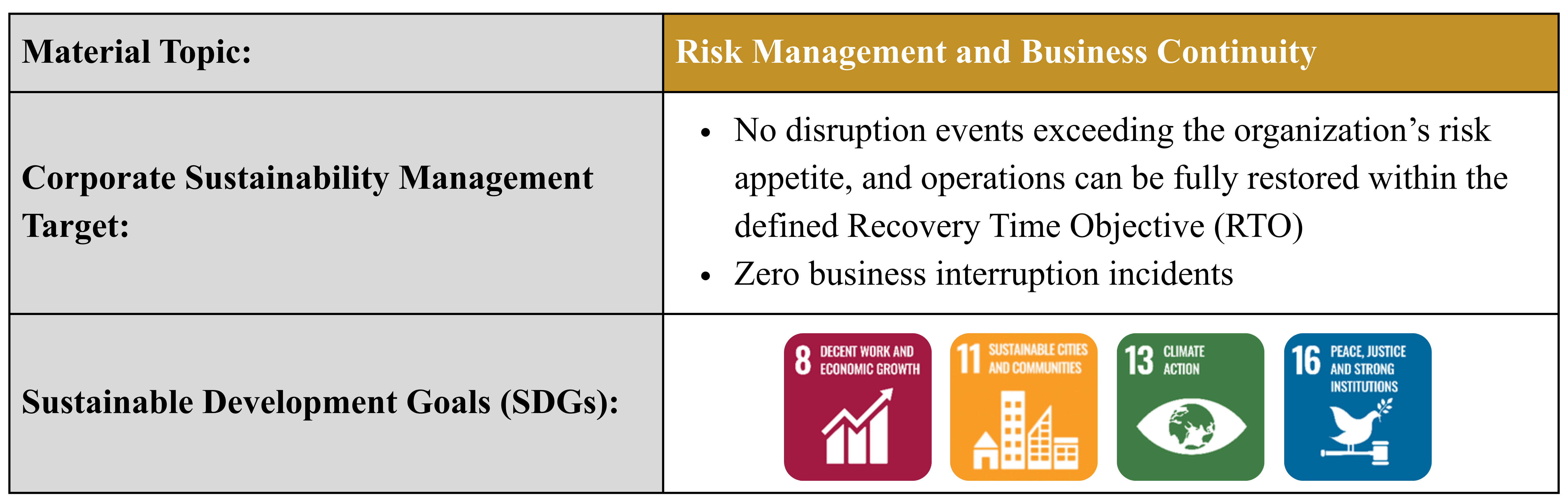
2. Risk management and business continuity
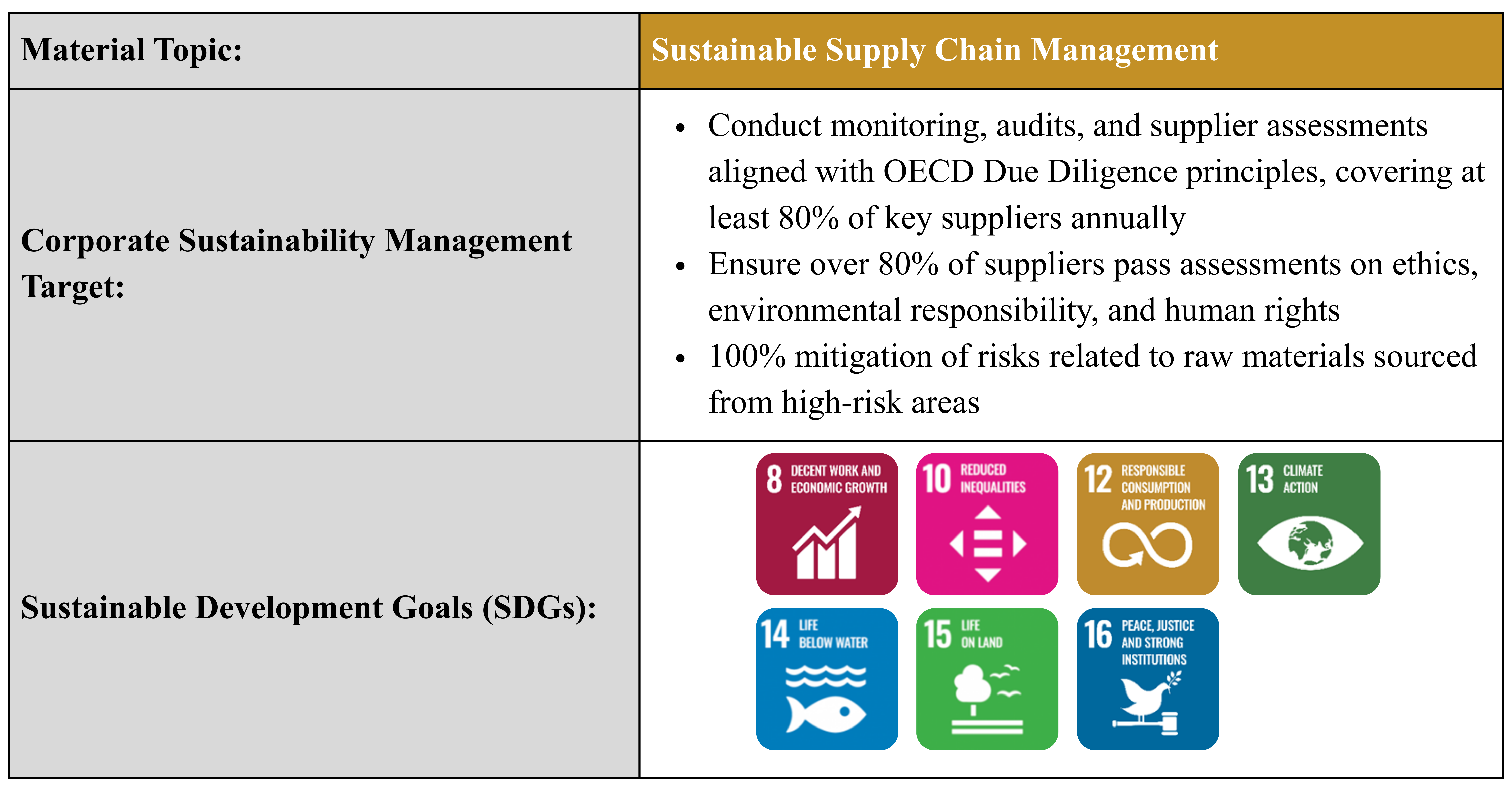
3. Sustainable supply chain management
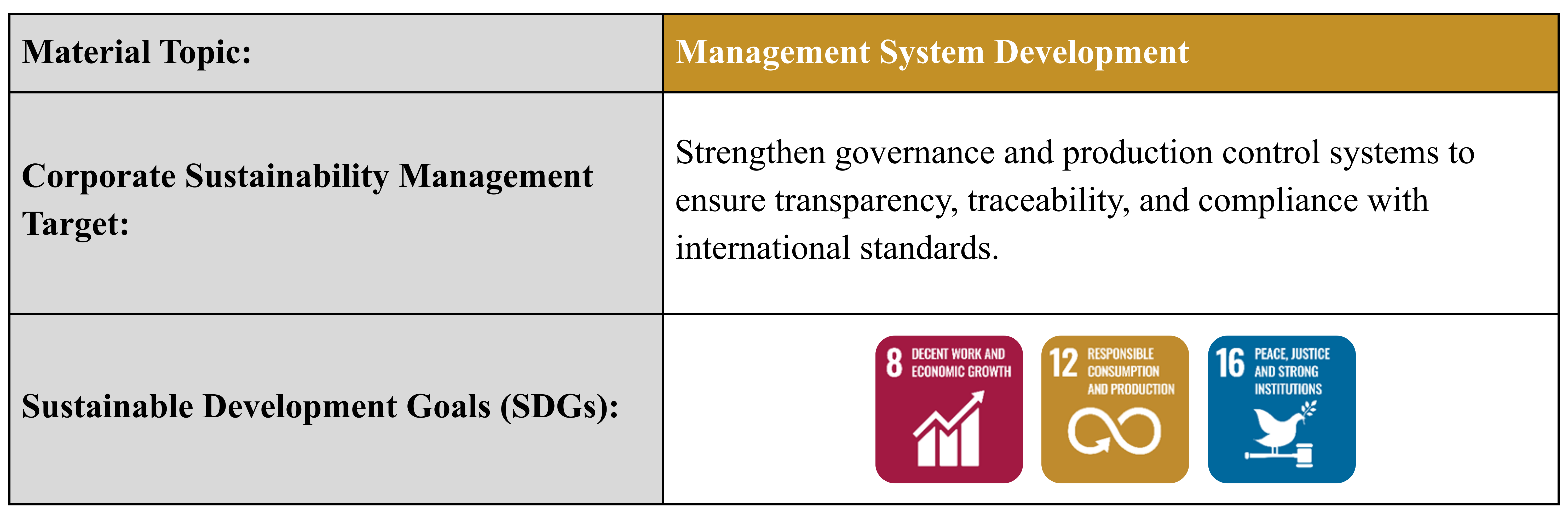
4. Development of management systems
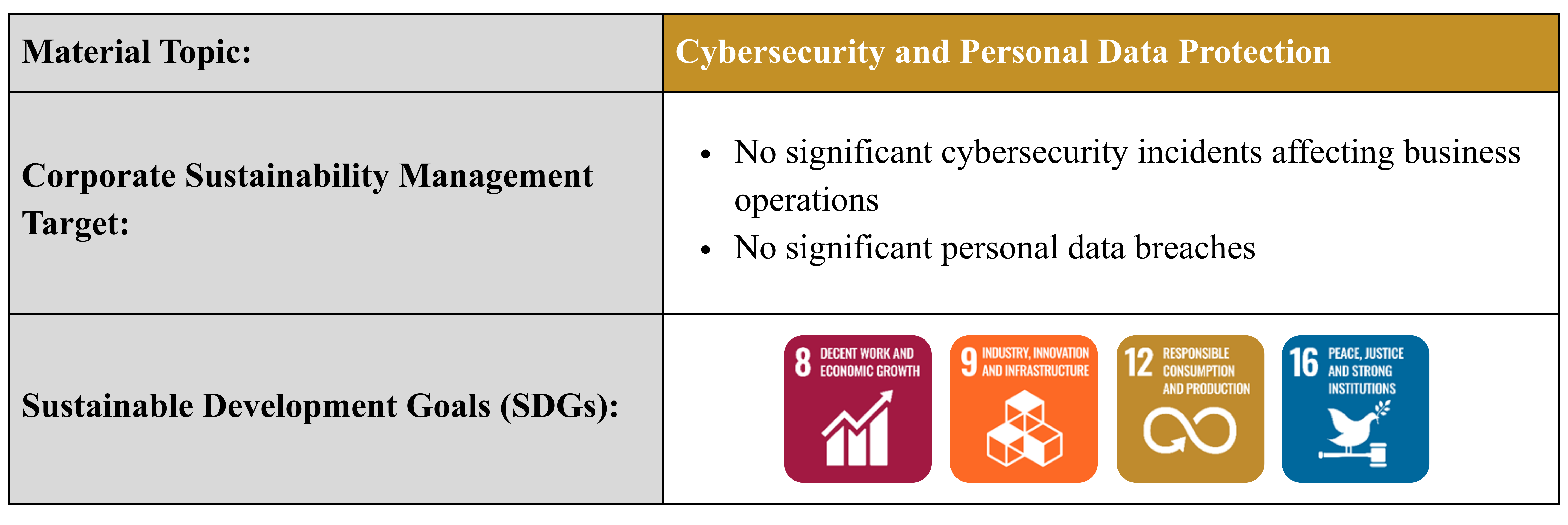
5. Cybersecurity and personal data protection
Stakeholder Analysis
| Stakeholder Type | Stakeholders | Stakeholder Expectations | Response to Expectations | Communication Activities |
|---|---|---|---|---|
| External stakeholders | 2923 · Description: Customers | - Deliver products and services that meet quality and standards as promised
- Transfer knowledge and technology through the company's products
- Diversity of products
- Maintain customer data confidentiality
- Convenient and fast communication channels.
- Protection of personal data. | - Encourage customers to be aware of and share responsibility for the quality and safety of products and services
- Assess customer satisfaction across various aspects comprehensively, using the feedback to improve operations and provide better services
- Provide services to customers with responsibility, following business ethics and professional conduct
- Protection of customer data.
- Compliance with international standards ISO 9001:2015, ISO 14001:2015, and Responsible Jewellery Council (RJC).
- Protect and maintain customer data | 2941 · Description: Online Communication · 2947 · Description: Satisfaction Survey · 2949 · Other name: Focus group discussion · Description: Others · 2949 · Other name: Study visit · Description: Others · 2949 · Other name: Provide knowledge from subject matter experts and the company's team. · Description: Others · 2949 · Other name: Meet with customers to listen to their feedback and suggestions. · Description: Others · 2949 · Other name: Complaints through the complaint submission channels and whistleblowing · Description: Others |
| External stakeholders | 2894 · Description: Creditor · 2899 · Description: Suppliers | - Reasonable pricing with the verification of market prices
- Pay debts as per the agreed terms
- Fairness and equality in hiring and bidding for work
- Exchange of knowledge and experiences
- Protection of personal data. | - Treat all business partners and creditors with equality and fairness, adhering to the terms of contracts and business ethics
- Communicate with partners to ensure they are aware of and understand the procurement regulations and the process for selection and evaluation, while monitoring, verifying, and reporting results to relevant stakeholders | 2945 · Description: Complaint Reception · 2949 · Other name: Focus group discussion · Description: Others · 2949 · Other name: Meet together · Description: Others · 2949 · Other name: Meet with customers to listen to their feedback and suggestions. · Description: Others |
| Internal stakeholders | 2921 · Description: Employees | - Fair compensation and benefits beyond legal requirements
- Job security and career advancement
- Continuous development of knowledge and work potential
-Workplace safety and hygiene
- Participation in the development of work systems, products, and services
- Involvement in public welfare activities
- - Opportunities for career development and succession planning
- Protection of personal data
- Modern equipment and technology to reduce workload
- Equal treatment
- Fair performance evaluations
- Good communication and relationships among employees within the organization
- Protection of personal data | - Establish guidelines on ethics and business conduct for employees to adhere to in their work
- Provide fair and appropriate compensation and benefits
- Implement safety control systems and equipment that meet standards, and ensure the workplace is suitable and conducive to efficiency and effectiveness, considering safety and hygiene
- Respect employees' rights as per legal requirements
- Develop career-specific skills training plans to promote advancement.
- Conduct performance evaluations.
- Review the potential development plan and succession plan annually.
- Hold quarterly welfare committee meetings.
- Arrange annual health check-ups. | 2945 · Description: Complaint Reception · 2948 · Description: Training / Seminar · 2949 · Other name: Establish the Pranda Academy Learning Center · Description: Others · 2949 · Other name: Intranet System / Social Media · Description: Others · 2949 · Other name: Employee Opinion Survey · Description: Others · 2949 · Other name: Performance Evaluation · Description: Others · 2949 · Other name: Employee Engagement Activities, including Social Responsibility Activities · Description: Others · 2949 · Other name: Holding a meeting to communicate with employees. · Description: Others · 2949 · Other name: A survey of employee satisfaction and engagement with the organization. · Description: Others |
| External stakeholders | 2902 · Description: Community · 2928 · Description: Society | - Enhance careers and support the well-being of society
- Collaborate in community and social development
- Consider the impact on communities and society
- Be an organization responsible to local, national, and global communities, promoting and preserving local cultures
- Disclose operational information based on factual accuracy
- Value community feedback and opinions.
- Demonstrate community and social responsibility. | - Manage a dual education system to promote access to education in the field of jewelry and gemology for youth, leveraging expertise in fine craftsmanship to produce skilled workers for Thailand’s jewelry industry
- Strictly adhere to occupational health and safety policies
- Support public service initiatives for the benefit of the community and society as a whole
- Engage in activities that contribute to public welfare for the community and society
- Listen to community suggestions, opinions, and complaints. | 2945 · Description: Complaint Reception · 2947 · Description: Satisfaction Survey · 2949 · Other name: Assess the needs · Description: Others · 2949 · Other name: Evaluate satisfaction · Description: Others · 2949 · Other name: Meet with the community regularly · Description: Others · 2949 · Other name: Organize meetings to gather feedback and suggestions · Description: Others · 2949 · Other name: Collaborate with the community to organize projects and activities that promote quality of life · Description: Others · 2949 · Other name: Organize study visits and promote participation in social development activities · Description: Others · 2949 · Other name: Report information, news, and activities · Description: Others · 2949 · Other name: Monitor information and reports from the media · Description: Others |
| External stakeholders | 2904 · Description: Investors or investment institutions · 2913 · Description: Shareholders | • Appropriate return on investment
• Management based on good corporate governance principles
• Disclosure of company information that is truthful, accurate, complete, and timely
• Effective risk management
• Strong internal audit and control system
• Profitable and continuously growing operating results
• Protection of personal data | • Treat shareholders and investors according to good governance principles.
• Establish transparent and reliable information disclosure.
• Protect shareholder rights in accordance with good corporate governance principles.
• Develop a business strategy plan.
• Manage risks comprehensively.
• Implement an anti-corruption policy.
• Conduct external audits of internal controls.
• There are plans to support:
- Business Growth
- Profitability & Efficiency
- Financial Stability
| 2938 · Description: Visit · 2941 · Description: Online Communication · 2944 · Description: Annual General Meeting (AGM) · 2945 · Description: Complaint Reception · 2949 · Other name: Form 56-1 One Report · Description: Others · 2949 · Other name: Opportunity Day · Description: Others |
| External stakeholders | 2898 · Description: Competitors | • Conduct business transparently, honestly, and ethically.
• Compete fairly and legally.
• Do not damage the reputation of business competitors.
• Do not seek confidential information of business competitors through dishonest means. | • Establish a system to prevent any actions taken to obtain or use competitors' trade secrets through illegal means.
• Treat competitors with understanding and good cooperation. | 2949 · Other name: Obtain information from the media and public forums. · Description: Others |
Environmental Sustainability — Overview
Introduction
The Company places strong emphasis on conducting business sustainably, alongside its responsibility toward the environment, society, and stakeholders throughout the value chain. As a manufacturer of gemstone and jewelry products, the Company strives to manage its production processes efficiently by minimizing unnecessary resource consumption, reducing waste generated from production processes, and improving the efficiency of raw material, energy, and labor utilization. These practices help maintain cost efficiency while ensuring product quality meets established standards and reducing long-term environmental impacts.
The Company has been certified under the ISO 9001:2015 Quality Management System and the ISO 14001:2015 Environmental Management System, as well as the Green Industry Level 3 certification. These certifications serve as important frameworks for maintaining production quality and preventing environmental impacts arising from operations. The Company emphasizes efficient resource utilization, waste and pollution reduction, proper chemical and waste management, and strict compliance with environmental laws and regulations, while continuously reviewing and improving its operational processes.
In addition, the Company has conducted and managed its Carbon Footprint for Organization (CFO) assessment in accordance with the guidelines of the Thailand Greenhouse Gas Management Organization (Public Organization). This assessment identifies the sources and quantities of greenhouse gas emissions generated from the Company’s activities. The information obtained serves as a basis for developing measures to reduce greenhouse gas emissions, such as improving energy efficiency, optimizing production processes, and promoting efficient resource utilization, thereby helping to mitigate the long-term impacts of climate change.
Furthermore, the Company has been certified by the Responsible Jewellery Council (RJC), reflecting its commitment to responsible business practices throughout the supply chain—from raw material sourcing and production processes to product delivery to customers. The Company places importance on environmental considerations, sustainable resource utilization, and building confidence among customers and stakeholders that its products are manufactured in accordance with ethical principles and with genuine social and environmental responsibility.
Operating Results — Introduction
The Company continuously monitors and evaluates its environmental performance under the established policies and operational guidelines. During the past year, the Company achieved several key environmental performance outcomes compared with the 2024 baseline year, as follows:
1. Efficient and effective energy management.
The Company reduced its electricity consumption by 24.44% compared with the 2024 baseline year. This achievement resulted from improving energy efficiency in operational processes, refining work procedures, and promoting responsible energy usage across all business units.
2. Responsible Water Management
The Company’s total water consumption decreased by 11.86% compared with the 2024 baseline year. This reduction was achieved through systematic water management and control, raising awareness among employees about water conservation, and improving related operational processes.
3. Waste and Pollution Management from Production Processes
The Company successfully reduced non-hazardous waste by 24.86% compared with the 2024 baseline year. This was achieved through employee engagement initiatives, focusing on waste reduction, proper waste segregation, and promoting reuse and recycling practices.
4. Greenhouse Gas Emissions Management and Reduction
The Company reduced greenhouse gas emissions (Scope 1–3) by 42.15% compared with the 2024 baseline year. This achievement was driven by improvements in energy efficiency, responsible resource management, the implementation of clear policies and measures, and systematic monitoring of the organization’s greenhouse gas emissions data.
5. Consideration of Biodiversity Impacts in Operational Areas
The Company ensured 100% responsible sourcing of key raw materials, with all materials obtained from legal and traceable sources. In addition, 100% of hazardous waste and wastewater discharged into the environment complied with applicable laws and regulations.
These performance results reflect the Company’s strong commitment to tangible environmental management and serve as a key foundation for advancing toward its long-term goal of reducing environmental impacts and achieving Net Zero Emissions by 2050 in a sustainable manner.
Environmental Policy & Guidelines
Introduction
The Company recognizes its responsibility for potential environmental impacts arising from its business operations, which may affect employees, communities, and stakeholders throughout the value chain. As a manufacturer of gemstone and jewelry products—an industry that involves the use of natural resources and production processes requiring careful control—the Company has established environmental policies and practices to serve as a framework for its operations. These policies are guided by the principles of sustainable development while upholding responsibility toward society and all stakeholders.
The Company is committed to:
Promoting and fostering environmental awareness among executives, employees, and all relevant stakeholders, encouraging them to recognize their responsibilities in protecting and reducing impacts on the environment.
Strictly complying with environmental laws, standards, and relevant regulations.
Preventing and minimizing environmental impacts arising from operational activities, including the efficient use of natural resources and energy.
Encouraging efficient resource utilization, reducing waste and pollution, and supporting reuse and recycling practices.
Continuously reviewing and improving environmental management systems to enhance operational efficiency.
Environmental Practices
To ensure compliance with these policies, the Company has adopted management systems based on ISO 9001:2015 and ISO 14001:2015 standards as tools for supervising and controlling operational processes at every stage—from raw material sourcing and production to product delivery. Key practices include:
Identifying, assessing, and controlling significant environmental aspects, such as energy consumption, water usage, waste management, and chemical management.
Managing waste and chemicals in accordance with relevant regulations and legal requirements to reduce risks to the environment and public health.
Preparing and managing the organization’s greenhouse gas emissions data through the Carbon Footprint for Organization (CFO) assessment in accordance with the guidelines of the Thailand Greenhouse Gas Management Organization (Public Organization). This enables the Company to establish measures for reducing greenhouse gas emissions and improving energy efficiency.
Monitoring, auditing, and reviewing environmental performance regularly, while implementing continuous improvement measures.
Adhering to the principles of the Responsible Jewellery Council (RJC) to ensure that business operations are conducted ethically, transparently, and with environmental responsibility throughout the supply chain.
The Company remains committed to continuously enhancing its environmental management practices in order to support sustainable business growth, strengthen customer confidence, and deliver tangible long-term reductions in environmental impacts.
Has an Environmental Policy
Yes
Policy Description
The Company has established environmental policies and practices as a framework for managing resources efficiently and systematically reducing environmental impacts arising from its business operations. Environmental management is fully integrated into the Company’s strategies and operational processes, under the principles of compliance with relevant laws and regulations, adherence to international standards, and a commitment to continuous development and improvement.
Accordingly, the Company has defined the following environmental policies and practices:
1) Efficient Energy Management
The Company is committed to recognizing the importance of efficient and effective energy management. It controls and reduces electricity consumption throughout its operations to maximize efficiency, promotes the responsible use of natural resources, minimizes environmental impacts, and continuously improves energy efficiency. These efforts support the reduction of energy-related costs while contributing to sustainable business operations in the long term.
2) Responsible Water Management
The Company recognizes that water is a critical resource for both business operations and surrounding communities. Therefore, it is committed to managing water consumption efficiently and responsibly by reducing water usage, promoting the reuse of treated water, and strictly complying with relevant laws and regulations. In addition, the Company implements measures to prevent potential impacts on the livelihoods and water usage of nearby communities, thereby supporting sustainable water resource management in the long term.
3) Waste, Wastewater, and Pollution Management from Production Processes
The Company is committed to effectively managing waste, wastewater, and pollution arising from its operations by focusing on waste reduction at the source based on the 3Rs principle (Reduce, Reuse, Recycle). This includes minimizing resource consumption, promoting reuse, and encouraging recycling within a management framework that complies with international standards and relevant regulations. These practices help prevent and mitigate potential environmental and community impacts while supporting sustainable business operations.
4) Greenhouse Gas Emissions Management and Reduction
The Company is committed to systematically managing and reducing greenhouse gas emissions from all operational activities in order to minimize environmental impacts and address climate change. This is implemented under the environmental management framework of ISO 14001 and in alignment with the ethical and sustainability standards of the jewelry industry under the Responsible Jewellery Council Code of Practices (COP 27). The Company places importance on monitoring, measuring, and controlling greenhouse gas emissions while promoting efficient and sustainable energy use to support long-term sustainable business development.
5) Consideration of Biodiversity Impacts in Operational Areas
The Company recognizes the importance of biodiversity and ecosystems as fundamental elements of sustainable business operations. It is therefore committed to conducting business with consideration for biodiversity conservation and minimizing impacts across the value chain. This includes sourcing raw materials from legal and traceable sources, using resources responsibly, and controlling and reducing impacts from production processes, waste, and pollution. The Company complies with relevant laws, regulations, and international standards, including Responsible Jewellery Council (RJC) and ISO 14001, in order to support long-term ecosystem conservation and biodiversity sustainability.
Policy Document Link
https://shorturl.asia/GyVOI
Environmental Guidelines
| Guideline |
|---|
| Electricity Management |
| Fuel Management |
| Renewable/Clean Energy Management |
| Water Management |
| Waste Management |
| Biodiversity Management |
| Greenhouse Gas and Climate Change Management |
Environmental Policy Review
Introduction
The Company places strong importance on continuously overseeing and improving its environmental performance. Environmental policies, practices, and targets are regularly reviewed to ensure alignment with the evolving business context, applicable laws and international standards, environmental trends, and stakeholder expectations.
As part of this review process, the Company evaluates environmental performance across all business units, covering energy management, water usage, waste and waste management, pollution control, greenhouse gas emissions, and potential impacts on biodiversity. This assessment enables the Company to identify material issues, determine areas for improvement, and establish clear targets that can be measured and systematically monitored for progress.
The Company has set concrete environmental targets in various areas, including improving energy and water efficiency, reducing waste and operational by-products, preventing and controlling pollution from production and distribution activities, and systematically managing greenhouse gas emissions. Data from the Carbon Footprint for Organization (CFO) assessment, conducted in accordance with the guidelines of the Thailand Greenhouse Gas Management Organization (Public Organization), serves as a key baseline for establishing measures and targets to reduce greenhouse gas emissions.
In the long term, the Company aims to achieve Net Zero Emissions by 2050. This goal will be pursued through improving operational efficiency, optimizing resource and energy utilization, adopting environmentally friendly technologies and practices, and considering additional appropriate measures in the future.
The Company is committed to translating the outcomes of environmental policy and target reviews into concrete action plans and operational initiatives. These efforts aim to support sustainable business growth, reduce environmental impacts, and create long-term value for all stakeholder groups.
Policy Reviewed This Year
Yes
Review Details
In 2025, the Board of Directors approved the review and revision of the Company’s environmental policies, practices, and targets to ensure alignment with the evolving business context, sustainability trends, and long-term material environmental issues. The key changes are summarized as follows:
1. Establishment of a Biodiversity Policy
The Company has introduced and announced its Biodiversity Policy for the first time as a framework to guide operational activities and business decision-making. The policy focuses on avoiding, preventing, and minimizing impacts on ecosystems and natural resources resulting from the Company’s activities, while promoting responsible and sustainable resource utilization.
This policy strengthens and broadens the scope of the Company’s environmental management approach, ensuring greater alignment with sustainable development principles.
2. Enhancement of Greenhouse Gas Management Targets
The Company has established clear long-term targets for greenhouse gas management by announcing its commitment to achieve Net Zero Emissions by 2050. This represents a significant advancement from focusing primarily on short-term operational emission reductions toward setting a long-term strategic direction to systematically address climate change.
3. Integration of Policies and Targets into Operational Practices
Following these revisions, the Company has expanded its environmental practices to more comprehensively address biodiversity and climate change issues. These policies and targets have been integrated into the Company’s environmental management systems in accordance with international standards and translated into clear action plans, measures, and performance indicators that can be continuously monitored and evaluated.
In summary, these changes reflect the Company’s commitment to continuously strengthening its environmental management practices—from focusing primarily on operational impact control to establishing long-term strategic directions that support sustainable business growth and demonstrate environmental responsibility across all dimensions.
Policies & Guidelines Changed
| Change | Other — Please Specify |
|---|---|
| Biodiversity Management | |
| Greenhouse Gas and Climate Change Management | |
| Other | Integration of Policies and Targets into Operational Practices |
Energy Management — Overview
Introduction
The Company places strong importance on efficient energy management by focusing on reducing electricity purchased from external sources. This approach supports sustainable business operations and helps minimize long-term environmental impacts.
The Company also promotes the use of alternative energy sources within its operations, which helps reduce reliance on external energy supplies, enhance energy security, lower long-term operational costs, and reduce greenhouse gas emissions associated with electricity consumption.
In addition, the Company regularly monitors, reviews, and evaluates energy usage while continuously implementing improvement measures. These include optimizing operational processes, selecting energy-efficient equipment and technologies, and promoting energy conservation awareness among employees at all levels to ensure energy is utilized efficiently and effectively.
The Company remains committed to continuously improving its energy management system while supporting business growth alongside environmental stewardship.
Energy — Plan & Guidelines
Has an Energy Management Plan
Yes
Plan Description
The Company is committed to managing energy efficiently and effectively in order to reduce energy consumption and greenhouse gas emissions from its operations while promoting the responsible use of resources. The Company’s key management approaches include:
Continuously improving electricity efficiency by adopting energy-saving technologies and equipment, as well as enhancing operational processes.
Regularly inspecting and maintaining equipment and machinery to ensure optimal energy efficiency.
Monitoring, measuring, and evaluating energy consumption on a regular basis to effectively control energy usage and minimize unnecessary losses.
Promoting energy conservation awareness among employees to encourage organization-wide participation in efficient energy use.
Plan Document Link
https://shorturl.asia/Z4sit
Energy — Electricity Consumption
Introduction
The Company places strong emphasis on the systematic management of electricity consumption by establishing policies and measures that cover planning, implementation, and continuous review to improve efficiency. This approach aims to ensure the efficient use of resources, reduce energy costs, and minimize environmental impacts resulting from business operations.
Through the continuous implementation of energy conservation measures, the Company successfully reduced electricity consumption by 24.44% compared with the 2024 baseline year, equivalent to a reduction of 1,648,018.23 megawatt-hours (MWh). This achievement resulted from improving the efficiency of machinery and electrical equipment, adopting energy-efficient technologies, optimizing operational processes for better energy use, and encouraging employee participation in responsible energy consumption.
Electricity Consumption
| Metric | Current Year | Previous Year | Two Years Ago |
|---|---|---|---|
| Total electricity consumption within the organization (Kilowatt-Hours) | 6,708,445.16 | 7,561,347.61 | 6,849,689.57 |
| Electricity purchased for consumption from non-renewable energy sources (Kilowatt-Hours) | 5,095,531.78 | 6,743,549.01 | 6,402,352.36 |
| Electricity purchased or generated for consumption from renewable energy sources (Kilowatt-Hours) | 1,612,913.38 | 817,798.6 | 447,337.21 |
Energy — Fuel Consumption
Introduction
The Company places importance on managing fuel consumption in its business operations efficiently by aiming to reduce reliance on fossil fuel energy sources and adjusting its energy usage patterns to align with environmentally responsible operational practices in the long term.
One of the key initiatives is the gradual transition of the Company’s vehicles to electric vehicles (EVs). This initiative helps reduce greenhouse gas emissions from fuel consumption, lower air pollution, and improve overall energy efficiency in business operations.
Fuel Consumption
| Metric | Current Year | Previous Year | Two Years Ago |
|---|---|---|---|
| Crude oil (Barrels) | |||
| Coal (Metric tonnes) | |||
| Jet fuel (Litres) | |||
| Diesel (Litres) | 17,972 | 19,796.96 | 20,186.75 |
| Gasoline (Litres) | 2,153 | 7,305.93 | 8,778.77 |
| Fuel oil (Litres) | |||
| Natural gas (Standard cubic feet) | |||
| LPG (Kilograms) | 26,493 | 29,772 | 21,131 |
| Steam (Metric tonnes) |
Energy — Targets
Introduction
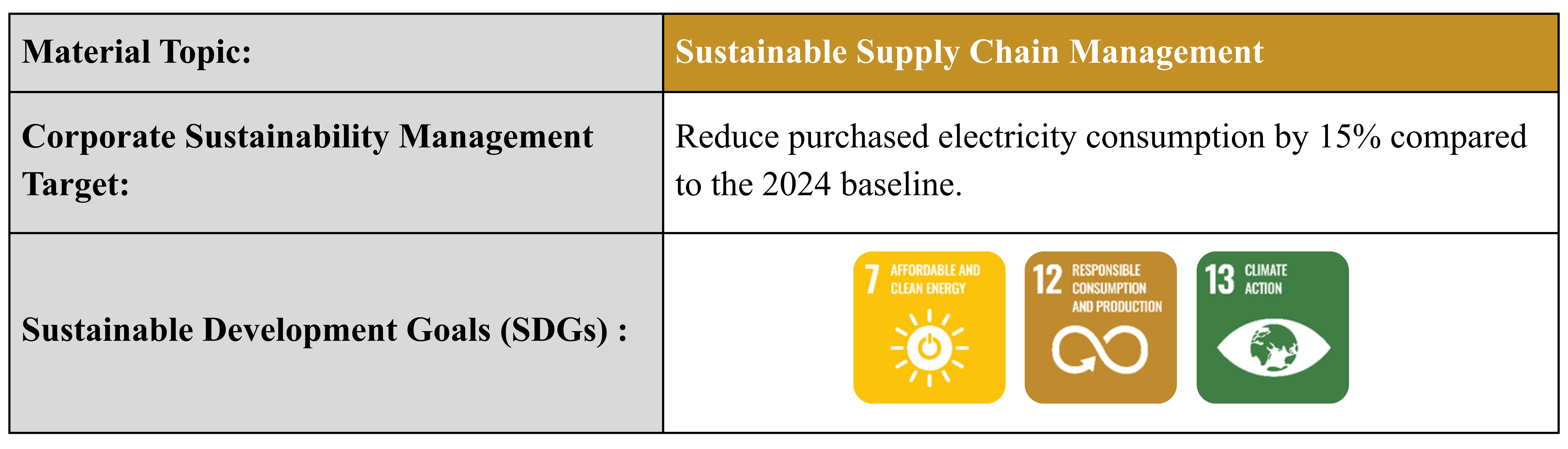
The company recognizes the importance of efficient electricity use, as electricity consumption is a major factor impacting the organization's energy resource usage and greenhouse gas emissions. Therefore, the company has set electricity management targets as a guideline for systematically controlling and reducing electricity consumption.
The company has set a target to reduce electricity purchases by 15% compared to the base year 2024. This will be achieved by focusing on increasing electricity efficiency across all operational processes through process improvements, the use of energy-efficient technologies and equipment, planning electricity usage appropriately based on the scale and nature of the business, and raising awareness and promoting employee participation in efficient energy use.
This target is part of the company's environmental management and supports the long-term goal of reducing environmental impact and greenhouse gas emissions, leading to sustainable business operations in the long term.
Has Set Targets
Yes
Targets
| Target | Base Year | Base Year Value | Target Year | Target Year Value | Target Change (%) | Unit | Unit — Please Specify |
|---|---|---|---|---|---|---|---|
| Reduction of electricity purchased for consumption | 2,024 | 6,743,549.01 | 2,025 | 1,011,532.35 | 15 | Others | Kilowatt-Hours |
Energy — Performance & Outcomes
Introduction
The Company systematically manages its energy usage by enhancing resource efficiency while integrating clean energy into its operations. This approach aims to reduce dependence on externally purchased electricity, minimize environmental impacts, and strengthen long-term business resilience.
The installation of a solar rooftop power generation system for internal use represents a key initiative that has delivered tangible results. Through this project, the Company reduced electricity purchased from external sources by 24.44% compared with the 2024 baseline year, equivalent to a reduction of 1,648,018.23 megawatt-hours of electricity consumption.
Has Performance Results
Yes
Performance Description
The Company systematically manages energy by adhering to the principles of efficient resource utilization, environmental responsibility, and the reduction of long-term operational impacts. This approach covers electricity consumption as well as the use of oil and fuel in the Company’s core business processes, with the aim of improving energy efficiency across all aspects of its operations.
In 2025, the Company implemented several key initiatives, including improving the efficiency of machinery and electrical equipment, adopting more energy-efficient technologies, enhancing energy monitoring and control systems, and promoting a culture of energy conservation through awareness-building among employees at all levels.
As a result of these efforts, the Company significantly reduced its energy consumption and achieved its established targets. These achievements reflect prudent resource management, a reduction in greenhouse gas emissions from operations, and the creation of long-term value alongside environmental responsibility and accountability to all stakeholders.
Water Management — Overview
Introduction
The Company places strong emphasis on efficient and sustainable water management, recognizing the value of water resources and its responsibility for potential impacts arising from business operations. Therefore, the Company has established management approaches covering appropriate water usage, wastewater treatment in accordance with standards, and water reuse initiatives to improve resource efficiency and reduce overall environmental impacts.
The Company has implemented a system to reuse treated water through a Reverse Osmosis (RO) process as part of its internal circular water management approach. This initiative helps reduce wastewater discharge and enhances the efficiency of water resource utilization to achieve maximum benefit.
These efforts reflect the Company’s application of technology to support responsible operations, promote efficient resource use, and maintain a balance between business growth and long-term environmental stewardship.
Water — Plan & Guidelines
Introduction
The Company places importance on efficient water resource management to support sustainable business operations and minimize environmental impacts. A systematic water management approach has been established, covering the control of water usage in operational processes, improvement of water-use efficiency, wastewater treatment in accordance with environmental standards, and the promotion of water reuse.
The Company operates in strict compliance with relevant environmental laws and regulations, while continuously monitoring and evaluating its performance to ensure the optimal use of water resources and to minimize impacts on surrounding communities and ecosystems.
Has a Water Management Plan
Yes
Plan Description
The Company manages water resources through a systematic approach covering the following key practices:
1. Monitoring and Controlling Water Consumption
The Company systematically monitors and tracks water usage across all operational processes to improve water-use efficiency, reduce losses, and ensure that water consumption is appropriate for production processes.
2. Improving Water Use Efficiency in Operations
The Company continuously improves operational processes and adopts appropriate technologies to enhance water-use efficiency and reduce water consumption per unit of production.
3. Wastewater Treatment in Compliance with Environmental Standards
The Company treats wastewater through standardized treatment systems before discharging it into the environment. The quality of discharged water is controlled to comply with legal requirements in order to prevent impacts on the environment, ecosystems, and surrounding communities.
4. Water Reuse
The Company promotes efficient water utilization by reusing treated water in certain processes through a Reverse Osmosis (RO) system, thereby reducing the consumption of raw water and improving overall water resource efficiency.
5. Monitoring, Measurement, and Evaluation
The Company regularly monitors, measures, and evaluates water usage and water quality. The data collected are analyzed to continuously improve and enhance the effectiveness of water management practices.
Plan Document Link
https://shorturl.asia/gHZVR
Water — Withdrawal, Discharge & Consumption
Withdrawal by Source — Introduction
The Company places strong importance on the systematic management of water resources by comprehensively collecting and compiling data on water consumption from various sources. This information serves as a key database for analysis, planning, and improving water use efficiency in alignment with the nature of the Company’s operations, while also helping to reduce long-term impacts on water resources.
In 2025, the Company’s total water consumption amounted to 144,308 cubic meters. The water used in operations was sourced from several channels, including municipal water supplied by external authorities, groundwater, and recycled water from the wastewater treatment process. These water consumption data, categorized by source, are analyzed to establish appropriate management approaches, enhance resource efficiency, and continuously reduce reliance on external water sources.
Transparent disclosure of water usage data reflects the Company’s commitment to prudent resource management and helps strengthen stakeholder confidence.
Discharge by Destination — Introduction
The Company places strong importance on responsible wastewater management by strictly complying with relevant laws and regulations. A systematic control, monitoring, and treatment process is implemented for wastewater generated from operations before it is discharged into external receiving water bodies, in order to prevent and minimize environmental impacts.
The Company maintains comprehensive records of the volume of wastewater generated from its operations and clearly categorizes the discharge sources, such as wastewater sent to a centralized treatment system, discharged into public water bodies, or reused in accordance with legal requirements. All wastewater must undergo proper treatment and quality inspection to ensure compliance with applicable standards prior to discharge.
Consumption — Introduction
The Company places strong emphasis on efficient water management, particularly within the environmental dimension, with a focus on responsible, transparent, and accountable resource utilization. The Company has established a systematic framework to monitor, control, and evaluate water consumption across all operational processes to ensure optimal use of water resources and minimize long-term environmental impacts.
In 2025, the Company’s total water consumption amounted to 144,308 cubic meters, representing a 21.02% reduction compared with the 2024 baseline year. This achievement reflects the effectiveness of the Company’s ongoing water management initiatives, including improvements in water efficiency within production processes, the reuse of treated water, and the promotion of water conservation awareness and participation among employees at all levels.
Recycling — Introduction
The Company places importance on efficient water management. Although the Company currently does not use recycled water in its production processes or core operations, it has implemented various measures to promote efficient water use and reduce environmental impacts.
Water Withdrawal, Discharge & Consumption
| Metric | Current Year | Previous Year | Two Years Ago |
|---|---|---|---|
| Total water withdrawal (Cubic meters) | 144,308 | 163,730 | 145,423 |
| Total water withdrawal by third-party water (Cubic meters) | 97,384 | 119,266 | 109,754 |
| Total water withdrawal by surface water (Cubic meters) | 0 | 0 | 0 |
| Total water withdrawal by groundwater (Cubic meters) | 46,924 | 44,464 | 35,669 |
| Total water withdrawal by seawater (Cubic meters) | 0 | 0 | 0 |
| Total water withdrawal by produced water (Cubic meters) | 0 | 0 | 0 |
| Percentage of wastewater treated before discharge (%) | 100 | 100 | 100 |
| Total water discharge (Cubic meters) | 138,535.68 | 155,543.5 | 139,606.08 |
| Total water discharge to third-party water (Cubic meters) | 0 | 0 | 0 |
| Total water discharge to surface water (Cubic meters) | 138,535.68 | 155,543.5 | 139,606.08 |
| Total water discharge to groundwater (Cubic meters) | 0 | 0 | 0 |
| Total water discharge to seawater (Cubic meters) | 0 | 0 | 0 |
| Total water consumption (Cubic meters) | 5,772.32 | 8,186.5 | 5,816.92 |
| Recycled water (Cubic meters) | 0 | 0 | 0 |
Water — Targets
Introduction
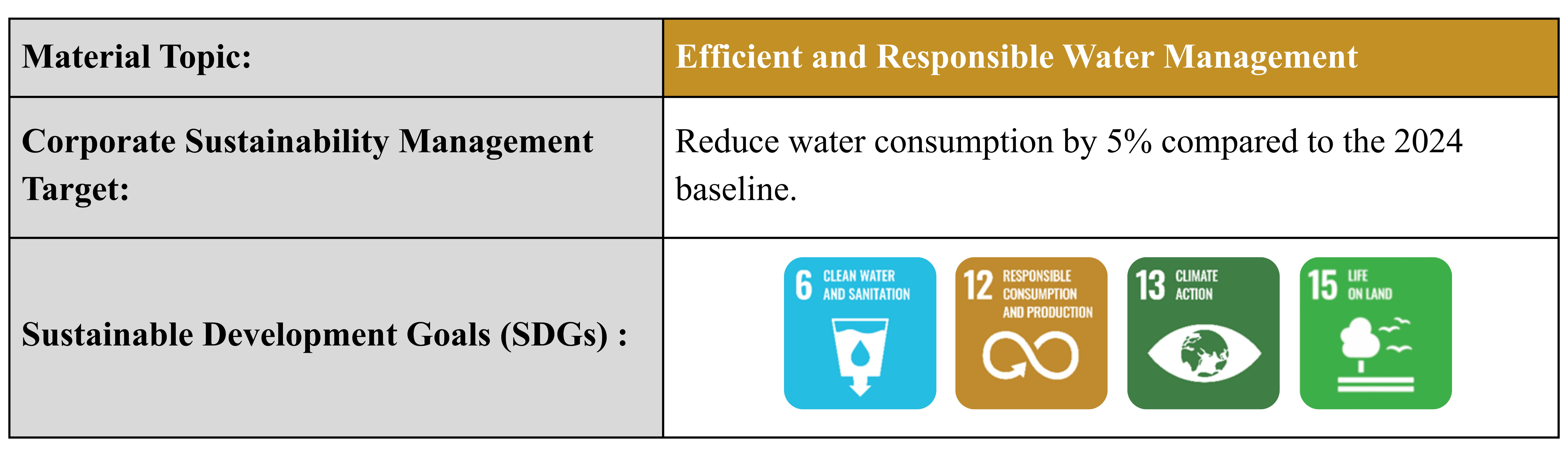
The Company places strong importance on efficient and sustainable water management, recognizing the limitations of water resources and its responsibility for potential impacts arising from business operations. Therefore, the Company has established clear water management targets to control and reduce water consumption from external sources while improving water use efficiency across all operational processes.
The Company has set a target to reduce water consumption by 5% compared with the 2024 baseline year, based on the organization’s total water usage. This target has been integrated into the Company’s systematic water management plan, which includes improving operational processes to ensure appropriate water use, reusing treated water through a Reverse Osmosis (RO) system, and encouraging participation from employees at all levels in responsible water conservation practices.
Has Set Targets
Yes
Targets
| Target | Base Year | Base Year Value | Target Year | Target Year Value | Target Change (%) | Unit |
|---|---|---|---|---|---|---|
| Reduction of water withdrawal | 2,024 | 163,730 | 2,025 | 8,186.5 | 5 | Cubic meters |
Water — Performance & Outcomes
Introduction
The Company systematically manages water resources by adhering to the principles of efficient resource utilization, environmental responsibility, and strengthening long-term resource security. The operational approach focuses on reducing water consumption from external sources while enhancing water use efficiency across all organizational processes.
Through the continuous implementation of water management measures, the Company successfully reduced water consumption by 11.86% compared with the 2024 baseline year, equivalent to a reduction of 19,422 cubic meters of water. This achievement resulted from improving operational processes to ensure appropriate water use, reusing treated water through a Reverse Osmosis (RO) system, and encouraging employee participation in responsible water conservation.
This success not only improves resource efficiency and reduces long-term operational costs but also plays an important role in minimizing environmental impacts, strengthening stakeholder confidence, and supporting the Company’s growth on the foundation of responsibility and long-term sustainability.
Has Performance Results
Yes
Performance Description
The Company systematically manages water resources by enhancing water use efficiency, reducing reliance on external water sources, and minimizing environmental impacts from its operations through the continuous implementation of concrete water management initiatives.
In 2025, the Company implemented key initiatives such as reusing treated water through a Reverse Osmosis (RO) system to circulate water back into internal operational activities. This approach improves resource efficiency, reduces wastewater discharge, and supports responsible water management. In addition, the Company improved water usage processes and related equipment to enhance efficiency, while promoting water conservation awareness among employees at all levels. As a result, the Company was able to significantly reduce water consumption and successfully achieve its established targets.
Waste Management — Overview
Introduction
The Company places great importance on the efficient and environmentally friendly management of waste and residues. Recognizing the potential impacts that may arise from improper management, the Company has established systematic policies and operational guidelines. These cover the entire process—from preventing and reducing waste at the source, proper segregation, reuse, treatment, and disposal—in accordance with technical principles and relevant legal requirements. This ensures that every step is traceable and minimizes risks to the environment and surrounding communities.
Operations begin with promoting the principles of Reduce, Reuse, and Recycle (3Rs). Waste and residues are properly segregated by type, such as general waste, recyclable waste, hazardous waste, and waste generated from production processes. Each category is stored in appropriate and safe designated areas with strict risk control measures.
For waste that cannot be reused or recycled, the Company ensures proper treatment or disposal through legally authorized contractors or agencies. In addition, a system is in place to regularly monitor and record waste and residue quantities. The collected data is analyzed to improve efficiency and continuously enhance waste management standards.
This approach reflects the Company’s commitment to responsible resource utilization, minimizing environmental impacts, and building trust among all stakeholders. At the same time, it supports sustainable development goals related to responsible production and consumption, as well as the preservation of ecological balance.
Waste — Plan & Guidelines
Introduction
The Company is committed to managing waste and residues systematically in order to reduce the amount of waste generated from operations, minimize environmental impacts, and promote the efficient use of resources. The waste management approach includes the following measures:
Implement measures to reduce general waste generated from employees’ daily consumption within the Company by promoting proper waste segregation and reducing the use of plastic.
Support initiatives that convert organic waste into animal feed in order to reduce the volume of waste sent to landfill and add value to unused resources.
Promote recycling and the reduction of waste from operational processes through proper waste segregation and improvements in work processes to minimize waste generation at the source.
Monitor, measure, and evaluate waste and residue management performance on a regular basis in order to continuously improve operational efficiency.
Has a Waste Management Plan
Yes
Plan Description
The Company places importance on systematic waste management to control and reduce the amount of waste generated from its operations, minimize environmental impacts, and promote efficient resource utilization. The Company focuses on waste reduction at the source, proper waste segregation for reuse and recycling, and continuous monitoring and evaluation. Key operational approaches are as follows:
Reducing Waste Within the Organization
The Company implements measures to reduce general waste generated from employee consumption within the organization by promoting proper waste segregation and campaigns to reduce plastic use, thereby helping decrease the volume of waste that must be disposed of.
Utilizing Organic Waste
The Company promotes initiatives to utilize organic waste, such as food scraps from consumption, by repurposing them as animal feed. This helps reduce the amount of waste sent to landfill and adds value to leftover resources.
Promoting Recycling and Reducing Operational Waste
The Company supports the segregation of recyclable waste and continuously improves operational processes to reduce waste generation at the source and enhance resource efficiency.
Monitoring and Evaluating Waste Management
The Company regularly monitors, measures, and evaluates waste management performance. The data collected are analyzed to continuously improve operational practices and support sustainable business operations alongside environmental protection.
Plan Document Link
https://shorturl.asia/CgmM8
Waste — Generation, Disposal & Recycling
Waste Generation — Introduction
The Company places strong importance on effective waste and residue management by establishing a continuous system to monitor, record, and control the amount of waste generated from operational processes. This ensures compliance with relevant requirements while minimizing environmental impacts and protecting surrounding communities.
The Company collects and maintains data on the quantity of waste and residues generated from both production processes and supporting activities within the organization. These wastes are classified by type, including non-hazardous waste, recyclable waste, and hazardous waste. The collected data is analyzed to identify trends, evaluate management efficiency, and serve as a basis for developing appropriate waste reduction measures aligned with operational characteristics.
Using evidence-based data as a foundation for management enables the Company to track progress, improve operational processes, and continuously enhance resource efficiency. The Company aims to reduce the amount of waste requiring final disposal while increasing the proportion of waste that can be reused or recycled, thereby creating added value from existing resources and supporting business growth alongside environmental responsibility.
Waste Generation, Disposal & Recycling
| Metric | Current Year | Previous Year | Two Years Ago |
|---|---|---|---|
| Total waste generated (Kilograms) | 86,959.95 | 95,238.25 | 12,872 |
| Non-hazardous waste (Kilograms) | 64,113.05 | 85,328.25 | 4,305 |
| Non-hazardous waste - Landfilling (Kilograms) | |||
| Non-hazardous waste - Incineration (with energy recovery) (Kilograms) | |||
| Non-hazardous waste - Incineration (without energy recovery) (Kilograms) | |||
| Non-hazardous waste - Other disposal operations (Kilograms) | |||
| Hazardous waste (Kilograms) | 22,846.9 | 9,910 | 8,567 |
| Hazardous waste - Landfilling (Kilograms) | |||
| Hazardous waste - Incineration (with energy recovery) (Kilograms) | |||
| Hazardous waste - Incineration (without energy recovery) (Kilograms) | |||
| Hazardous waste - Other disposal operations (Kilograms) | |||
| Total reused/recycled waste (Kilograms) | 3,060.4 | 4,569.2 | 4,305 |
| Reused/Recycled non-hazardous waste (Kilograms) | 3,060.4 | 4,569.2 | 4,305 |
| Reused non-hazardous waste (Kilograms) | |||
| Recycled non-hazardous waste (Kilograms) | 3,060.4 | 4,569.2 | 4,305 |
| Reused/Recycled hazardous waste (Kilograms) | |||
| Reused hazardous waste (Kilograms) | |||
| Recycled hazardous waste (Kilograms) |
Waste — Targets
Introduction
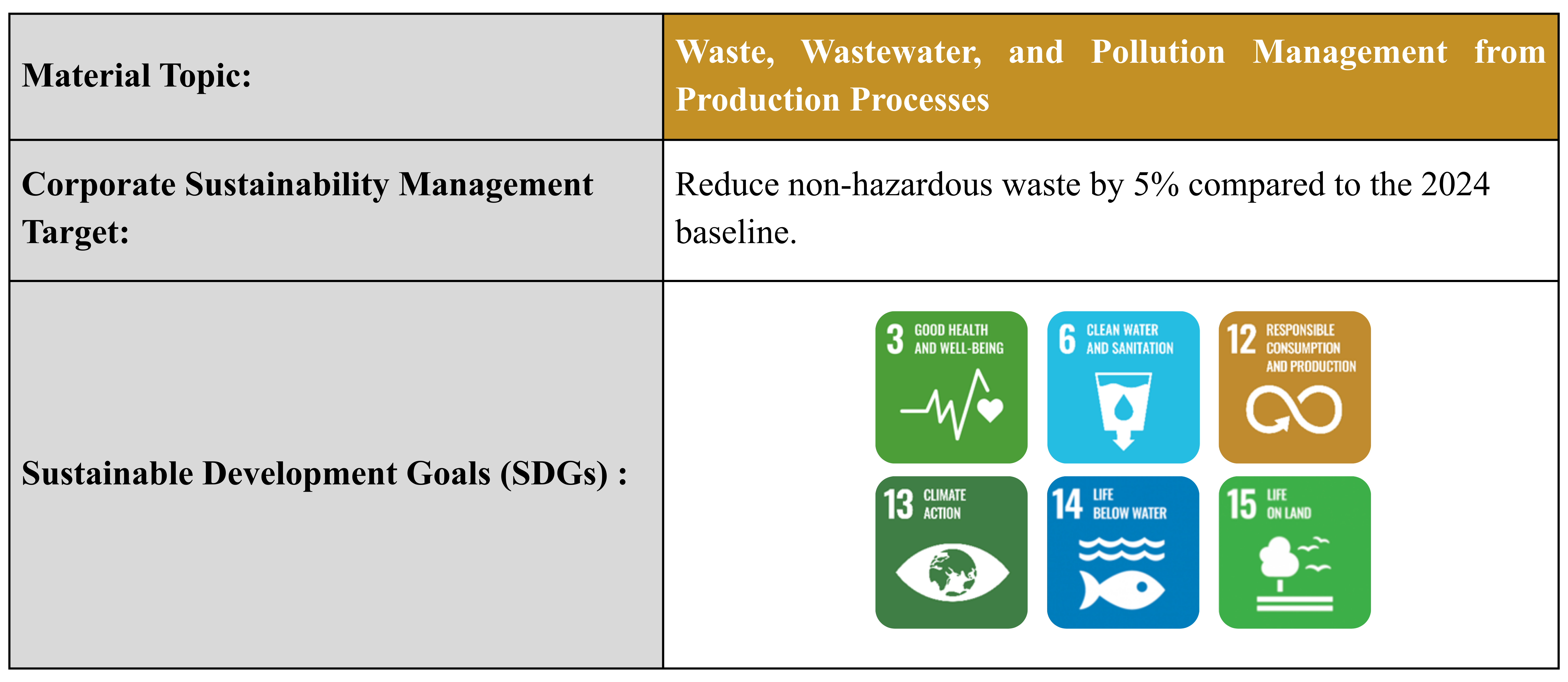
The Company places strong importance on systematic waste and residue management by focusing on reducing waste generation at the source, using resources efficiently, and minimizing the amount of waste that requires final disposal. At the same time, the Company strictly complies with relevant legal requirements and standards in order to control environmental impacts and build confidence among stakeholders.
In 2025, the Company set a target to reduce non-hazardous waste by 5% compared with the 2024 baseline year, covering waste generated from both core operational processes and supporting activities within the organization. This target reflects the Company’s commitment to improving resource efficiency and strengthening waste management practices in alignment with responsible business growth. To achieve this goal, the Company integrates the principles of Reduce, Reuse, and Recycle (3Rs) into operational processes at all levels. Key performance indicators and regular monitoring systems have also been established to collect data for analysis, evaluation, and continuous operational improvement.
Establishing clear targets along with a systematic monitoring process serves as an important mechanism to drive the organization toward more efficient resource utilization and reduced environmental impact.
Has Set Targets
Yes
Targets
| Waste Type | Disposal Approach | Target | Base Year | Base Year Value | Target Year | Target Year Value | Target Change (%) | Unit |
|---|---|---|---|---|---|---|---|---|
| Non-hazardous waste | 2759 · Description: Recycle · 2760 · Description: Landfilling | Reduce waste volume | 2,024 | 85,328.25 | 2,025 | 4,266.41 | 5 | Kilograms |
Waste — Performance & Outcomes
Introduction
The Company systematically drives waste and residue management by emphasizing waste reduction at the source, proper waste segregation, and increasing the proportion of waste recovery and reuse. These efforts aim to enhance resource efficiency and minimize environmental impacts at every stage of operations.
In 2025, through the continuous implementation of these measures, the Company successfully reduced non-hazardous waste by 24.86% compared with the 2024 baseline year, equivalent to a reduction of 21,215.20 kilograms. This achievement resulted from improvements in operational processes to reduce losses, the promotion of effective waste segregation, and increased efforts to reuse or recycle waste materials.
This success in reducing non-hazardous waste not only helps lower waste management costs and reduce the volume of waste requiring final disposal, but also reflects responsible and transparent management practices. It demonstrates the Company’s commitment to creating long-term value while maintaining balanced business growth across economic, social, and environmental dimensions.
Has Performance Results
Yes
Performance Description
The company has continuously implemented projects and activities to support the goal of reducing waste, including:
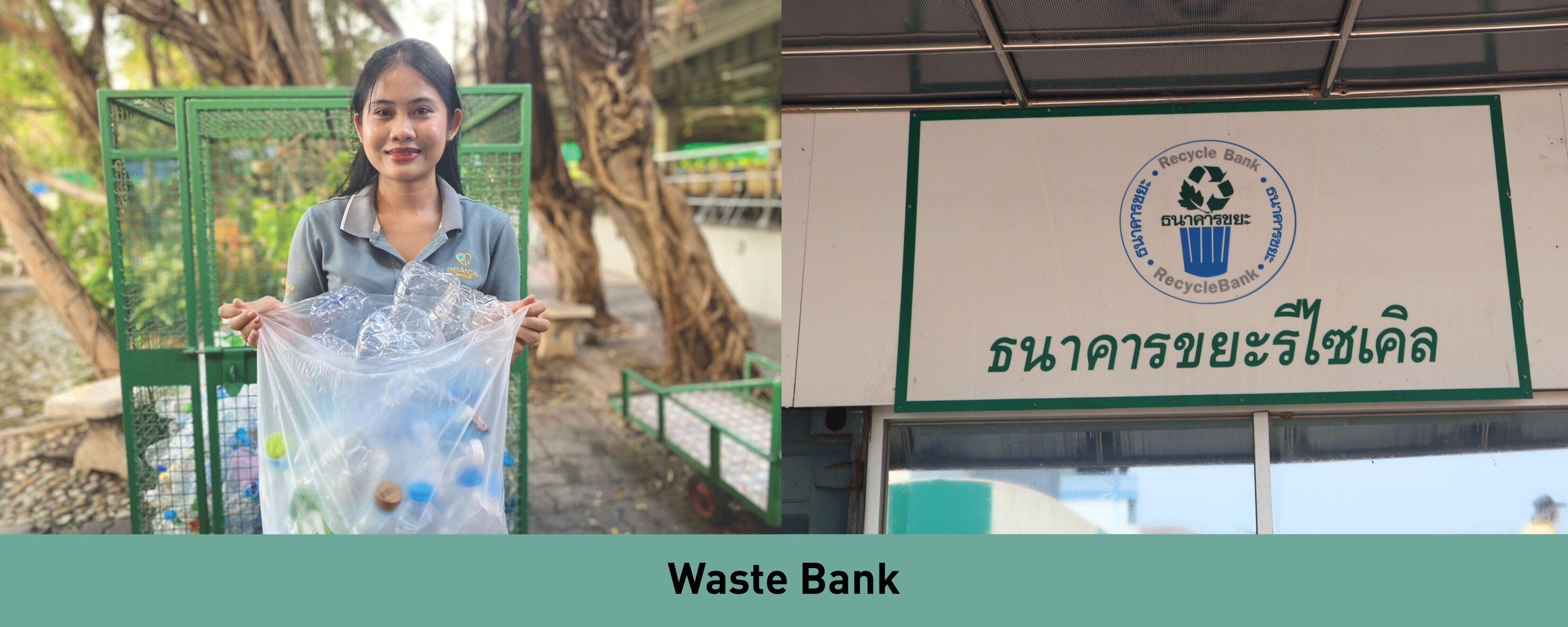
Project | Waste Bank |
Objective | The Company has established the “Waste Bank” project to promote quality of life and cultivate environmental responsibility among employees within the organization. The initiative aims to reduce waste generation and ensure proper, systematic, and traceable waste management. In addition, it encourages employee participation in effective waste segregation while creating motivation through opportunities to earn supplementary income from everyday waste management practices. |
Operational Approach | The Waste Bank serves as a central hub for collecting and depositing recyclable waste from employees within the organization. Participants can deposit recyclable materials or reusable items instead of receiving cash directly. The deposited waste is evaluated based on predetermined rates, and its value is recorded as a balance in the depositor’s account according to the established conditions. All collected waste is systematically sorted before being transferred to recycling shops or buyers for proper recycling processes. This project not only helps reduce the amount of waste generated within the organization but also acts as an important mechanism for promoting sustainable resource management and encouraging tangible environmental participation. |
Performance Results | In 2025, the project received strong cooperation from employees and successfully collected a total of 1,236.40 kilograms of recyclable waste. This result reflects increased awareness and collaboration in reducing waste and managing resources more efficiently |
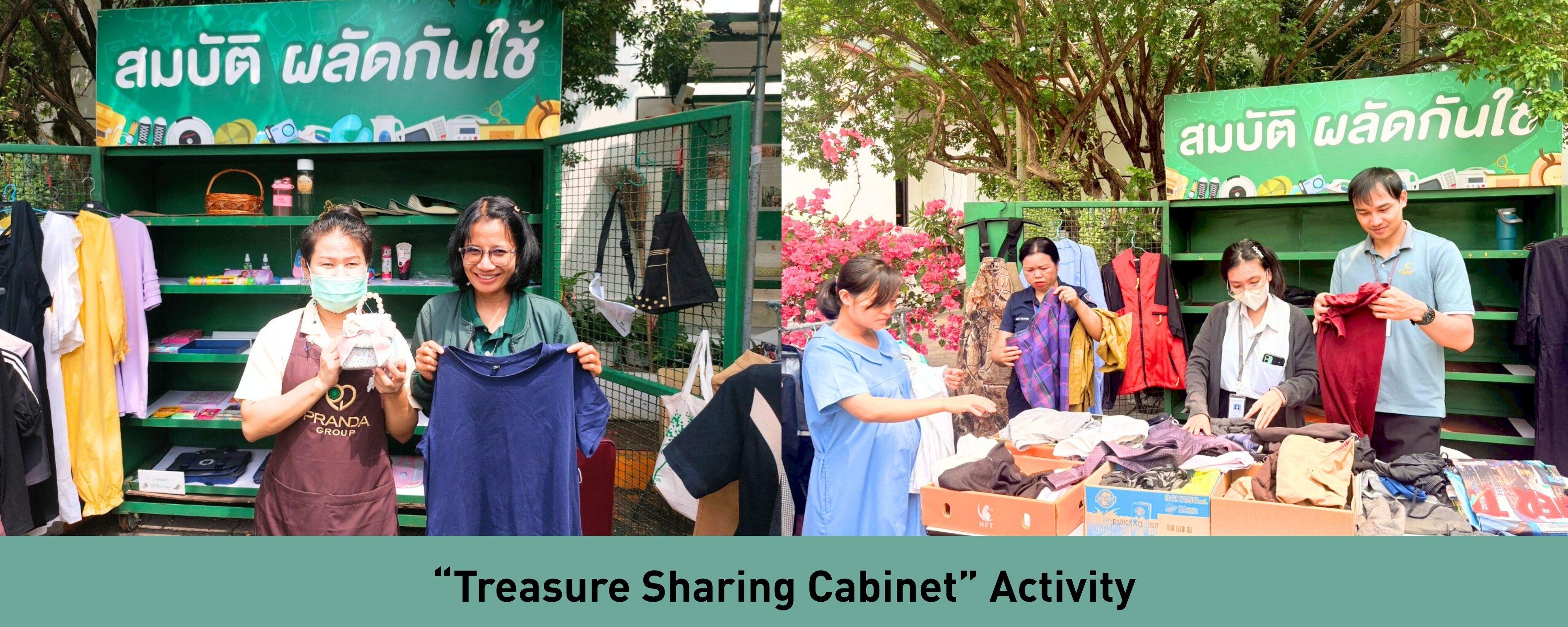
Activity | Sharing Treasure Cabinet |
Objective | To promote responsible and efficient resource utilization based on the 3Rs principles (Reuse, Reduce, Recycle) and to foster a culture of sharing within the organization. The initiative aims to encourage sustainable environmental stewardship while strengthening collaboration among employees. |
Operational Approach | The Company has established a designated space called the “Sharing Treasure Cabinet”, where employees can bring items that are still in good condition but no longer in use—such as clothing, shoes, or other household items—to exchange or pass on to others. The activity is conducted under the concept “For Us, For Friends, For the Planet.” It helps extend the lifecycle of resources, reduce waste generation, and cultivate a culture of sharing within the organization. |
Performance Results | In 2025, the Company organized this activity 8 times and conducted 2 donation events, with a total of 685.36 kilograms of items collected. This resulted in an estimated reduction of 1,371 kilograms of carbon dioxide equivalent (kgCO2e) in greenhouse gas emissions. The activity received strong participation from employees, both as donors and recipients, helping strengthen positive relationships within the organization while simultaneously reducing environmental impacts. |
Activity | Show & Share Lifestyle Gen S |
Objective | To encourage employees to recognize that people of all ages can become “Gen S” (Generation Sustainability) by adopting environmentally responsible behaviors in their daily lives. |
Operational Approach | The Company encourages employees to share environmentally friendly lifestyle practices, such as carrying reusable bags, using personal water bottles or tumblers, turning off water and electricity when not in use, carpooling, or finishing all food on their plates. Participants are invited to take photos of their sustainable lifestyle activities and share them through designated channels to receive small souvenirs. This activity helps inspire others and encourages broader participation across the organization. |
Performance Results | The activity received positive responses from employees, resulting in continuous participation and helping promote behavioral changes toward more environmentally friendly lifestyles. |

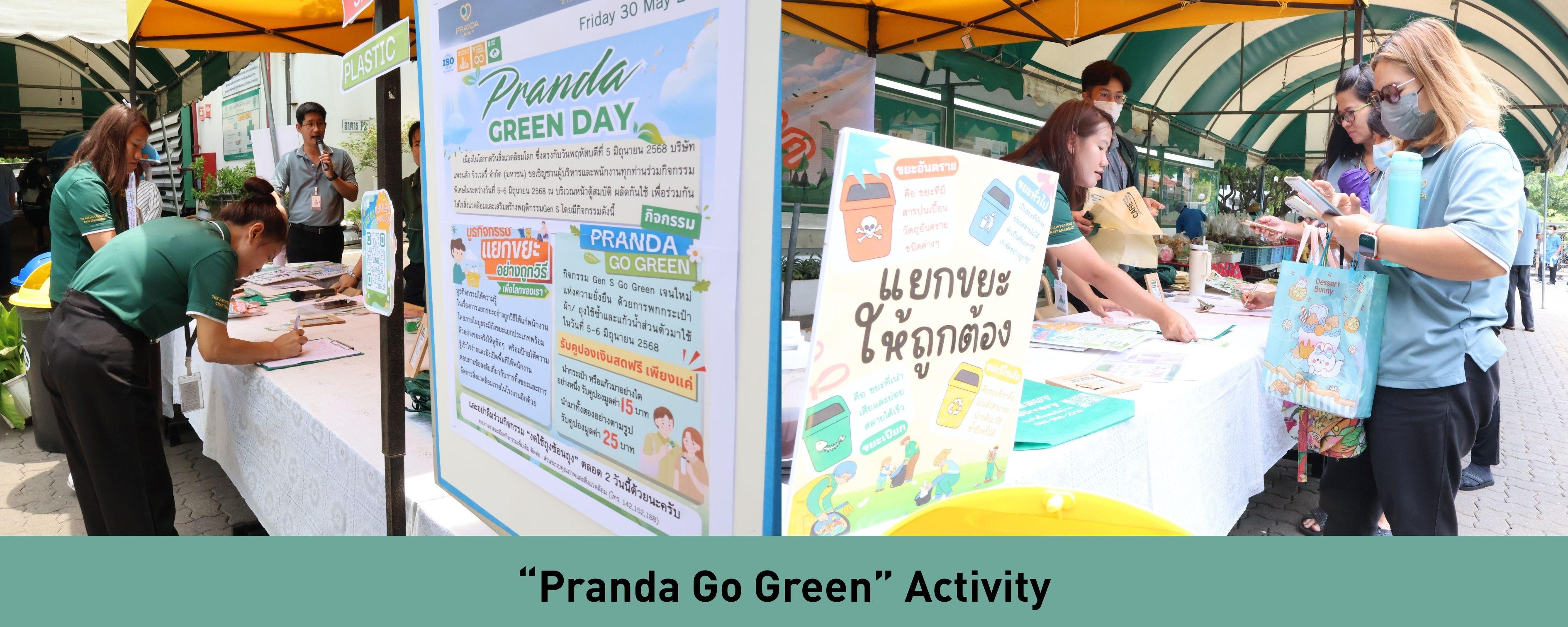
Activity | Pranda Go Green |
Objective | To campaign for the reduction of single-use plastics within the organization, such as plastic bags, plastic food containers, and plastic bottles. |
Operational Approach | The Company encourages employees to bring their own reusable cups and personal bags for use within the workplace. Participants in the campaign can redeem coupons for use at stores within the factory, providing an incentive to reduce reliance on single-use plastics. |
Performance Results | The activity received strong cooperation from employees and has continuously helped raise awareness about reducing single-use plastic consumption within the organization. |
Greenhouse Gas — Overview
Introduction
The Company places strong importance on systematic greenhouse gas (GHG) management, recognizing the impact of greenhouse gas emissions on climate change and the role of the business sector in contributing to mitigation efforts. Therefore, the Company has integrated greenhouse gas assessment and management practices into its ongoing operational processes in order to enhance efficiency and transparency in environmental management.
The Company has prepared and assessed its Carbon Footprint for Organization (CFO) in accordance with the standards established by the Thailand Greenhouse Gas Management Organization (Public Organization). This assessment covers the collection and calculation of greenhouse gas emissions from various organizational activities, including electricity consumption, fuel usage, transportation, and related supporting activities. This approach ensures that the overall greenhouse gas emissions profile of the organization is comprehensively and systematically represented.
Implementing this approach enables the Company to clearly identify sources of greenhouse gas emissions and use the data to analyze and establish appropriate emission reduction measures. The information also serves as a baseline for monitoring progress and continuously improving operational efficiency. This framework therefore acts as an important mechanism for supporting efficient energy use, reducing environmental impacts, and strengthening stakeholder confidence, while enabling balanced and sustainable business growth in the long term.
GHG — Plan & Guidelines
Has a GHG Management Plan
Yes
Plan Description
The Company has established a systematic greenhouse gas (GHG) management plan to control and reduce emissions from operational activities. The plan focuses on improving energy efficiency, transitioning to environmentally friendly technologies, and increasing the proportion of renewable energy usage. This initiative forms part of the Company’s climate change risk management and supports sustainable business operations in the long term.
Key implementation approaches include:
1. Management of greenhouse gas emissions from operational vehicle use
The Company promotes a transition toward Electric Vehicles (EVs)for operational use. In 2025, the Company increased the number of EVs while reducing the use of gasoline-powered vehicles. As a result, the proportion of EV usage increased from 12.5% in 2024 to 25% of the total vehicle fleet. This initiative helps reduce greenhouse gas emissions associated with operational transportation.
2. Improving the energy efficiency of air-conditioning systems
The Company has implemented measures to improve the energy efficiency of its air-conditioning systems by replacing damaged or end-of-life units with energy-efficient air conditioners. Additionally, refrigerants with Low Global Warming Potential (Low GWP)are selected to reduce climate impact.
3. Enhancing lighting system efficiency
The Company has undertaken a lighting efficiency improvement project by replacing fluorescent lamps with LED lighting. This initiative increases energy efficiency, reduces electricity consumption, and lowers greenhouse gas emissions from operations.
Plan Document Link
https://shorturl.asia/gO9sS
GHG — Emissions
Introduction
The company prioritizes the systematic management and reduction of its greenhouse gas emissions to mitigate the impacts of climate change and support sustainable business operations. This is achieved by integrating greenhouse gas management into its environmental policy, international environmental management systems, and the operational plans of each business group.
The company conducts a Carbon Footprint for Organization (CFO) assessment according to the standards and guidelines of the Thailand Greenhouse Gas Management Organization (TGO) to determine the quantity and sources of greenhouse gas emissions in Scopes 1-3 comprehensively. The assessment results are used as a database to set appropriate and trackable greenhouse gas emission reduction targets and measures.
Based on past performance, the company has implemented concrete greenhouse gas emission reduction measures, such as improving energy efficiency and reducing electricity consumption, managing resources and work processes efficiently, reducing waste and unnecessary resource use, and improving operational processes to align with environmental principles. This has enabled the company to reduce its greenhouse gas emissions in Scopes 1-3 according to its set targets.
The company's greenhouse gas management operations are further supported by various certified standards, such as ISO 14001:2015, ISO 9001:2015, Green Industry Level 3 certification, Corporate Carbon Footprint certification, and certification from the Responsible Jewellery Council (RJC). These enhance the efficiency, transparency, and reliability of greenhouse gas management across all processes.
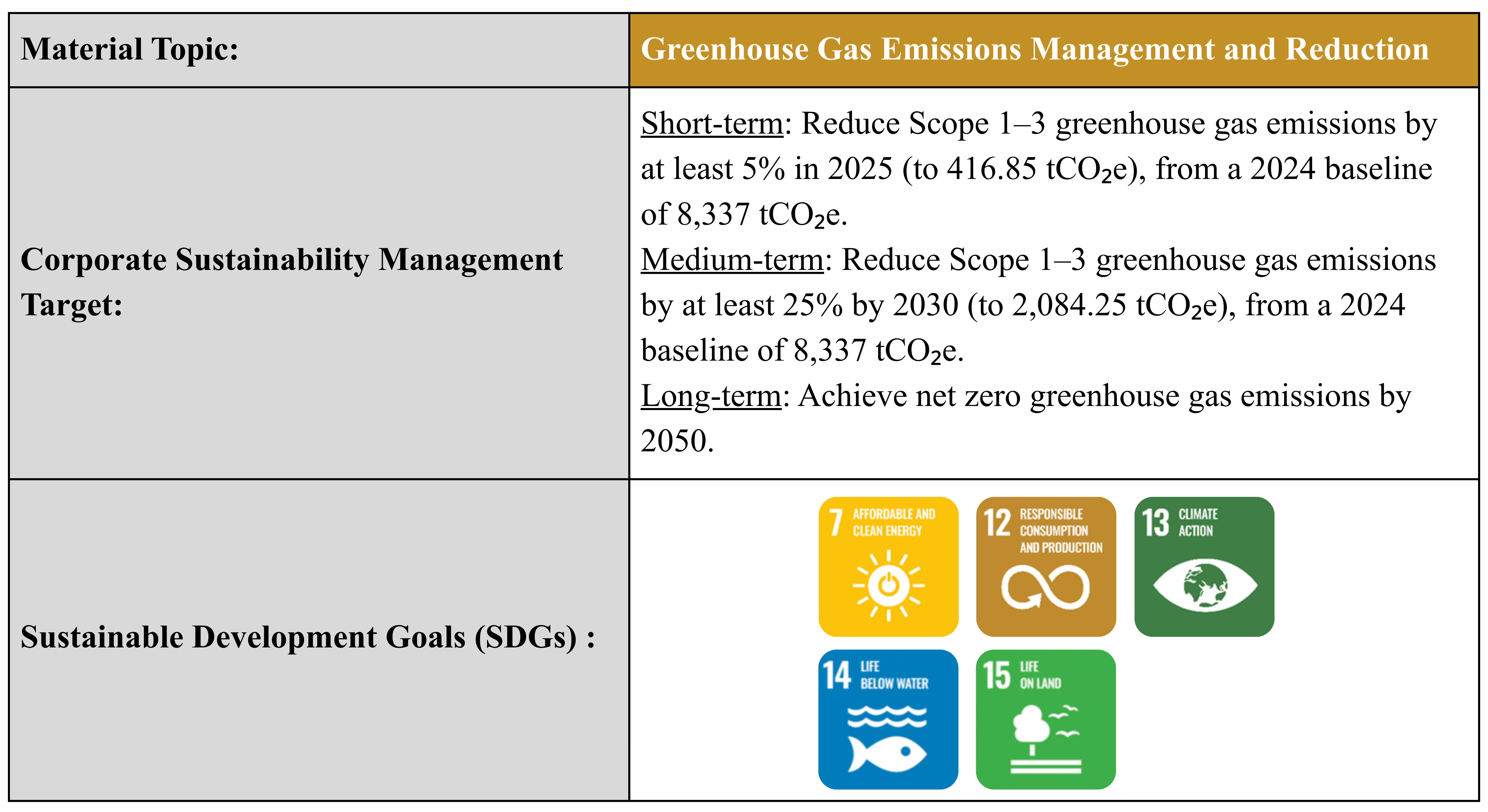
The company will continue to monitor, review, and revise its greenhouse gas emissions, and develop and upgrade emission reduction measures to suit the business context. This is to support the achievement of short-term, medium-term, and long-term greenhouse gas emission reduction targets, including the goal of net-zero emissions by 2050.
GHG Emissions
| Metric | Current Year | Previous Year | Two Years Ago |
|---|---|---|---|
| Total GHG emissions (Metric tonnes of carbon dioxide equivalent) | 4,822.73 | 8,337 | 4,899 |
| Total greenhouse gas emissions 1 (Metric tonnes of carbon dioxide equivalent) | 443.05 | 467 | 479 |
| Total greenhouse gas emissions 2 (Metric tonnes of carbon dioxide equivalent) | 2,565.72 | 3,411 | 3,324 |
| Total greenhouse gas emissions 3 (Metric tonnes of carbon dioxide equivalent) | 1,813.96 | 4,459 | 1,096 |
GHG — Emissions Verification
Introduction
The company prioritizes the accuracy, reliability, and transparency of its greenhouse gas emission data. Verification of greenhouse gas emissions is a systematic part of the company's climate change management process.
The company compiles its Carbon Footprint for Organization (CFO) data, covering greenhouse gas emissions in scopes 1-3, according to the standards and guidelines of the Thailand Greenhouse Gas Management Organization (TGO). Data is systematically collected, verified, and stored from operational activities across all business groups.
For the company's greenhouse gas emission reduction performance in 2025, the company will have its emission data verified by an independent external agency, V Green KU Co., Ltd., to confirm its accuracy and completeness. This verification is scheduled for February 2026. Therefore, the disclosed data is based on the company's own compiled data and has not yet undergone verification.
This verification will enhance the reliability of the company's greenhouse gas emission data and support its use in monitoring and evaluating performance, comparing it to a baseline year, and setting future greenhouse gas emission reduction targets and measures. As well as disclosing information to stakeholders transparently and in accordance with good corporate governance principles,
The company will use the verification results to continuously improve its data collection processes and greenhouse gas management, in order to enhance the efficiency of greenhouse gas emission reduction and support the achievement of the net-zero emissions target by 2050.
Emissions Verified by a Third Party
Yes
Verifying Body
3181
GHG — Principles & Standards
Introduction
The Company recognizes that climate change is a critical issue that may affect long-term business operations. Therefore, it has established a systematic approach to greenhouse gas (GHG) management, referencing relevant principles and standards to ensure that its operations are clear, transparent, verifiable, and capable of building confidence among stakeholders.
The Company prepares and assesses its Carbon Footprint for Organization (CFO) in accordance with the guidelines of the Thailand Greenhouse Gas Management Organization (Public Organization). The assessment covers Scope 1–3 greenhouse gas emissions, enabling the Company to comprehensively identify the sources and quantities of emissions from various activities. The resulting data is used as a foundation for setting targets, planning strategies, and implementing appropriate emission reduction measures that align with the Company’s operational characteristics.
This management approach is implemented alongside the ISO 14001:2015 Environmental Management System, as well as initiatives to improve energy and resource efficiency. These efforts aim to effectively control and reduce greenhouse gas emissions from operational processes under the principle of continuous improvement.
In addition, the Company utilizes the CFO assessment results to monitor, verify, and report its performance on a regular basis. This reflects the Company’s commitment to responsibility and transparency, while also establishing a long-term target to achieve Net Zero Emissions by 2050 (B.E. 2593). This direction is an important step in strengthening competitiveness and reducing climate-related risks in the future.
Principles & Standards Applied
| Standard |
|---|
| 2671 |
GHG — Targets
Introduction
The company prioritizes the systematic management and reduction of greenhouse gas emissions to support sustainable business operations and climate change adaptation. The company sets greenhouse gas emission reduction targets covering Scopes 1–3, based on the Carbon Footprint for Organization (CFO) assessment guidelines from the Thailand Greenhouse Gas Management Organization (TGO), using 2024 as the base year, with an estimated emission volume of 8,337 tons of carbon dioxide equivalent (tonCO2e).
The company has set three phases for greenhouse gas emission reduction as follows:
Short-term target (2025)
The company aims to reduce Scope 1–3 greenhouse gas emissions by at least 5% by 2025, equivalent to a reduction of approximately 416.85 tonCO2e, compared to the base year 2024.
Medium-term target (2030)
The company aims to reduce Scope 1–3 greenhouse gas emissions by at least 25% by 2030, equivalent to a reduction of approximately 2,084.25 tonCO2e, compared to the base year 2024.
Long-term target (2050)
The company is committed to achieving net-zero emissions by 2050 through ongoing greenhouse gas emission reduction measures, improved energy efficiency, and process improvements. Efficient resource management and consideration of appropriate additional measures in the future.
These targets reflect the company's commitment to contributing to climate change mitigation and provide a key framework for driving environmental operations in line with long-term sustainable growth.
Has Set GHG Targets
Yes
GHG Targets — Net Zero
Net Zero Targets
| Emission Scope | TGO Certification | Base Year | Base Year Emissions | Near-term Target Year | Near-term Target Value | Near-term Target Change (%) | Long-term Target Year | Long-term Target Value | Long-term Target Change (%) | Target Year | Target Year Emissions | Target Change (%) | Unit | Per Unit (Intensity) | Per Unit — Please Specify |
|---|---|---|---|---|---|---|---|---|---|---|---|---|---|---|---|
| 2716 | Net zero | 2,024 | 8,337 | 2,030 | 2,084.25 | 25 | 2,050 | 8,337 | 100 | 2,030 | 2,084.25 | 25 | Metric tonnes of carbon dioxide equivalent | Branch | Branch |
GHG — Performance & Outcomes
Introduction
The Company systematically manages greenhouse gas (GHG) emissions by integrating climate-related management into its operational plans and organizational risk management framework. This approach aims to effectively control and reduce the impacts of climate change.
Based on the assessment of the Carbon Footprint for Organization (CFO), which covers Scope 1–3 greenhouse gas emissions in accordance with the guidelines of the Thailand Greenhouse Gas Management Organization (Public Organization), the Company’s performance in 2025 shows a 42.15% reduction in greenhouse gas emissions compared with the 2024 baseline year. This achievement results from improvements in energy efficiency, efficient resource management, operational process enhancements, and the continuous and systematic monitoring of greenhouse gas emission data.
These results not only demonstrate progress toward the Company’s short-term targets but also establish an important foundation for strengthening competitiveness, reducing environmental risks, and building stakeholder confidence. Ultimately, these efforts support the Company’s long-term goal of achieving Net Zero Emissions by 2050 (B.E. 2593).
Has Performance Results
Yes
Performance Description
The company systematically manages greenhouse gas emissions and environmental issues within the framework of its environmental policy and greenhouse gas management plan. The focus is on reducing the impact of business operations on climate change, while simultaneously enhancing operational standards across all aspects of the organization.
The company has received “Green Industry” certification, Level 3, from the Ministry of Industry. This demonstrates a clear environmental management system with defined policies, plans, and measures to reduce environmental impacts, including concrete and trackable greenhouse gas management.
In addition, the Company has been certified under ISO 14001:2015, the international standard for environmental management systems. This certification reflects the Company’s capability to identify, control, and reduce environmental impacts arising from its operational activities, including the effective management of greenhouse gas emissions in compliance with relevant requirements.
In terms of quality management, the Company has obtained ISO 9001:2015 certification. This standard supports operations through well-defined and standardized processes, quality control, and continuous improvement, which also serve as an important foundation for enhancing environmental management efficiency.
The Company has also received certification for its Carbon Footprint for Organization (CFO) in accordance with the guidelines of the Thailand Greenhouse Gas Management Organization (Public Organization). The assessment covers Scope 1–3 greenhouse gas emissions, reflecting transparency, accuracy, and credibility in greenhouse gas emissions data. The results serve as an important database for setting targets and implementing emission reduction measures at various stages.
As a jewelry and gemstone business operator, the Company has also been certified by the Responsible Jewellery Council (RJC). This certification demonstrates the Company’s commitment to responsible business practices throughout the value chain, taking into account resource management, environmental responsibility, and the confidence of customers and stakeholders.
These certifications and achievements are the result of the Company’s continuous implementation of projects and measures, such as improving energy efficiency, managing resources efficiently, and systematically monitoring and evaluating greenhouse gas emissions. These efforts form an important foundation for driving the organization toward its goal of achieving Net Zero Emissions by 2050 (B.E. 2593), while supporting balanced and sustainable long-term growth.
Environmental Legal Incidents
Introduction
In 2025, the Company did not encounter any incidents related to violations of environmental laws, regulations, or requirements. There were also no cases where the Company’s operations caused negative environmental impacts.
The Company is committed to strict compliance with all relevant laws and regulations. Its environmental management is conducted under internationally recognized standards, such as ISO 14001:2015, with regular monitoring, inspections, and environmental risk assessments. These practices aim to prevent and minimize the likelihood of incidents that could affect the environment, surrounding communities, and stakeholders.
The absence of violations or negative environmental impacts reflects the effectiveness of the Company’s internal management and governance systems, as well as its strong commitment to conducting business responsibly, transparently, and with continuous consideration for long-term environmental sustainability.
Legal Violation Incidents
| Metric | Current Year | Previous Year | Two Years Ago |
|---|---|---|---|
| Number of cases or incidents of legal violations or negative environmental impact (cases) | 0 | 0 | 0 |
Other Environmental Management
Plan Description
The Company places importance on conducting business alongside the conservation of natural resources and biodiversity. Plans and measures have been established to reduce impacts on ecosystems in areas related to its operations, covering responsible raw material sourcing, waste management, and strict compliance with environmental laws and regulations.
1. Responsible Raw Material Sourcing
The Company has set a target that 100% of key raw materials must come from legal sources and be traceable. Supplier selection and evaluation are conducted based on environmental and social responsibility criteria. In addition, suppliers are required to comply with relevant laws concerning the use of natural resources in order to prevent sourcing from areas that may negatively affect ecosystems or protected areas.2. Hazardous Waste and Wastewater Control and Management
The Company has established a systematic management system for hazardous waste and wastewater, operating in strict compliance with relevant environmental laws and standards. Wastewater quality is monitored and tested before discharge into the environment, and hazardous waste is handled and disposed of through licensed waste management providers. These measures ensure that 100% of hazardous waste and wastewater discharged into the environment comply with legal requirements.
Through these plans and measures, the Company is able to reduce environmental impacts and support the conservation of biodiversity in areas related to its operations in a sustainable manner.
Employee Management — Overview
Introduction
The Company recognizes that employees are valuable human capital who play a crucial role in driving competitiveness, business continuity, and long-term sustainable growth. Therefore, the Company manages its human resources strategically under the principles of fairness, transparency, and respect for human rights. This approach covers the entire human resource management cycle, including recruitment, development, performance evaluation, employee retention, and workforce risk management, in order to strengthen organizational capabilities and prepare the Company to adapt to future changes.
The Company treats all employees equally and without discrimination, while complying with relevant Thai labor laws and international labor standards. These practices aim to protect labor rights and promote a safe, fair, and supportive working environment that enhances employees’ quality of working life. The Company employs both permanent and contractual employees across core and supporting functions, with a total workforce of 1,969 employees. Clear employment structures, roles, responsibilities, and reporting lines are established to ensure efficient operations in line with good governance principles and the expectations of stakeholders under internationally recognized labor and human rights assessment frameworks.
Employment and Workforce Structure
The Company promotes equal employment opportunities and non-discrimination by considering knowledge, competencies, and experience as key criteria in recruitment and employment decisions. Appropriate wages, compensation, and benefits are provided in compliance with applicable laws to ensure employees receive fair and comprehensive benefits.
Employee Development and Capability Retention
The Company is committed to continuously developing employees’ skills, knowledge, and capabilities through training programs, knowledge transfer, and skill enhancement initiatives aligned with job responsibilities. These efforts support career advancement and strengthen the organization’s long-term competitiveness.
Occupational Health, Safety, and Working Environment
The Company provides a safe and suitable working environment by systematically assessing and managing occupational health, safety, and employee health risks. Regular safety training and awareness programs are conducted to prevent workplace accidents and occupational illnesses.
Labor relations and employee engagement
The company promotes open and constructive communication, encouraging employees to express their opinions, propose improvements, and raise concerns through appropriate and transparent channels. This approach helps strengthen positive labor relations and fosters a work environment that supports mutual growth.
Employees — Plan & Guidelines
Introduction
The Company strategically manages its human resources to support competitiveness, business continuity, and long-term sustainable growth. This approach focuses on human capital development, workforce risk management, and the establishment of effective management systems covering the entire human resource management cycle, while complying with labor laws and ensuring fair protection of employees’ rights.
1. Workforce Planning and Organizational Structure Management
The Company develops both short-term and long-term workforce plans by considering corporate strategy, business plans, and risk factors that may affect workforce readiness. This ensures that the Company has an adequate number of employees with appropriate skills to respond to changes in working patterns, technological developments, and the competitive business environment.
2. Employee Capability Development and Skill Enhancement
The Company systematically promotes the development of employees’ knowledge, competencies, and skills through training programs covering both technical and behavioral skills, including teamwork and collaboration. These initiatives aim to enhance productivity and prepare employees for future changes.
3. Leadership Development and Succession Planning
The Company places importance on leadership development at all levels and establishes succession plans for strategically important positions. This approach helps ensure management continuity, reduce risks associated with reliance on key personnel, and strengthen long-term business stability.
4. Performance Management to Enhance Organizational Effectiveness
The Company utilizes a performance management system to set goals, monitor progress, and evaluate employee performance in alignment with the organization’s direction and strategies. Performance data are analyzed to support employee development, workforce planning, and overall operational improvement.
5. Organizational Culture and Employee Engagement
The Company promotes an organizational culture that supports effective performance, open communication, and employee participation. Feedback mechanisms and internal activities are provided to strengthen employee engagement, collaboration, and readiness to drive the organization toward its long-term goals.
Has an Employee Management Plan
Yes
Plan Description
1. Fair Employee Compensation
The Company establishes its compensation structure based on the principles of fairness, transparency, and competitiveness. Compensation is determined in accordance with the legally prescribed minimum wage in each location, as well as job characteristics, responsibilities, position level, skills, and employees’ experience. This approach supports the retention and development of capable personnel while strengthening the organization’s competitiveness and long-term stability.
The Company is committed to providing compensation that supports a reasonable standard of living and adheres to the principle of equal pay for work of equal value. Compensation considerations are linked to a clear and fair performance evaluation system, which serves as the basis for salary adjustments, performance-based incentives, and career advancement opportunities. This approach helps motivate employees, strengthen employee engagement, and support the sustainable growth of the organization.
2. Employee Training and Development
The Company places strong emphasis on the continuous development of employees’ knowledge, skills, and capabilities. Systematic training and development programs are provided in both theoretical and practical aspects to enhance expertise in alignment with the Company’s strategy and evolving business environment. The Company also promotes a learning culture and adaptability among employees at all levels.
Training plans are developed and reviewed annually, taking into account required competencies, current and future skill development needs, and emerging knowledge relevant to business operations. Training programs cover technical skills, behavioral competencies, and teamwork capabilities to improve work efficiency, support career progression, and strengthen the organization’s long-term competitiveness.
3. Promoting Employee Relations and Engagement
The Company emphasizes building strong employee relationships and encouraging participation at all levels by promoting open, transparent, and respectful communication. This approach helps foster mutual understanding, trust, and collaboration in driving the organization toward its long-term goals.
The Company provides structured mechanisms and channels for employees to share feedback, suggestions, and grievances through accessible, secure, and fair processes. These channels enable employees to express their views on workplace issues, employment conditions, and the working environment appropriately.
In addition, the Company supports employee engagement through internal activities, employee representative mechanisms, and continuous internal communication processes. These initiatives help strengthen employee engagement, a sense of belonging, and effective collaboration. The Company also prioritizes employees’ overall well-being by providing welfare benefits and facilities that support a balanced work-life environment, aiming to enhance employees’ physical, mental, and social well-being.
Feedback and participation from employees are used to support the development of human resource policies, HR management practices, and workplace environments, thereby strengthening organizational effectiveness and supporting sustainable business operations in the long term.
4. Occupational Health and Safety
The Company places high importance on occupational health and safety and strictly complies with relevant laws and standards to prevent and reduce the risks of workplace accidents and work-related illnesses. Clear policies, targets, and key performance indicators for occupational health and safety have been established and integrated into the Company’s risk management and operational processes.
The Company implements a systematic approach to occupational health and safety management based on proactive prevention, risk assessment, and employee participation at all levels. These practices aim to create a safe, hygienic, and supportive working environment that enhances employees’ quality of working life and supports the Company’s sustainable business operations in the long term.
Plan Document Link
https://shorturl.asia/ha9bl
Plan Areas
| Plan Area |
|---|
| Fair employee compensation |
| Employee training and development |
| Promoting employee relations and participation |
| Occupational health and safety in workplace |
Employees — Workforce
Introduction
The Company places strong importance on respecting human rights and ensuring fair labor practices throughout the entire employment and human resource management process. This commitment aims to create a working environment that promotes equality, mutual respect, and employee engagement within the organization.
As of 2025, the Company had a total of 1,969 full-time employees, including 24 employees with disabilities. This reflects the Company’s commitment to promoting equal employment opportunities and encouraging the participation of individuals from diverse backgrounds within the workplace.
Workforce — Introduction
The Company carries out its employment practices under policies and guidelines that take into account human rights, equality, and fair treatment of workers. It provides equal employment opportunities without discrimination and considers the suitability of each position in relation to the knowledge, skills, and experience of personnel in order to support efficient and sustainable human resource management.
In addition, the Company manages its workforce in alignment with its business direction and systematically monitors employment data to reflect the organizational workforce structure and distribution in a transparent manner. Details of the number of employees are presented as follows.
Employees with Disabilities — Introduction
The Company places importance on promoting equal employment opportunities for persons with disabilities under the principles of respect for human dignity and non-discrimination. It supports persons with disabilities in utilizing their knowledge, abilities, and skills in appropriate occupations, enabling them to earn stable incomes and maintain a good quality of life.
In this regard, the Company strives to create a working environment that facilitates the participation of persons with disabilities, allowing them to play a role in the organization’s operations and contribute to creating sustainable value for society. Details of the number of employees with disabilities are presented as follows.
Workforce Data
| Metric | Current Year | Previous Year | Two Years Ago |
|---|---|---|---|
| Total number of employees (Persons) | 1,969 | 2,109 | 2,112 |
| Number of male employees (Persons) | 613 | 643 | 653 |
| Number of female employees (Persons) | 1,356 | 1,466 | 1,459 |
| Total employment of disabled persons (people) | 24 | 27 | 28 |
| Total disabled employees (people) | 24 | 27 | 28 |
| Total male disabled employees (people) | 15 | 17 | 20 |
| Total female disabled employees (people) | 9 | 10 | 8 |
| Total disabled workers who are non-employee (people) | 0 | 0 | 0 |
| Contributions to the fund for promoting and improving the quality of life for disabled persons | 0 | 0 | 0 |
| Total number of male employees in operational level (Persons) | 569 | 597 | 596 |
| Total number of male employees in management level (Persons) | 40 | 42 | 52 |
| Total number of male employees in executive level (Persons) | 4 | 4 | 5 |
| Total number of female employees in operational level (Persons) | 1,225 | 1,338 | 1,323 |
| Total number of female employees in management level (Persons) | 129 | 126 | 134 |
| Total number of female employees in executive level (Persons) | 2 | 2 | 2 |
Employees — Remuneration & Provident Fund
Introduction
The Company has a total of 1,969 employees. In 2025, the Company paid a total of 621.40 million baht in compensation, consisting of salary, wages, overtime pay, bonuses, diligence allowances, social security payments, and provident fund contributions, etc. In addition, subsidiaries paid similar compensation to employees totaling 119.99 million baht, with a total of 411 employees.
Remuneration & Provident Fund
| Metric | Current Year | Previous Year | Two Years Ago |
|---|---|---|---|
| Total disabled employees (people) | 621,397,000 | 713,165,000 | 662,627,046.78 |
| Total male employee remuneration (Baht) | 194,323,188.86 | 221,550,224 | 203,715,178.82 |
| Total female employee remuneration (Baht) | 427,073,811.14 | 491,614,776 | 458,911,867.96 |
| Number of employees eligible to participate in PVD (persons) | 1,361 | 1,453 | 1,492 |
| Total number of employees joining employee provident fund (Persons) | 1,093 | 1,178 | 1,157 |
| Percentage of total number of employees joining employee provident fund to total number of employees (%) | 55.51 | 55.86 | 54.78 |
| Number of PVD members / Total eligible employees (%) | 80.31 | 81.07 | 77.55 |
| Total amount of provident fund contributed by the Company (Baht) | 13,571,764 | 13,115,770 | 12,876,286 |
| Total amount of provident fund contributed by employee (baht) | 13,571,764 | 14,078,020 | 13,849,396 |
Employees — Training & Development
Introduction
The Company places importance on the continuous development of employees’ knowledge, skills, and potential. Systematic training and development programs are provided, covering both academic and practical aspects to enhance expertise in alignment with the Company’s strategies, business direction, and future changes. The Company also promotes a culture of lifelong learning and supports employees at all levels in adapting to evolving work environments.
The Company establishes and reviews its training plans annually by considering required competencies, current and future skill development needs, and new knowledge relevant to business operations. The training programs cover technical skills, behavioral skills, and collaboration skills to improve work efficiency, support career advancement, and strengthen the organization’s long-term competitiveness.
In 2025, the Company organized both academic and practical training programs, including activities that encouraged collaboration within the organization and training designed to ensure equality and accessibility for employees across all groups. A total of 60 training courses were conducted, with 107 training sessions delivered. The average training hours reached 12.65 hours per employee per year, exceeding the Company’s target of 8 hours per employee per year.
Training Data
| Metric | Current Year | Previous Year | Two Years Ago |
|---|---|---|---|
| Average employee training hours (Hours / Person / Year) | 12.65 | 17.58 | 19.97 |
| Employee development and training expenses (baht) | 340,523 | 1,650,537.63 | 3,023,392.87 |
Employees — Occupational Health & Safety
Introduction
The Company places great importance on the management of occupational safety, health, and the working environment. It is committed to strictly complying with relevant laws and standards to prevent workplace accidents and occupational diseases, while promoting the well-being of employees. This serves as a fundamental basis for creating a safe working environment and fostering a strong organizational culture.
In 2025, the Company implemented proactive measures to continuously enhance safety performance, with the aim of reducing risks related to workplace accidents and work-related health impacts. The results for the year showed that there were no work-related fatalities and no reported cases of occupational diseases among workers (0 cases). This reflects the effectiveness of the Company’s occupational safety and health management system.
Occupational Health & Safety Data
| Metric | Current Year | Previous Year | Two Years Ago |
|---|---|---|---|
| Total number of lost time injury incidents by employees (Cases) | 13 | 12 | 8 |
Employees — Labour Relations
Introduction
The Company places importance on promoting employees’ quality of life, well-being, and happiness at work. In 2025, the Company conducted its first Employee Engagement Survey to establish baseline information for developing long-term human resource management and employee care strategies.
The survey covered key aspects including job satisfaction, motivation, workplace relationships, benefits and welfare, as well as the working environment. A total of 1,376 employees participated in the survey, representing 63.20% of the total workforce. The results indicated that the employee engagement level stood at 75.56%.
The Company has analyzed the survey results and used them as input for developing human resource initiatives, such as improving the working environment, enhancing benefits and welfare programs, and encouraging employee participation at all levels. These initiatives aim to strengthen employee engagement, satisfaction, and quality of work life, thereby supporting the creation of value and sustainable organizational growth in the long term.
In 2025, the Company’s voluntary employee turnover rate was 15.24%, an increase from 13.70% in 2024. The Company has analyzed this information to identify trends and incorporate it into the ongoing development of its human resource policies.
Labour Relations Data
| Metric | Current Year | Previous Year | Two Years Ago |
|---|---|---|---|
| Total voluntary resignations (Persons) | 308 | 289 | 387 |
| Male employees who voluntary resigned (Persons) | 86 | 98 | 115 |
| Female employees who voluntary resigned (Persons) | 222 | 191 | 272 |
| Percentage of employee turnover leaving the Company voluntarily (%) | 15.64 | 13.7 | 18.32 |
| Evaluation result of employee engagement | 1 | 0 | 0 |
Employees — Employee Representation
Introduction
The Company supports employees’ freedom of association and promotes their participation in developing fair and equal welfare and working environment. The Company has established a Welfare Committee to act as employees’ representatives in discussing and coordinating with the management regarding welfare and various benefits. The Committee is elected by employees and has a term of office of 2 years.
Although the company currently has no labor union, it still adheres to the principle of giving employees the right to freely form groups or apply to be members of external organizations, and has set up clear channels for receiving suggestions and complaints processes to ensure fairness and build trust within the organization.
Currently, the Welfare Committee, which consists of at least seven employee representatives, plays an important role in pushing for employee welfare arrangements to be in accordance with the law, taking care of employee benefits, fostering good relationships within the organization, and supporting smooth and efficient business operations.
Employees Are Represented Collectively
Yes
Forms of Representation
| Form |
|---|
| Welfare committee |
| Labor relations committee |
| Employee committee |
Employees — Targets
Has Set Employee Targets
Yes
Targets
| Indicator | Target Areas | Base Year | Base Year — Description | Target Year | Target Year — Description |
|---|---|---|---|---|---|
| 1.Rate of human rights risk and impact assessment 2. Number of human rights violations (cases) 3. Ratio of female executives to male executives 4. Number of labor disputes related to unfair treatment (cases) 5. Annual employee turnover rate 6. Average of 8 hours of learning and development per employee per year 7. Employee engagement rate (Employee Engagement Score) 8. Number of fatal work-related accidents 9. Number of occupational illnesses among employe | 2983 · Description: Fair employee compensation · 2984 · Description: Employee training and development · 2985 · Description: Promoting employee relations and participation · 2988 · Description: Safety and occupational health at work · 2989 · Description: Non-discrimination | 2,024 | 1. 100% of the company’s business operations are assessed for human rights risks and impacts.
2. The number of complaints or human rights violations within the organization and supply chain resulting from the company’s operations is zero.
3. The ratio of female executives to male executives is at least 50%.
4. The number of labor disputes related to unfair treatment is zero cases.
5. The employee turnover rate does not exceed 20% per year.
6. Employees receive an average of 8 hours of learning and development per person per year.
7. The number of fatal work-related accidents is zero.
8. The number of occupational illnesses among all employees is zero. | 2,025 | 1. 100% of the company’s business operations have been assessed for human rights risks and impacts.
2. The number of complaints or human rights violations within the organization and supply chain resulting from the company’s operations is zero.
3. The ratio of female executives to male executives is not less than 50%.
4. The number of labor disputes related to unfair labor practices is zero cases.
5. The employee turnover rate shall not exceed 20% per year.
6. Employees receive an average of 8 hours of learning and development per person per year.
7. The employee engagement score is not less than 85%.
8. The number of fatal workplace accidents is zero.
9. The number of work-related illnesses among all employees is zero. |
Employees — Performance & Outcomes
Introduction
1. Fair Employee Compensation
In 2025, the Company conducted performance evaluations for 100% of employees at all levels in accordance with a fair and transparent performance management approach. The evaluation process utilized the OKRs (Objectives and Key Results) framework, which covers organizational, departmental, and individual levels, as well as competency assessments of employees.
The evaluation results were used as key criteria for determining compensation in alignment with the Company’s salary structure and policies, ensuring fairness and appropriateness in relation to employees’ roles and responsibilities. The Company remains committed to continuously improving its performance evaluation processes to further enhance employee motivation and career advancement, while supporting the organization’s stable and sustainable growth.
2. Employee Training and Development
The Company places strong emphasis on the continuous development of employees’ knowledge, skills, and capabilities. In 2025, the Company organized a range of training programs covering both academic and practical aspects, as well as courses designed to strengthen collaboration within the organization. These initiatives aim to enable employees to adapt and grow together with the organization.
In addition, the Company has developed inclusive training approaches that promote equality, such as providing sign language interpreters in certain training sessions to ensure that employees with hearing impairments can participate effectively.
In 2025, the Company organized 60 training courses across 107 sessions, with 1,423 participants, representing 72.13% of the total workforce. On average, employees received 23.67 training hours per person per year.
Key Training Programs in 2025
Jewelry Business Fundamental Program
This workshop-style training program was designed to enhance a comprehensive understanding of the jewelry business. The program covered fundamental knowledge of jewelry products and gemstones, jewelry production processes from upstream to downstream, modern organizational management concepts, as well as HR management tools and performance measurement methods such as KPIs, competencies, and OKRs. It also included knowledge related to organizational standards and workplace safety.
The training emphasized knowledge transfer alongside experience sharing, enabling participants to connect their individual roles with the overall business context and effectively apply the knowledge in their work.
Program Details
Participants: 144 employees
Period: 13 – 26 February 2025
Results
Participants gained a clearer understanding of the jewelry business and organizational operational standards. The knowledge acquired was effectively applied to their work, improving operational efficiency, strengthening organizational standards, and supporting long-term sustainable development.
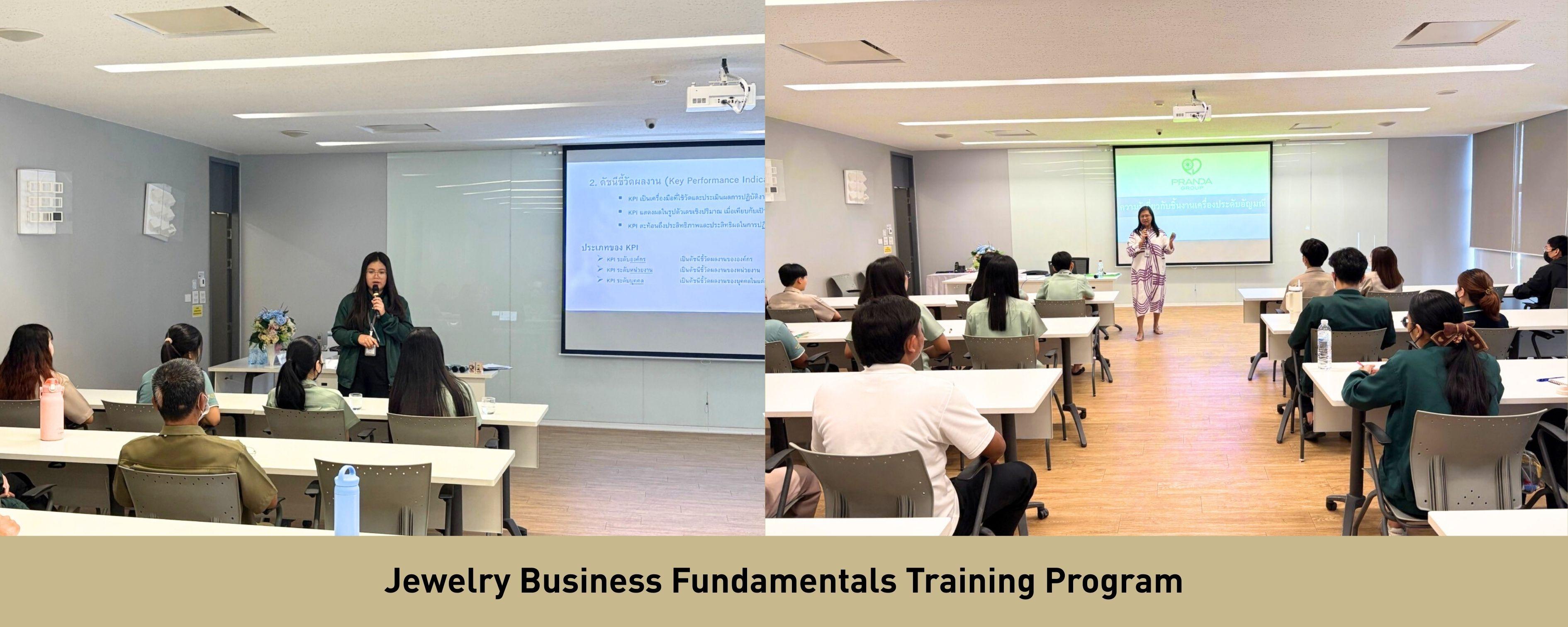
Generation Insight & Self-Development for Sustainable Growth Program
This workshop focused on building understanding of the characteristics, attitudes, and behaviors of employees from different generations (Gen B, Gen X, Gen Y, and Gen Z). The program also enhanced communication and collaboration skills among employees with different generational backgrounds and personality traits based on the DISC concept.
In addition, the program aimed to raise awareness of the 17 Sustainable Development Goals (SDGs) and the ESG framework (Environmental, Social, and Governance) to encourage employee participation in driving sustainable organizational growth.
Program Details
Participants: 697 employees
Period: 3 – 27 March 2025
Results
Participants improved their ability to communicate and collaborate effectively with colleagues from diverse generational and personality backgrounds. The knowledge gained could be applied both in the workplace and daily life, enhancing teamwork, understanding, and collaboration toward shared organizational goals.
Kick Off Transformation 2025: Seizing Opportunities to Achieve Organizational OKRs
This program formed part of the Company’s Transformation Roadmap for workforce development. It aimed to enhance employees’ capabilities to respond effectively to challenges in a highly competitive environment.
The training focused on unlocking employees’ potential, encouraging creativity, initiative, and the courage to challenge traditional working approaches. It also emphasized a shared understanding of the organization’s strategic goals and alignment between individual roles and organizational OKRs to drive strong transformation and growth.
Program Details
Participants: 74 employees
Period: May – November 2025
Results
Participants were able to apply transformation concepts and knowledge in their daily work, resulting in improved performance outcomes and enhanced efficiency at both team and organizational levels.
Logistics and Supply Chain Management Program
This training program aimed to strengthen systematic knowledge and understanding of logistics and supply chain management. The course covered the history, roles, and importance of logistics, along with activities related to warehouses and distribution centers such as warehouse types and functions, space and equipment management, workplace safety, and strategies for determining suitable factory and warehouse locations.
The training focused on applying supply chain principles in practical operations to improve process efficiency, reduce operational losses, and strengthen logistics management capabilities aligned with the organization’s business strategies.
Program Details
Participants: 126 employees
Period: March – May 2025
Results
Participants were able to effectively apply logistics and supply chain knowledge in their work, enhancing skills, operational efficiency, and the organization’s overall competitiveness.
Basic Gemology Program
This program focused on providing fundamental knowledge of gemstones, including classification, inspection, and basic analysis techniques. The objective was to enable employees to accurately assess gemstone quality according to standard practices.
The program also helped reduce operational errors, improve work accuracy, strengthen business credibility, and support the development of high-quality jewelry products with added value.
Program Details
Participants: 29 employees
Period: April 2025
Results
Participants were able to apply gemology knowledge effectively in their work, improving expertise, operational accuracy, and overall organizational quality standards.
Waste Management for Sustainable Value Creation Program
This workshop aimed to build knowledge, awareness, and understanding of waste issues and environmental impacts. It focused on proper waste segregation and management techniques, as well as the concept of Reuse and Recycle to reduce environmental impacts, improve resource efficiency, and create additional value while reducing operational costs.
The training also supported the Company’s environmental management approach and alignment with the Sustainable Development Goals (SDGs).
Program Details
Participants: 51 employees
Period: May 2025
Results
Participants gained systematic knowledge about waste management and were able to apply waste management techniques effectively in their work in accordance with ISO 14001:2015 Environmental Management System requirements. These practices contributed to environmental impact reduction, efficient resource utilization, and sustainable organizational development.
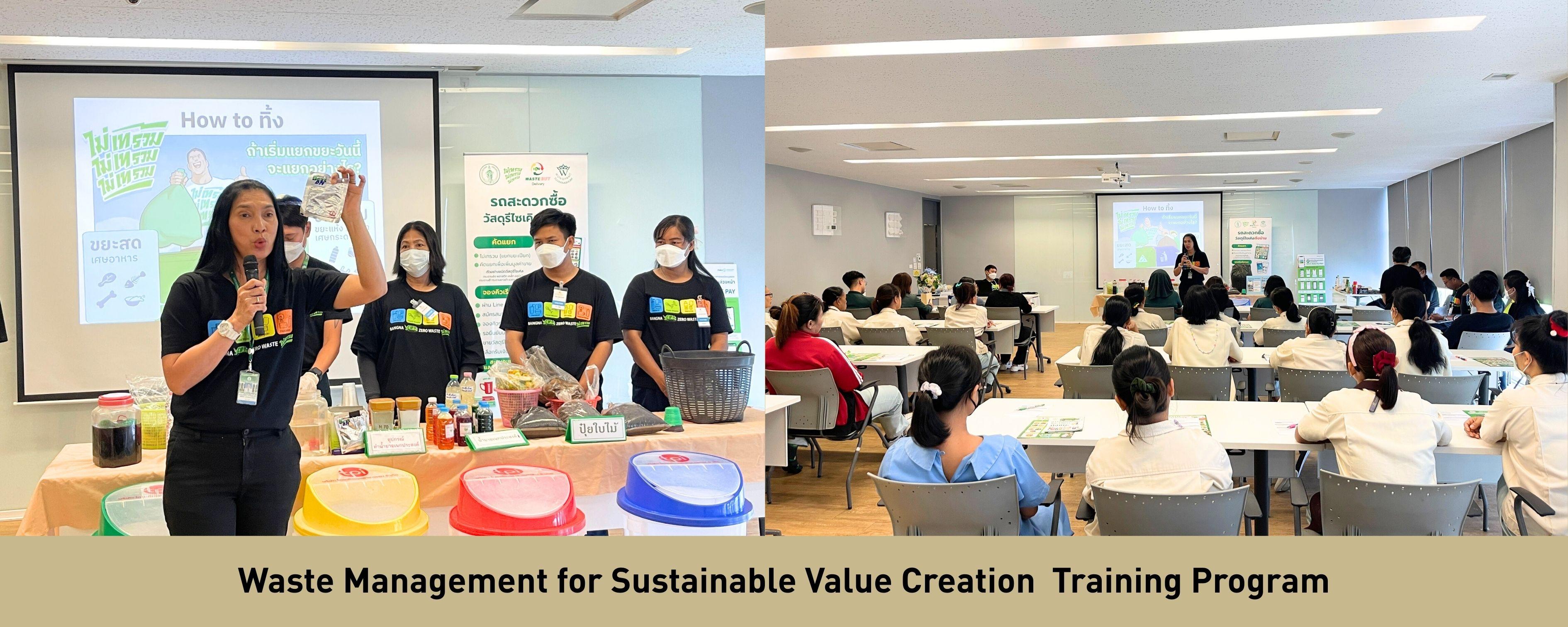
Chinnasa Meditation: Mindfulness Power for Work Effectiveness Program
This training program aimed to promote understanding of meditation practices in a simple and practical form that can be easily applied in daily life.
The program covered the fundamentals and purposes of meditation, as well as its benefits in workplace applications. It focused on enhancing mindfulness and concentration, reducing stress, improving decision-making, and supporting work-life balance, thereby promoting holistic employee development.
Program Details
Participants: 167 employees
Period: September – October 2025
Results
Participants were able to apply mindfulness and meditation techniques in both their work and personal lives, leading to more mindful working practices, improved decision-making, effective collaboration, and better work-life balance. These factors contribute to long-term employee development and sustainable organizational growth.
FUN PARTY: Building Relationships Beyond the Workplace
Objective
To strengthen relationships among executives through informal gatherings outside working hours. This initiative forms part of the organization’s Transformation Roadmap for human capital development, aiming to foster an open organizational culture that encourages learning and adaptability to future changes.
Implementation
The Company organized Fun Party activities for executives on a continuous basis. Executives from different departments were encouraged to participate in designing and presenting creative ideas for each event, resulting in diverse and unique activities.
The events also provided a platform for exchanging perspectives and experiences among executives from various functional areas. Participants were randomly grouped into different teams during each event to encourage networking, relationship building, and collaboration across departments.
The activities included games and team challenges designed to enhance planning, analytical thinking, problem-solving, and collaborative decision-making. These activities helped strengthen relationships, teamwork, and team spirit among executives.
Program Details
Participants: 74 executives
Period: June – November 2025
Results
Participants developed stronger relationships with executives from different departments and engaged in creative exchanges of ideas and experiences. The activities promoted teamwork and contributed to strengthening the organization’s culture in preparation for sustainable transformation and future challenges.
Strategic Planning Day 2026: “Survival Camp”
Objectives
This activity is designed to strengthen teamwork and creativity among executive leaders. The program focuses on fostering collaboration in solving business challenges and enhancing leadership development so that leaders can effectively guide the organization toward success amid rapidly changing market conditions.
Program Format
The activity consists of team-based missions that require strategic thinking and collaboration. Participants work together to solve complex problems and develop more effective processes. The program emphasizes leadership development, creative thinking, and teamwork to achieve the organization’s goals.
Implementation Details
Number of participants: 135 people
Implementation period: December 2025
Results
Participants demonstrated strong commitment to enhancing creativity and teamwork, which are essential factors in driving the organization toward long-term success.
3. Promoting Employee Relations and Engagement
In 2025, the Company focused on enhancing employee engagement and participation at all levels in order to strengthen employees’ sense of belonging to the organization. The Company also promoted positive relationships between supervisors and colleagues through continuous creative activities.
At the same time, the Company placed importance on providing welfare and benefits that support both quality of life and work–life balance, creating a working environment that encourages employee development and growth. These efforts are considered a key factor in retaining talented and capable employees over the long term, enabling them to play an important role in driving the organization toward sustainable success.
Key employee engagement activities in 2025 included the following:
Pranda Family’s Sport Day
Objective
The Company organized the Pranda Family’s Sport Day to strengthen relationships and unity among employees at all levels through recreational activities in a friendly atmosphere. The event helped reduce barriers between departments and foster a stronger sense of belonging within the organization.
The activity also supported employee well-being through physical exercise, which is a fundamental factor in enhancing employees’ physical and mental readiness.
Implementation
The Company organized a variety of fun sports competitions that encouraged employees from different departments to participate and collaborate as teams. The activities were designed to promote communication, coordination, and creative teamwork, while also encouraging healthy lifestyles.
Results
The event received strong participation and positive feedback from employees. It successfully strengthened employee engagement, promoted teamwork, and created a cooperative working atmosphere. The activity also reflected the Company’s commitment to caring for employees and fostering a warm organizational culture.
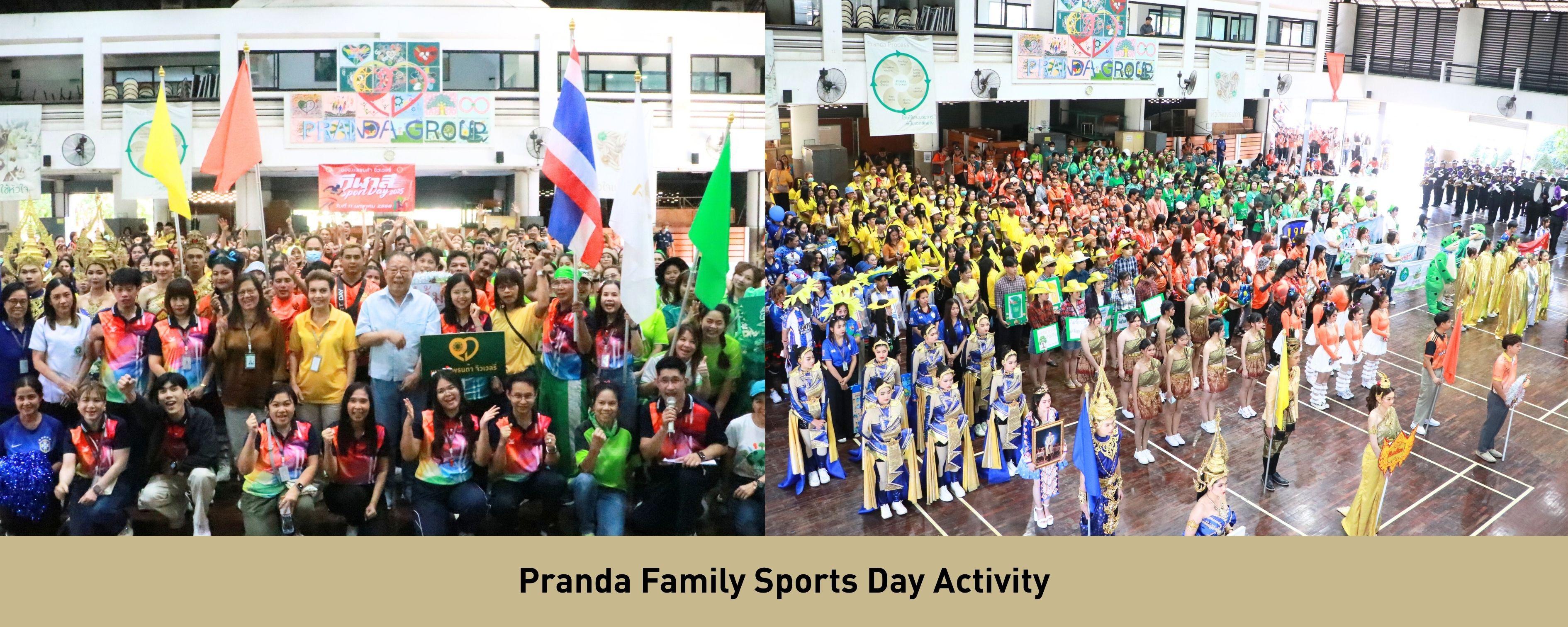
Annual Health Check-Up
Objective
The Company emphasizes preventive healthcare for employees by organizing annual health check-ups to monitor and screen potential health risks at an early stage. This initiative is part of the Company’s efforts to promote employee well-being.
The Company believes that good health is a fundamental factor in improving work performance and ensuring employees’ readiness to drive the organization’s continuous growth.
Results
In 2025, a total of 1,570 employees participated in the annual health check-up program.
The initiative increased awareness of preventive healthcare and enabled employees to monitor their personal health conditions. It also helped reduce the likelihood of illness through systematic health screening and risk assessment, enabling employees to perform their duties effectively within a workplace environment that prioritizes long-term well-being.
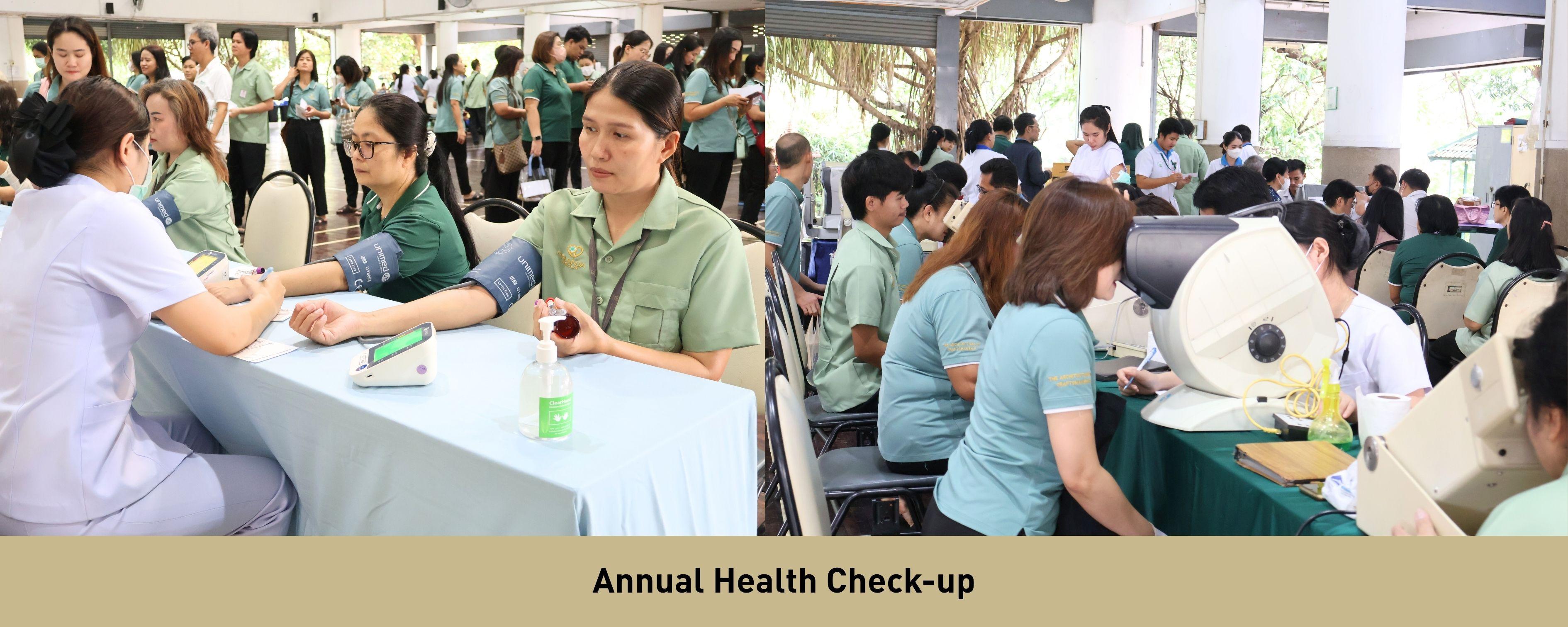
Pranda Family Happiness Festival
Objective
The Company organized the Pranda Family Happiness Festival to strengthen interactions and relationships between executives and employees at all levels during the New Year celebration. The event was also intended to express appreciation for employees’ dedication and contributions throughout the year.
The activity aimed to connect employees and their families with the organization, reflecting the Company’s culture of recognizing employees as an important part of the organization.
Implementation
The Company organized a social gathering for employees and their families, along with creative recreational activities designed to create a joyful and harmonious atmosphere within the organization. The event provided an opportunity for employees’ families to participate and experience a close connection with the organization.
Results
The event received strong positive responses, with 1,888 participants attending the celebration.
The activity successfully promoted employees’ quality of life and mental well-being, reinforcing the Company’s commitment to creating a Happy Workplace and fostering employee engagement to support long-term organizational stability and growth.
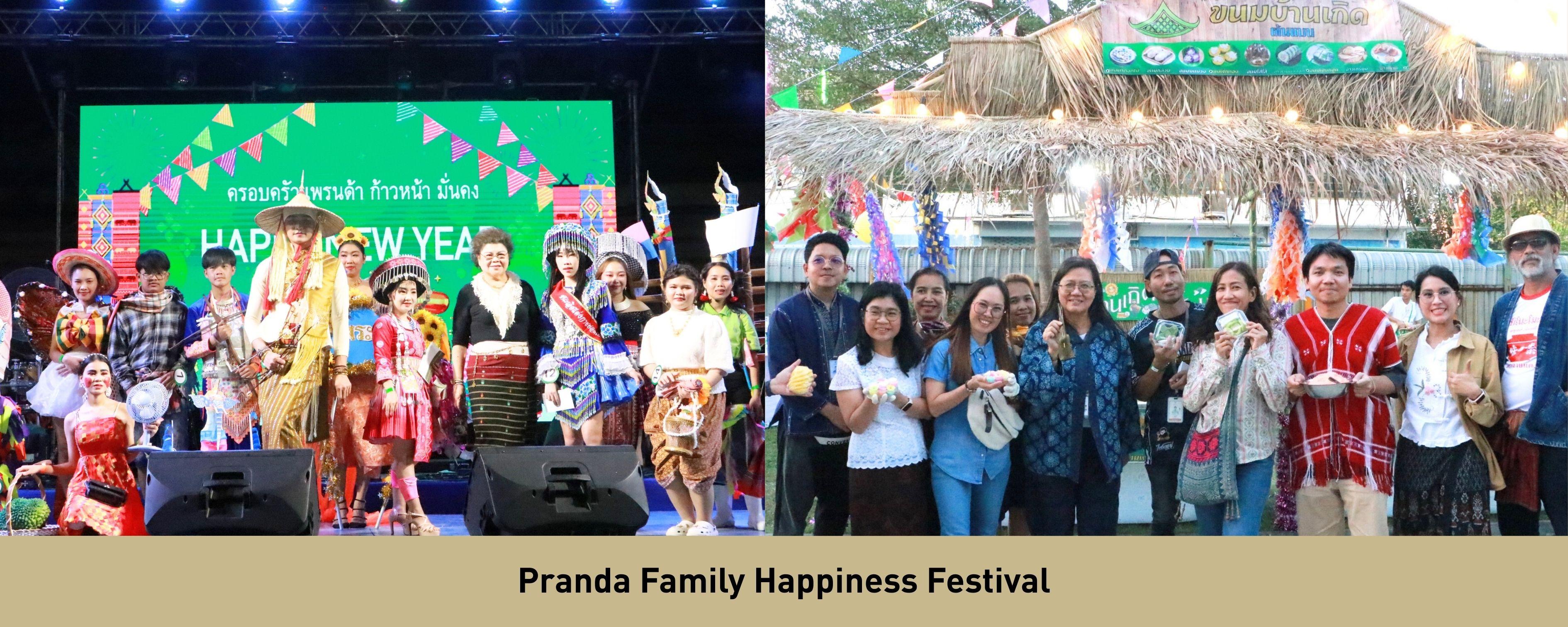
Songkran Relationship-Building Activity – Pranda Family
Objective
The Company organized the “Songkran Relationship-Building Activity – Pranda Family” to preserve Thai cultural traditions while promoting an organizational culture based on respect and mutual appreciation.
The event provided employees at all levels with an opportunity to express gratitude and respect in accordance with Thai traditions while fostering morale, good fortune for the Thai New Year, and stronger relationships within the organization.
Implementation
The company organized activities in accordance with Thai traditions for the Songkran Festival. These included merit-making by offering alms to monks, the ceremonial bathing of Buddha images, and a water-pouring ceremony to seek blessings from the founders of Pranda, all to bring good fortune to employees and the organization. In addition, the company encouraged employees to wear traditional Thai attire or floral-patterned clothing to reflect cultural identity and foster a sense of unity and harmony within the organization.
Results
The activity received enthusiastic participation from employees and helped create a joyful atmosphere within the organization. It also encouraged appreciation of Thai cultural heritage and reinforced the values of gratitude and respect, which are essential foundations for effective collaboration.
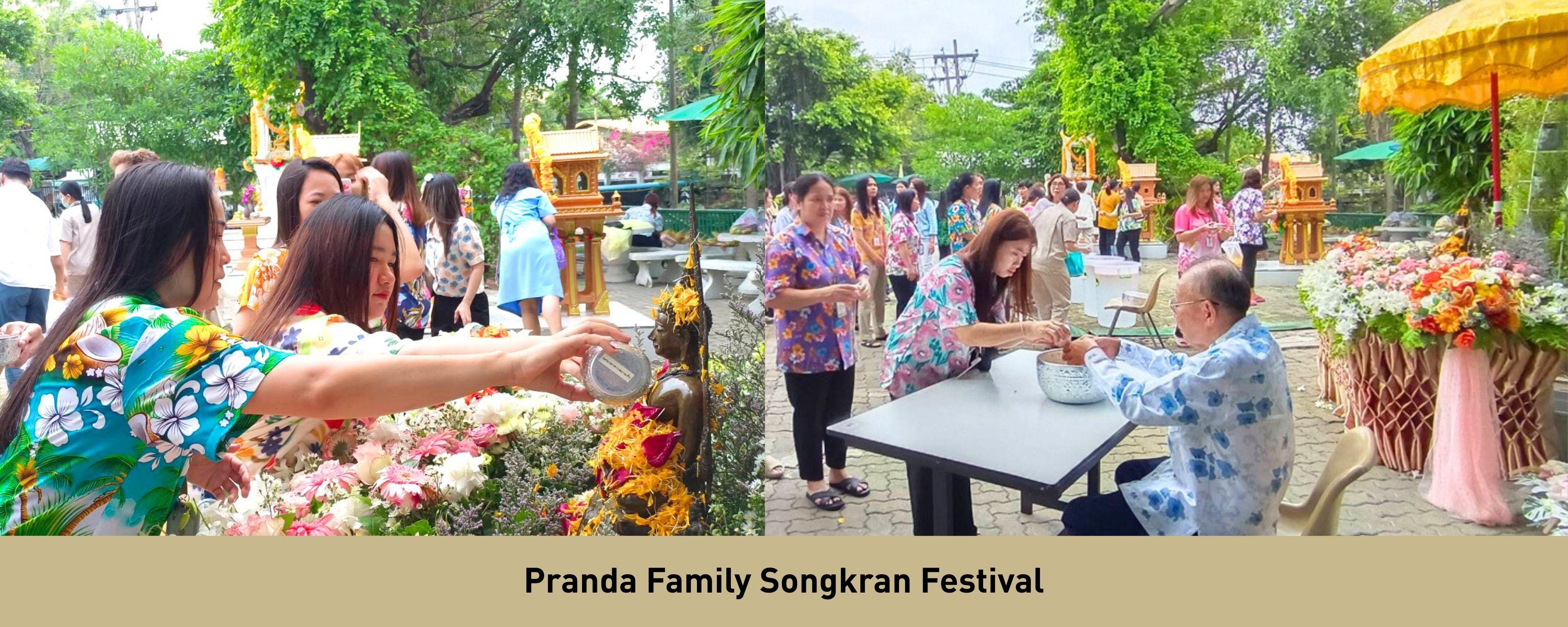
Pranda Family Honor Ring Ceremony
Objective
The Company organized the Honor Ring Ceremony to recognize and express appreciation for employees who have demonstrated dedication and long-term contributions to the organization.
The award symbolizes trust, loyalty, and shared growth between employees and the Company.
The Company recognizes employee commitment according to years of service as follows:
5 Years: “One Family”
10 Years: “Close Relatives”
20 Years: “Shared Bloodline”
30 Years: “One Heart”
35 Years: “Everlasting Bond”
Implementation
The company held a prestigious ceremony to present honor rings and gold certificates, with the founders and senior executives participating in the award presentation and extending their congratulations to the employees. The event aimed to recognize and appreciate the dedication of personnel who have contributed to the organization, while also boosting morale and inspiring employees at all levels to continuously develop and drive the organization forward together.
Results
In 2025, 132 employees received the Honor Ring Award, reflecting the Company’s success in retaining talented employees over the long term.
Breakdown by years of service:
35 Years: 30 employees
30 Years: 24 employees
20 Years: 19 employees
10 Years: 31 employees
5 Years: 28 employees
This initiative plays an important role in strengthening employee engagement and reflects the Company’s culture of recognizing employees as key drivers of sustainable growth.
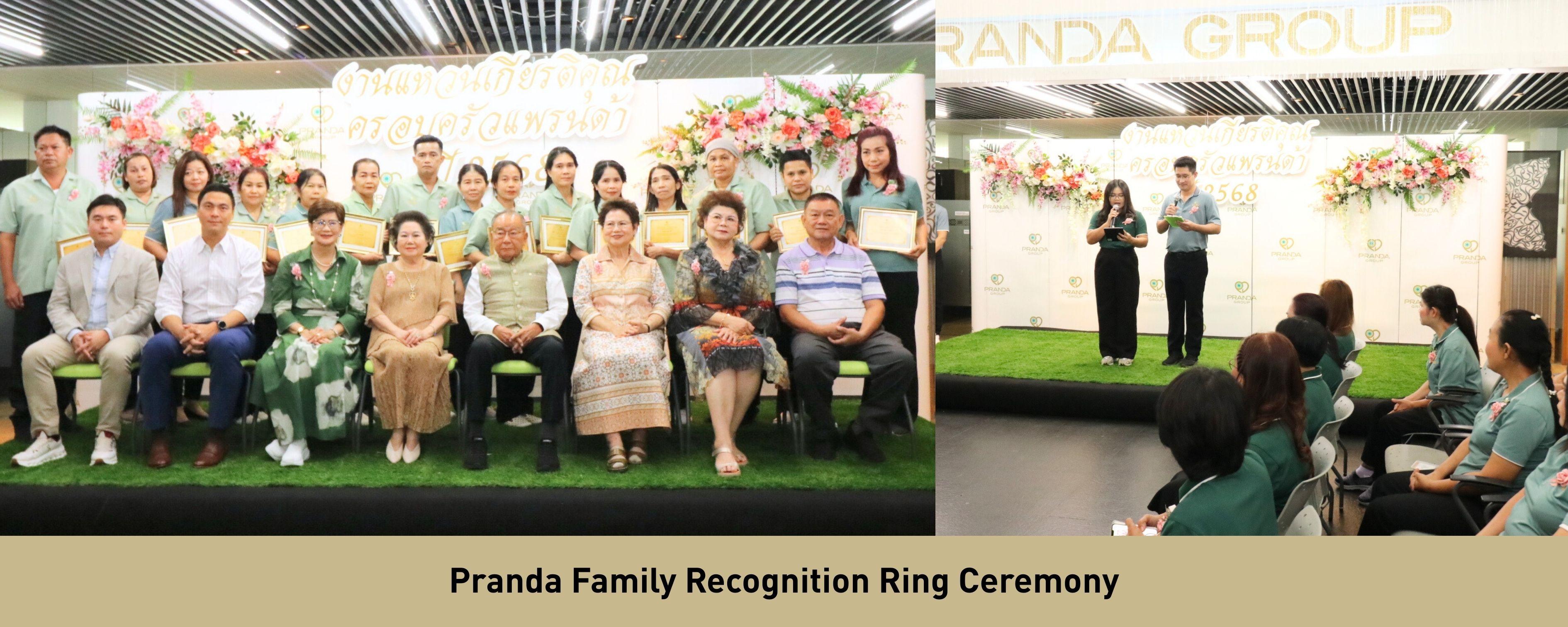
Pranda Star Award
Objective
The company established the Pranda Star Award to provide employees with the opportunity to participate in nominating and selecting colleagues who serve as positive role models and inspire others within the organization.
This award aims to recognize individuals who demonstrate a positive attitude, contribute to a supportive work environment, promote teamwork, and actively participate in organizational activities on a regular basis. It also helps reinforce a corporate culture that emphasizes collaboration and shared growth.
Selection Criteria
Recipients are selected through an employee participation process based on the following qualities:
Positive and Motivational
Dependable and Relationship-Focused
Engaged and Participative
Results
In 2025, a total of 4 Pranda Star Awards were presented, consisting of 1 Winner and 3 Runners-Up.
The award program plays an important role in strengthening a corporate culture that values employee recognition and encourages positive behaviors that support collaboration.
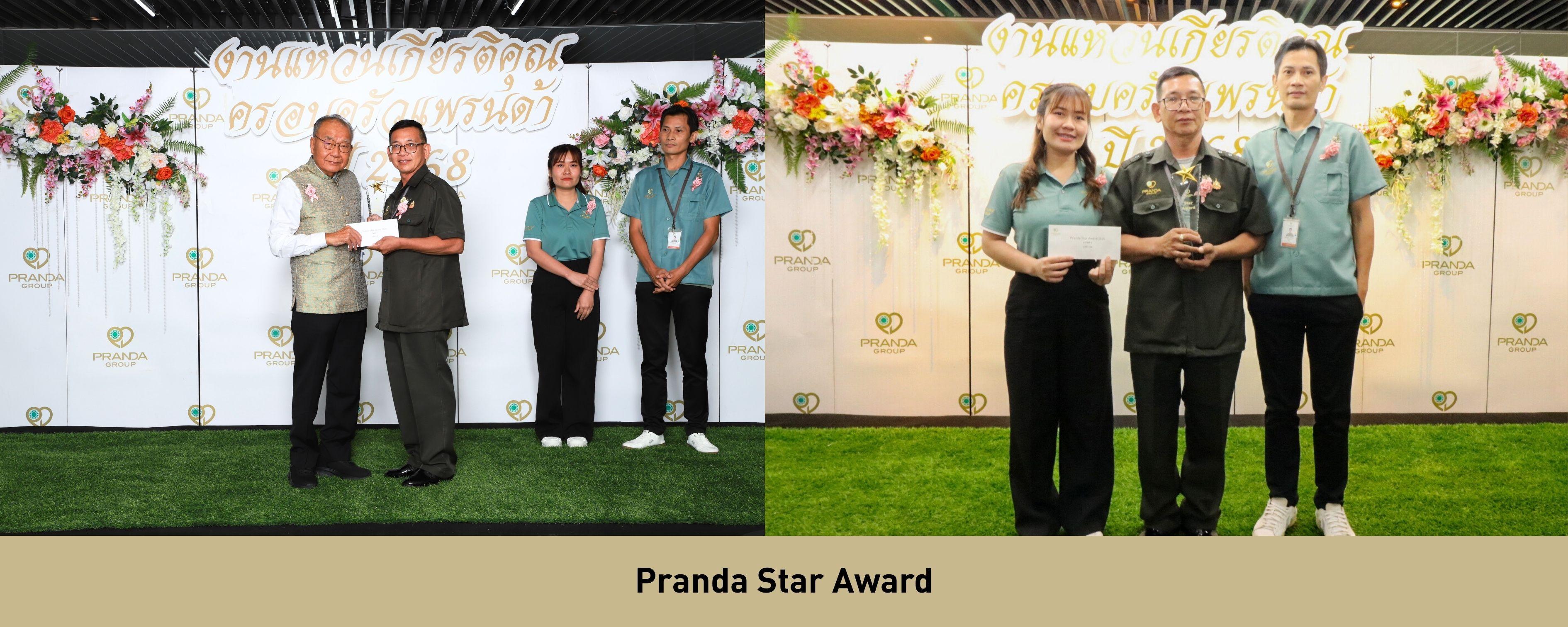
Employee Welfare for Quality of Life
The Company recognizes employees as a key resource and prioritizes improving employee well-being as a foundation for enhancing work potential and sustainable organizational growth.
Therefore, the Company provides comprehensive welfare benefits to support employees’ work–life balance in several areas, including:
Family Support
The Company established an on-site early childhood development center to support employees in caring for their children and to help reduce family burdens.
Housing and Recreational Facilities
Employee dormitories are provided for employees from other regions, along with a clubhouse and health garden to provide spaces for relaxation and promote well-being.
Financial Stability
The Company supports the establishment of a savings cooperative to encourage financial discipline and long-term financial security for employees.
These welfare initiatives reflect the Company’s commitment to improving employees’ quality of life and strengthening morale, employee engagement, and sustainable growth for both employees and the organization.
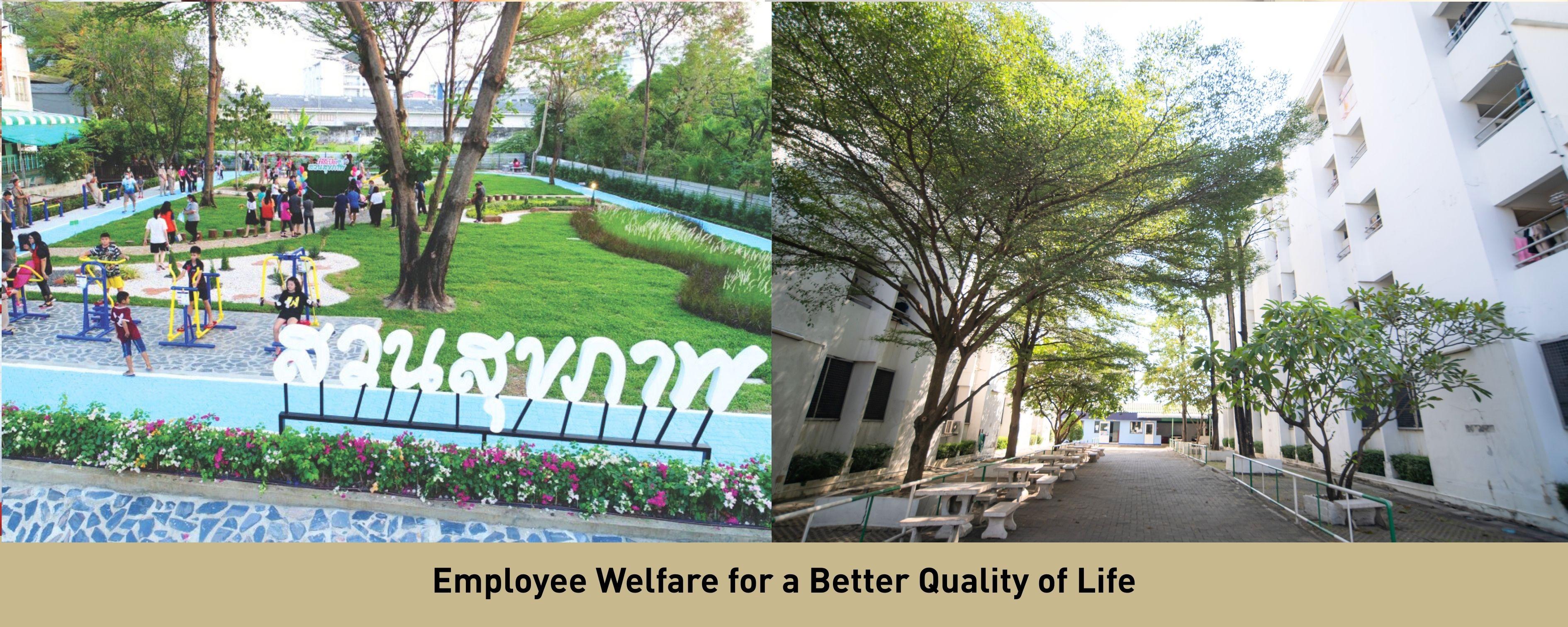
Promotion of Family Institution
The company has established an on-site early childhood development center for preschool-aged children within the workplace. This initiative helps ease the burden on employees while supporting appropriate childcare. It also contributes concretely to improving the quality of life of employees and their families.
Residential Facilities and Recreational Areas
The company provides employee dormitories to facilitate staff who come from other regions. In addition, a clubhouse and health garden are available as spaces for relaxation and to promote the well-being of employees.
Promotion of Financial Stability
The company supports the establishment of a savings cooperative to encourage financial discipline and help employees build long-term financial stability.
Overall, the provision of these welfare benefits reflects the company’s commitment to comprehensively caring for and improving the quality of life of its employees. This plays an important role in strengthening morale, fostering organizational commitment, and supporting the sustainable growth of both employees and the organization.
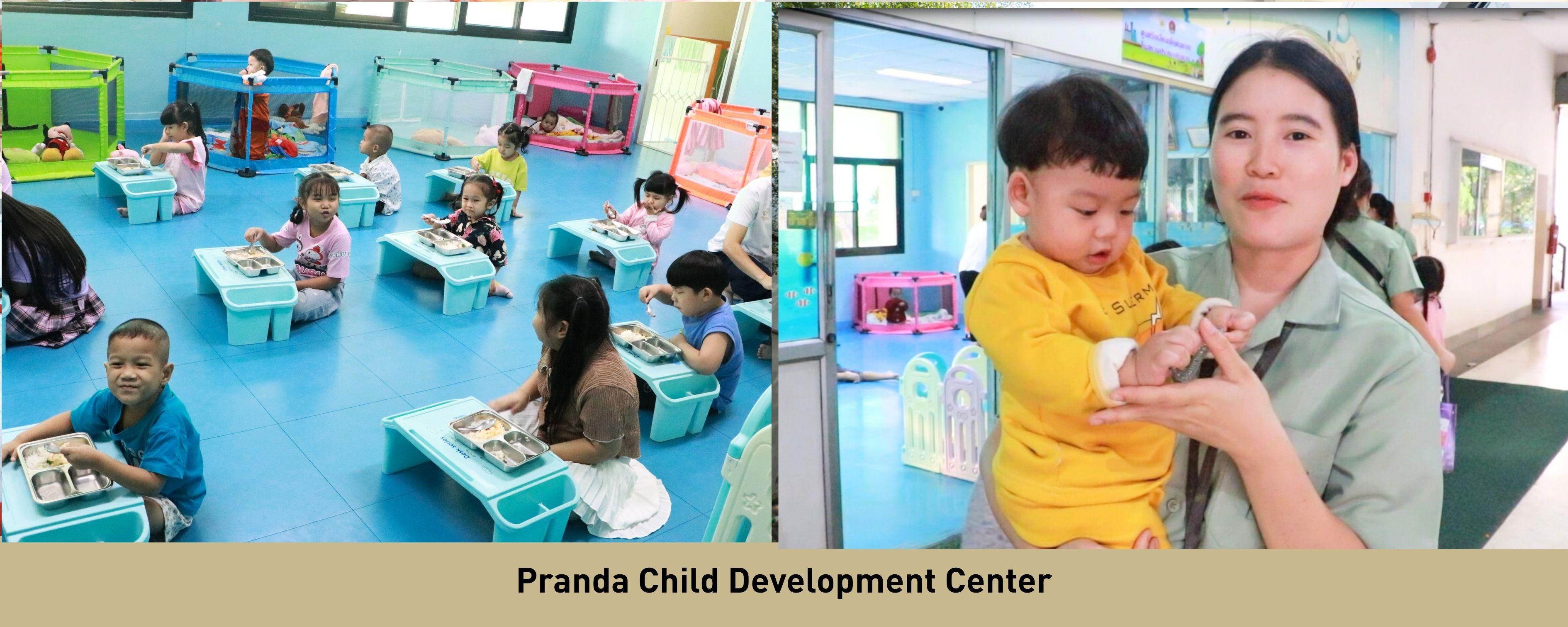
4. Occupational Health and Safety
The Company places the highest priority on occupational health, safety, and workplace environment, with the goal of achieving “Zero Accidents.” This commitment aims to protect the lives, health, and well-being of employees, contractors, and business partners involved in the Company’s operations.
The Company strives to create a safe, hygienic, and sustainable working environment through systematic risk management, accident prevention, and occupational disease prevention, while also promoting knowledge, awareness, and participation among employees, contractors, and partners.
These efforts reflect the Company’s commitment to responsible business operations and serve as a foundation for sustainable long-term organizational growth.
Key Occupational Health, Safety, and Workplace Environment Activities in 2025
Workplace Environmental Monitoring Program
Objective:
To monitor and control workplace environmental risk factors in compliance with legal standards.
Implementation:
Industrial hygiene measurements covering lighting, noise, heat, dust, and chemical concentration in working environments.
Results:
All measured factors were within legal standard limits.
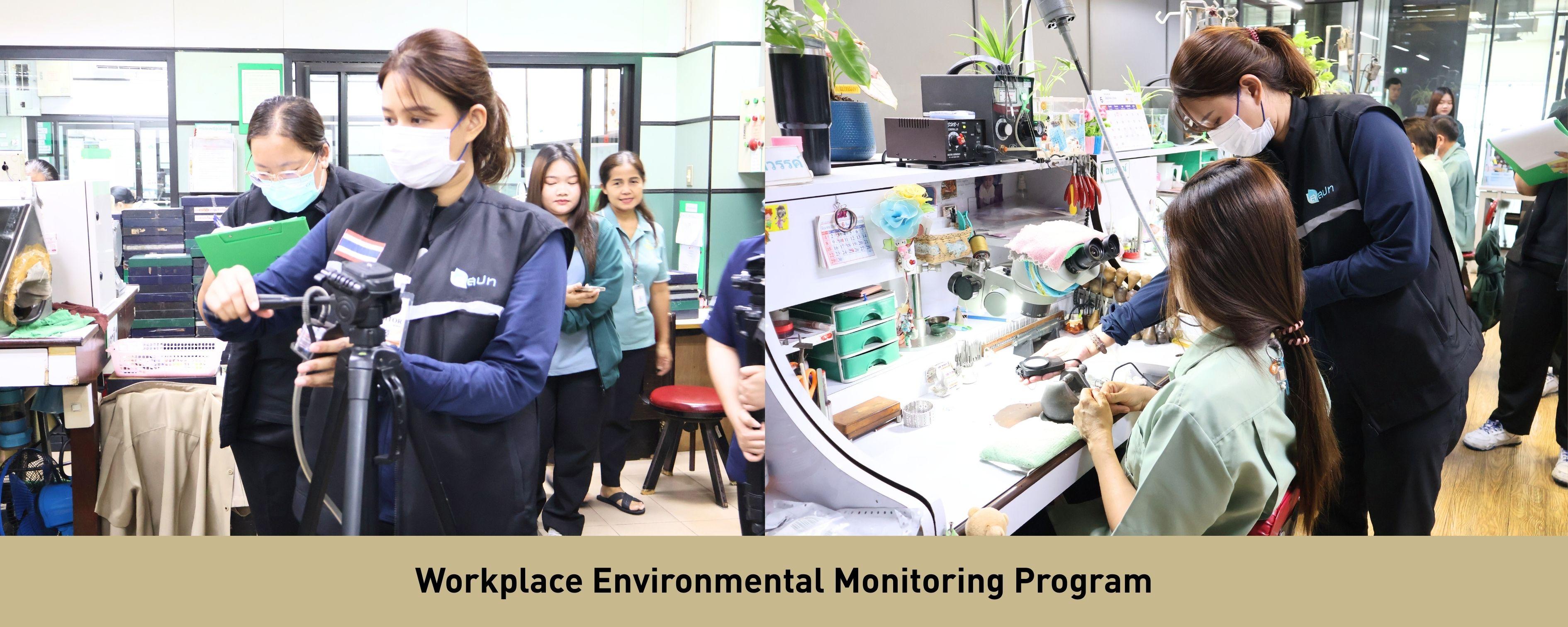
Firefighting Training and Fire Evacuation Drill
Objective:
To enhance knowledge and preparedness in fire prevention and emergency response.
Implementation:
Theoretical and practical training on fire extinguisher usage, evacuation procedures, alarm recognition, and emergency system testing.
Results:
Participation met the required training targets.
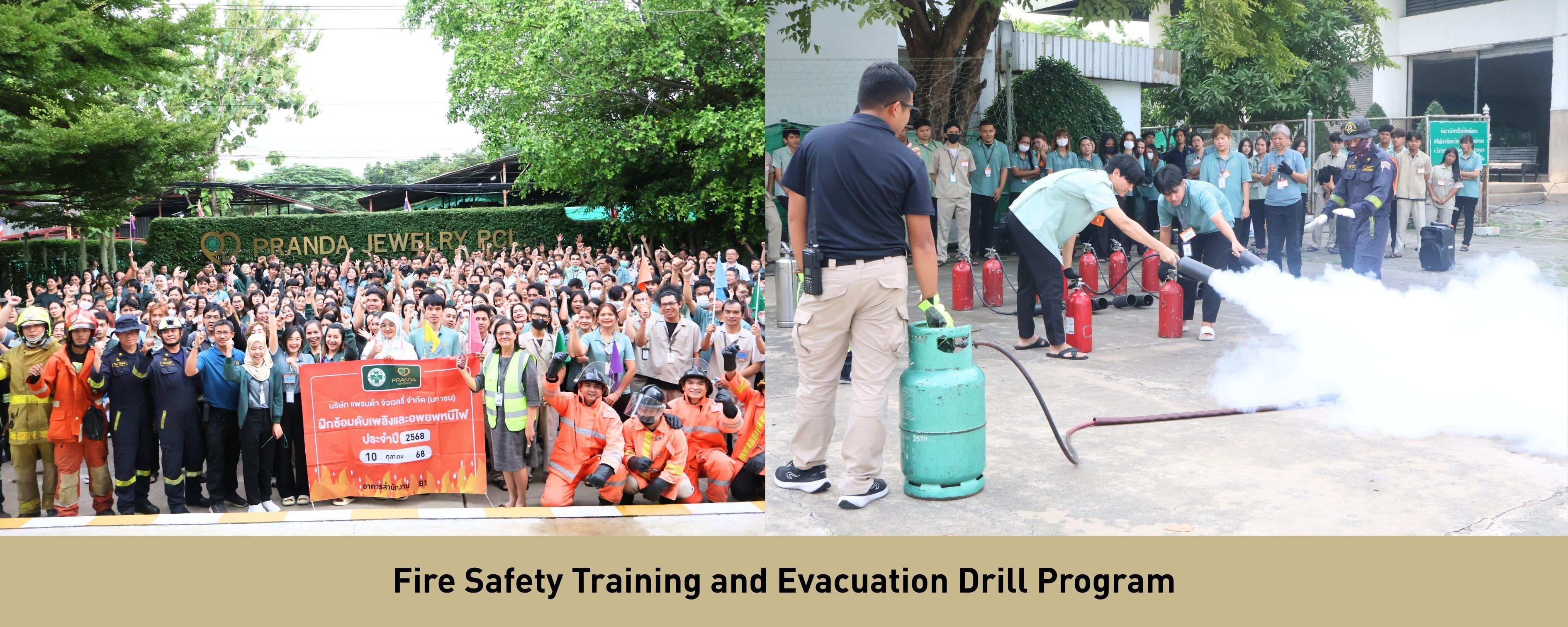
Radiation Emergency Response Drill
Objective:
To prepare employees for potential emergencies related to the use of X-ray machines in production processes.
Results:
9 participants attended, representing 100% of relevant personnel.
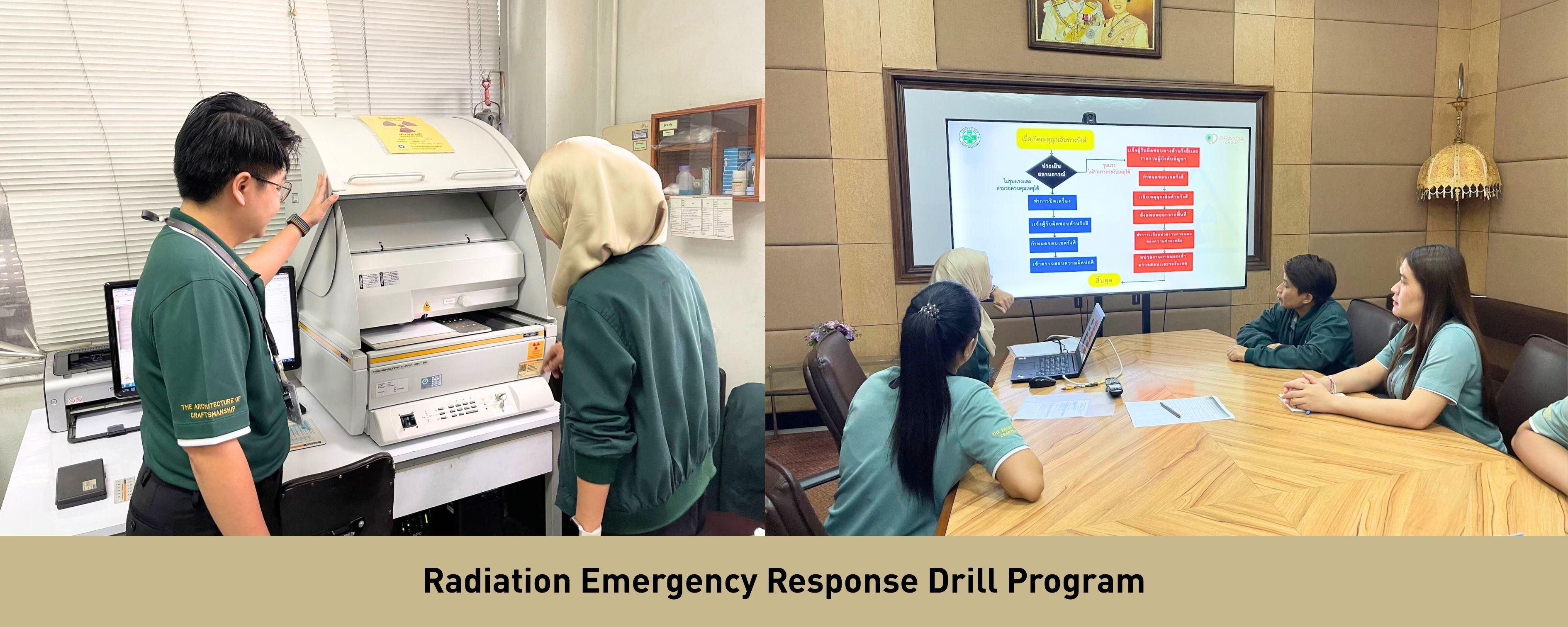
Hazardous Chemical Safety Training
Objective:
To enhance safe handling of hazardous chemicals and reduce health and accident risks.
Results:
Employees improved their ability to handle chemical emergencies effectively.
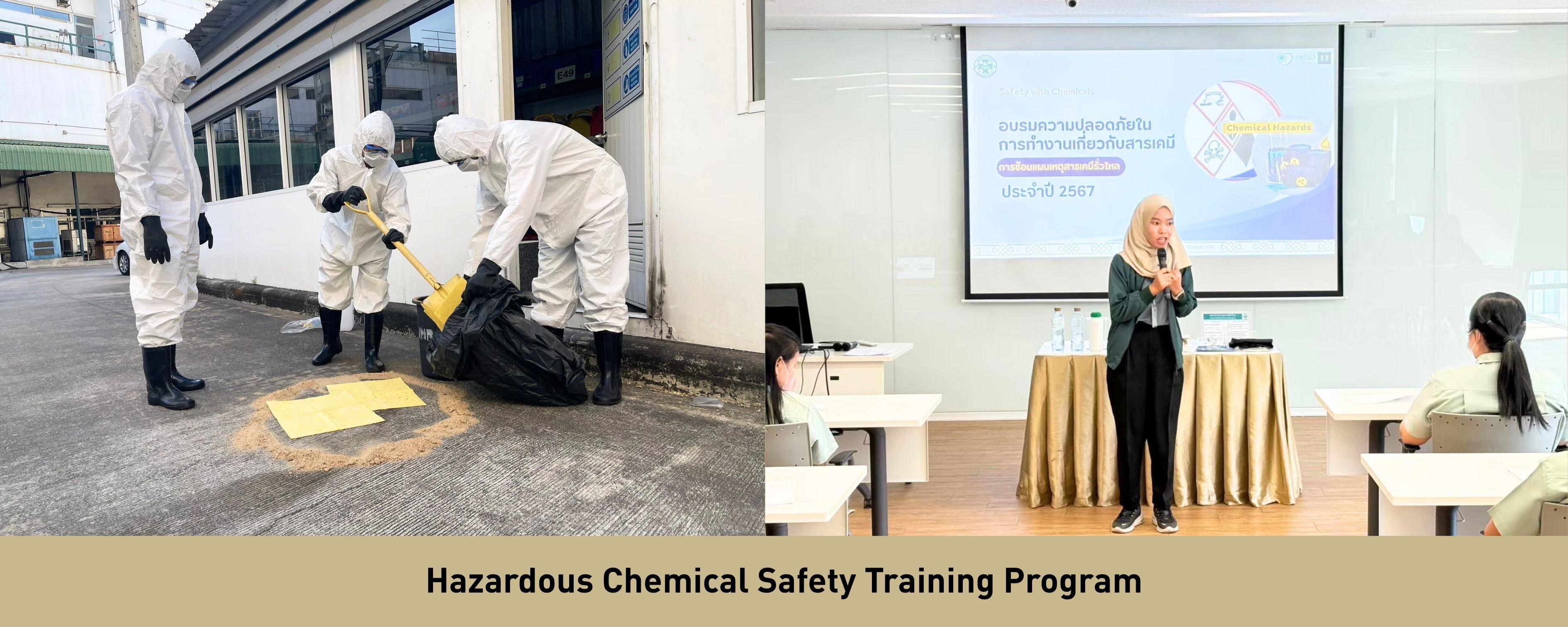
First Aid and Basic Life Support Training (CPR & AED)
Results:
40 participants (100% of designated personnel) completed the training and were able to apply the knowledge in real-life emergencies.
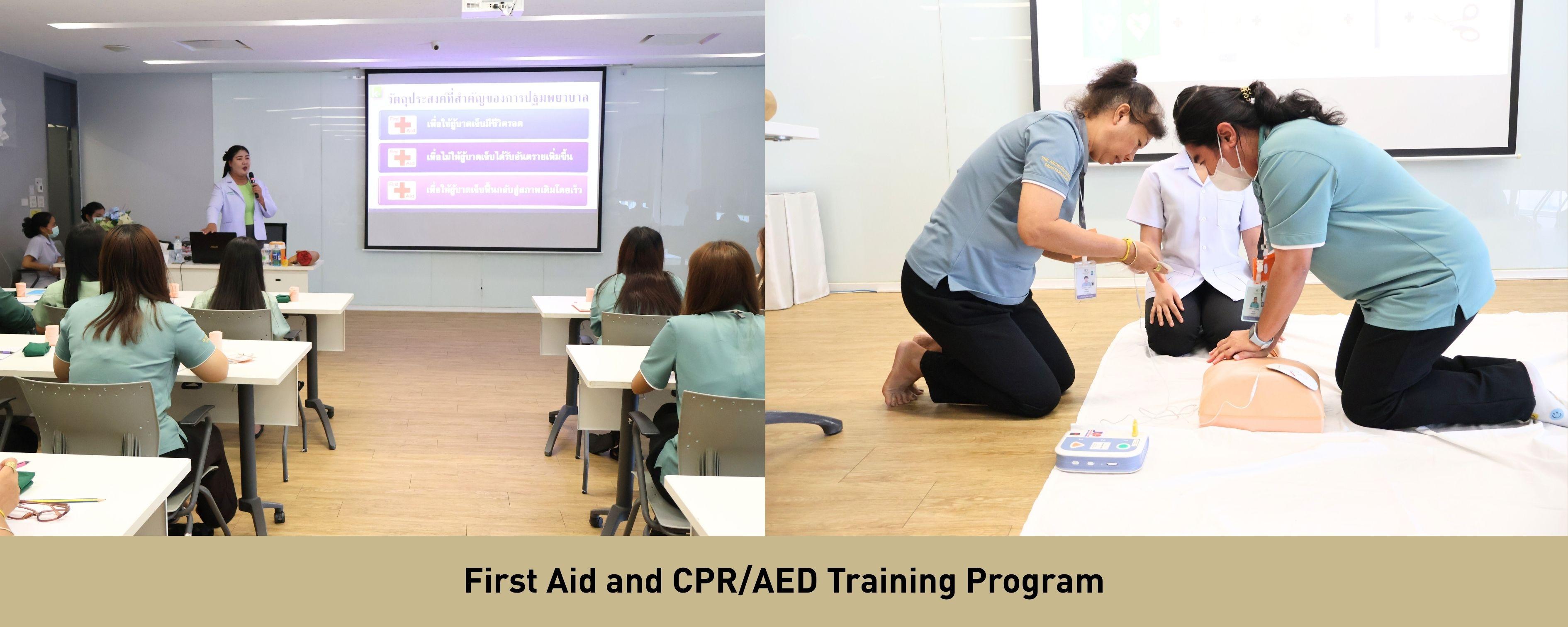
Occupational Health Check Based on Job Risk Factors
Objective:
To monitor occupational diseases and health risks.
Implementation:
Pre-employment, annual, and job-specific health check-ups.
Results:
Health risks were screened at early stages according to job conditions.
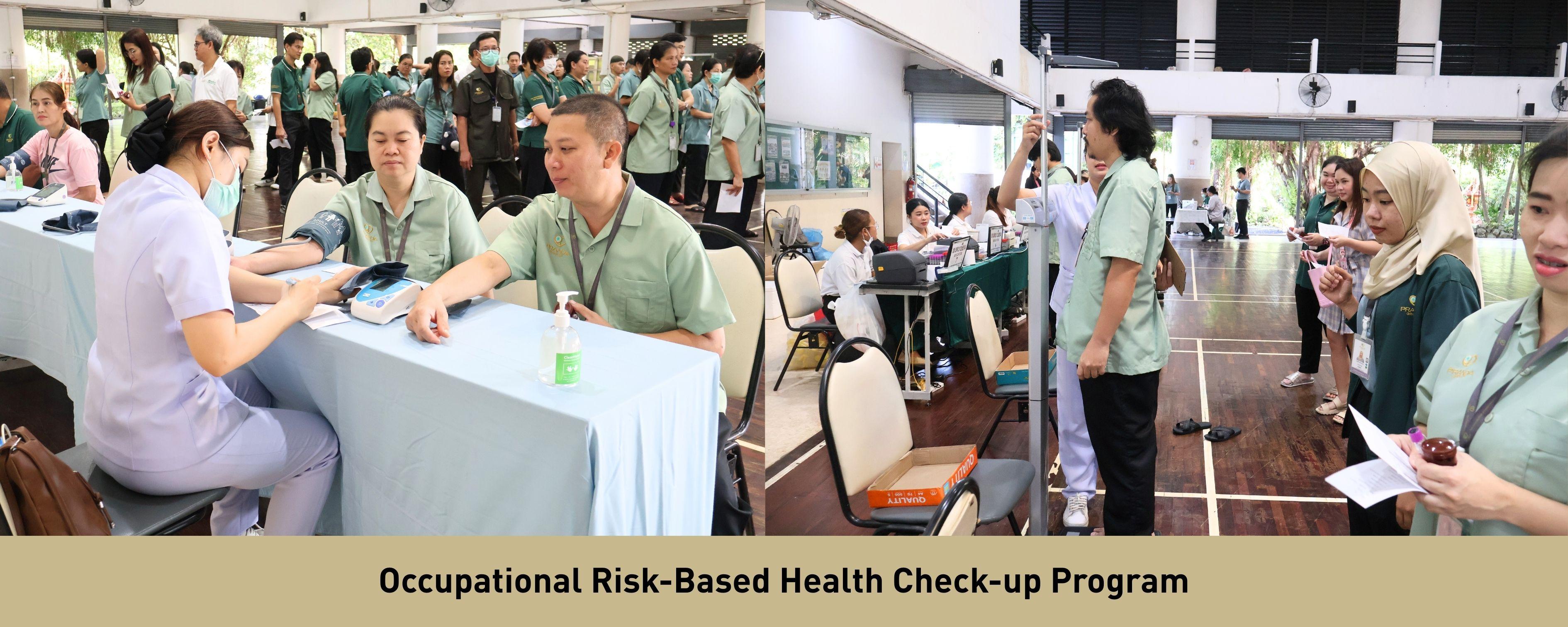
Forklift Operation Safety Training
Participants:
20 employees (100% of relevant personnel)
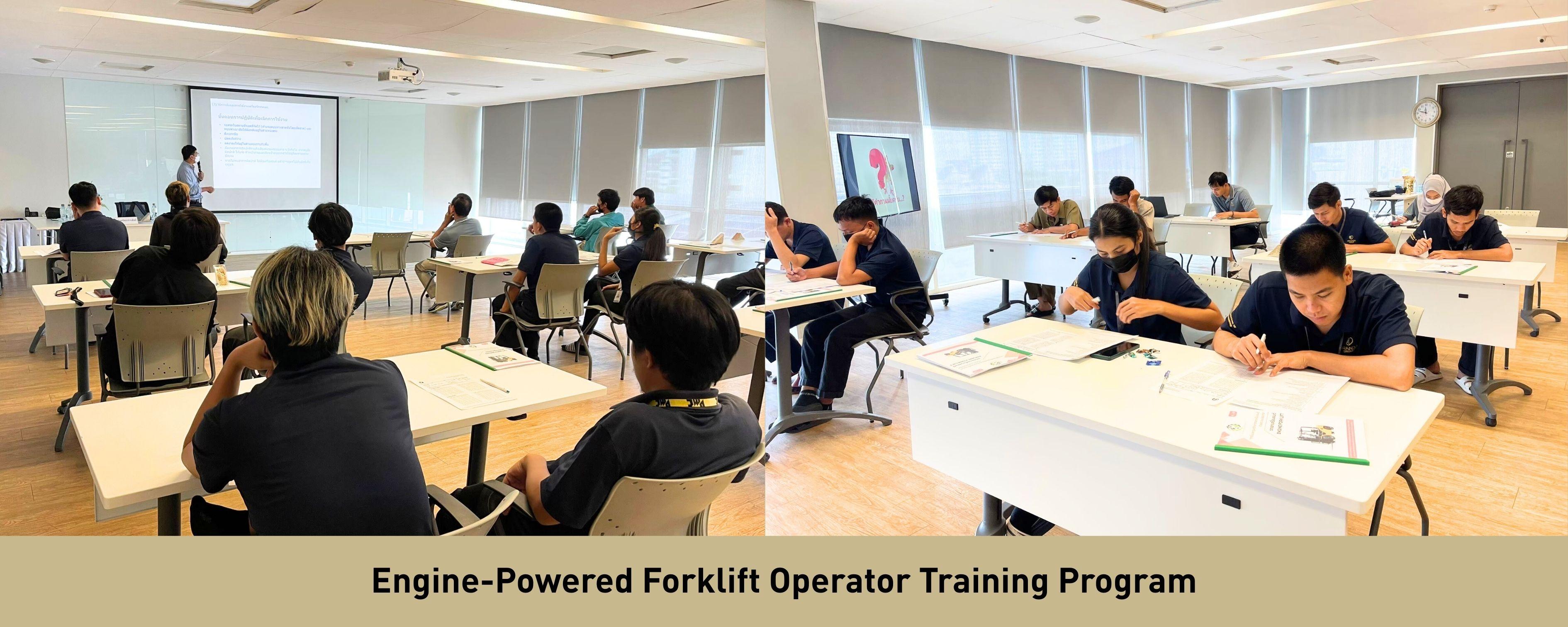
Occupational Health and Safety Orientation
Objective:
To ensure employees and external workers understand safety regulations before entering operational areas.
Results:
100% of new employees completed safety orientation.
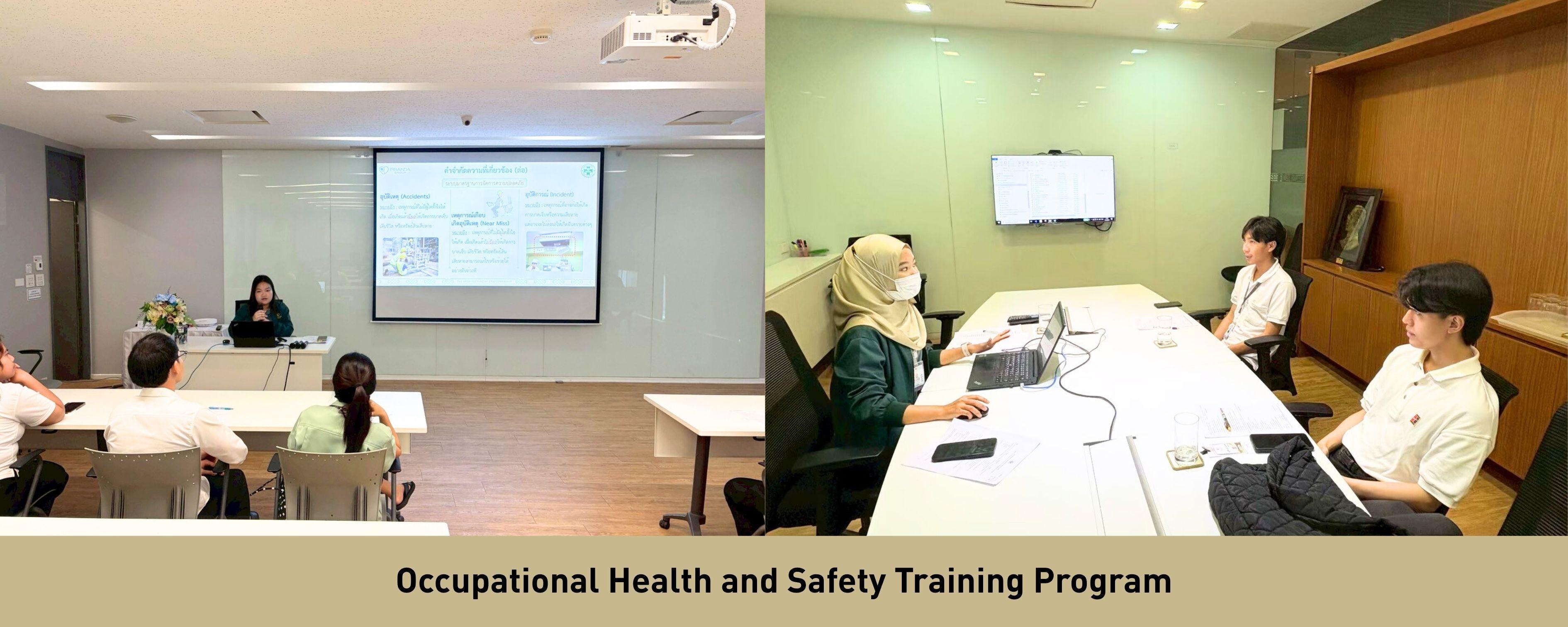
Industrial Gas Safety Training
Participants:
32 employees (100% of relevant personnel)
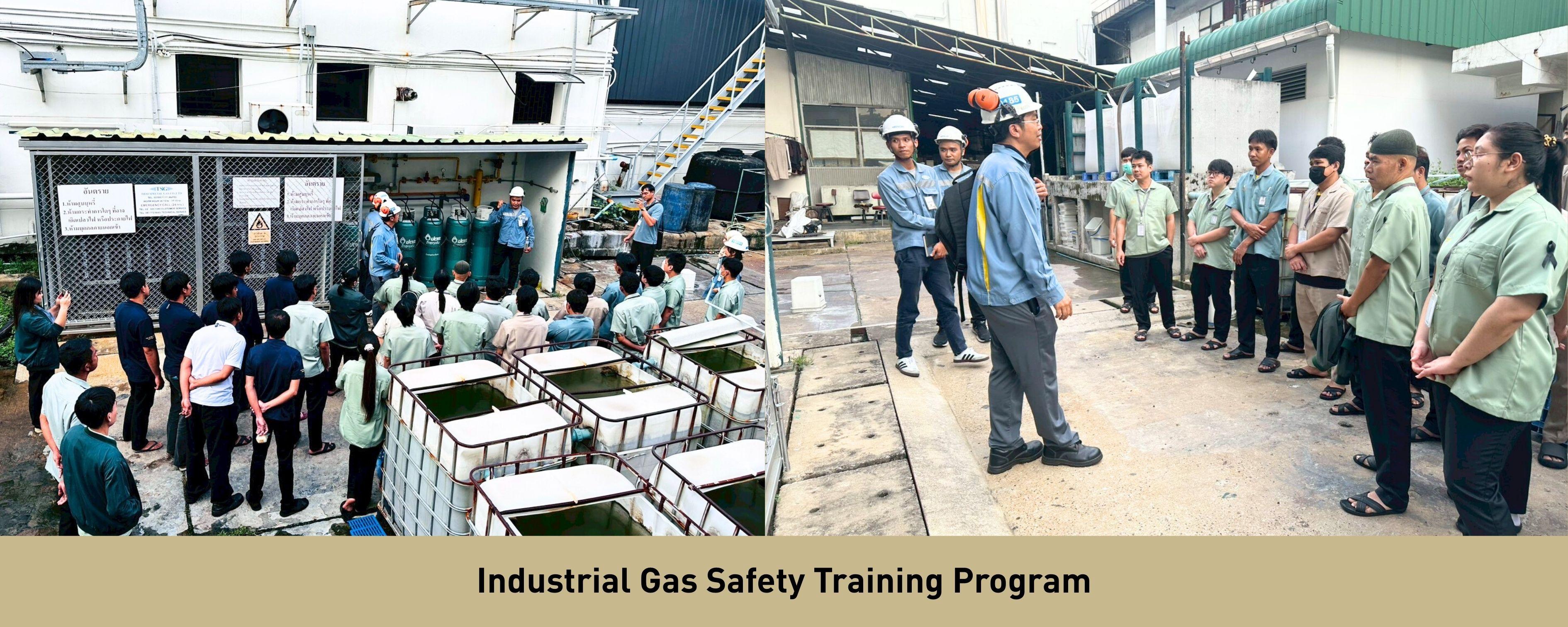
Road Safety Awareness Training
Results:
Participation reached 100% of designated personnel.
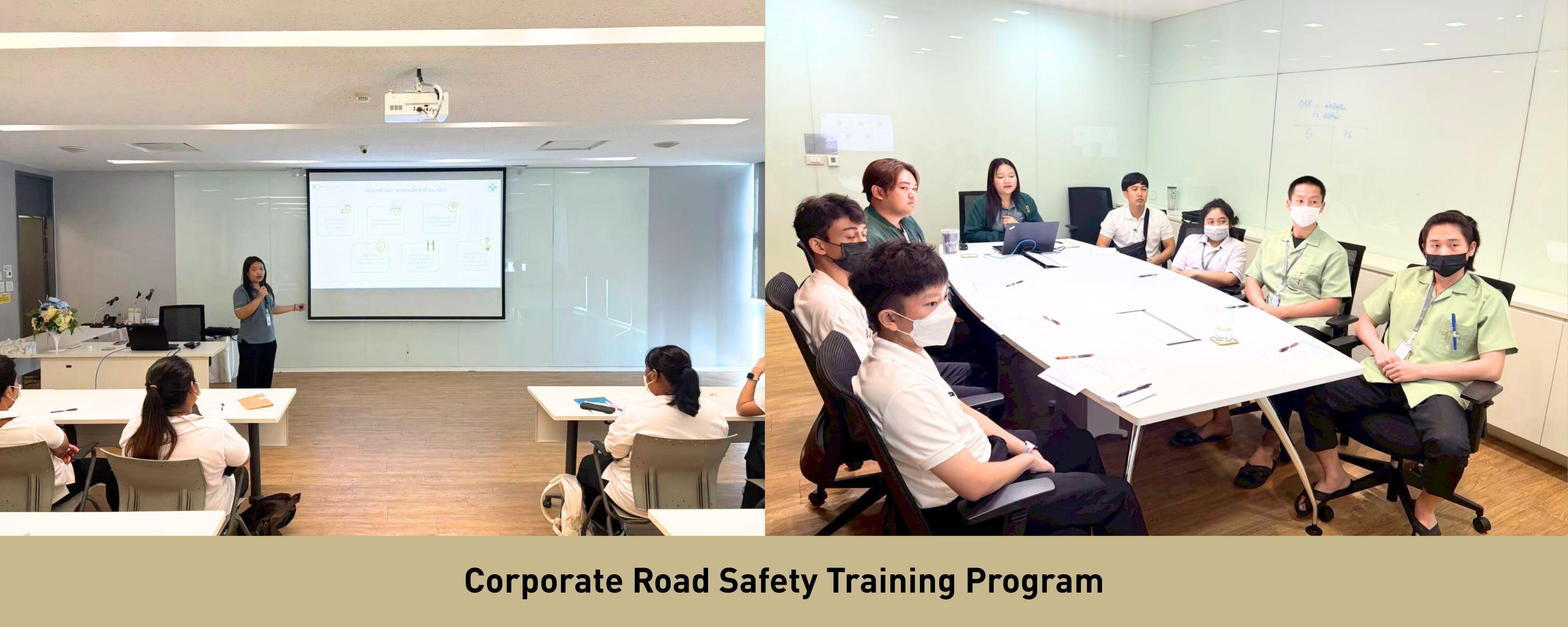
Safety Week Campaign
Activities included exhibitions and awareness campaigns on occupational health and safety.
Results:
Employees demonstrated increased safety awareness and active participation in accident prevention.
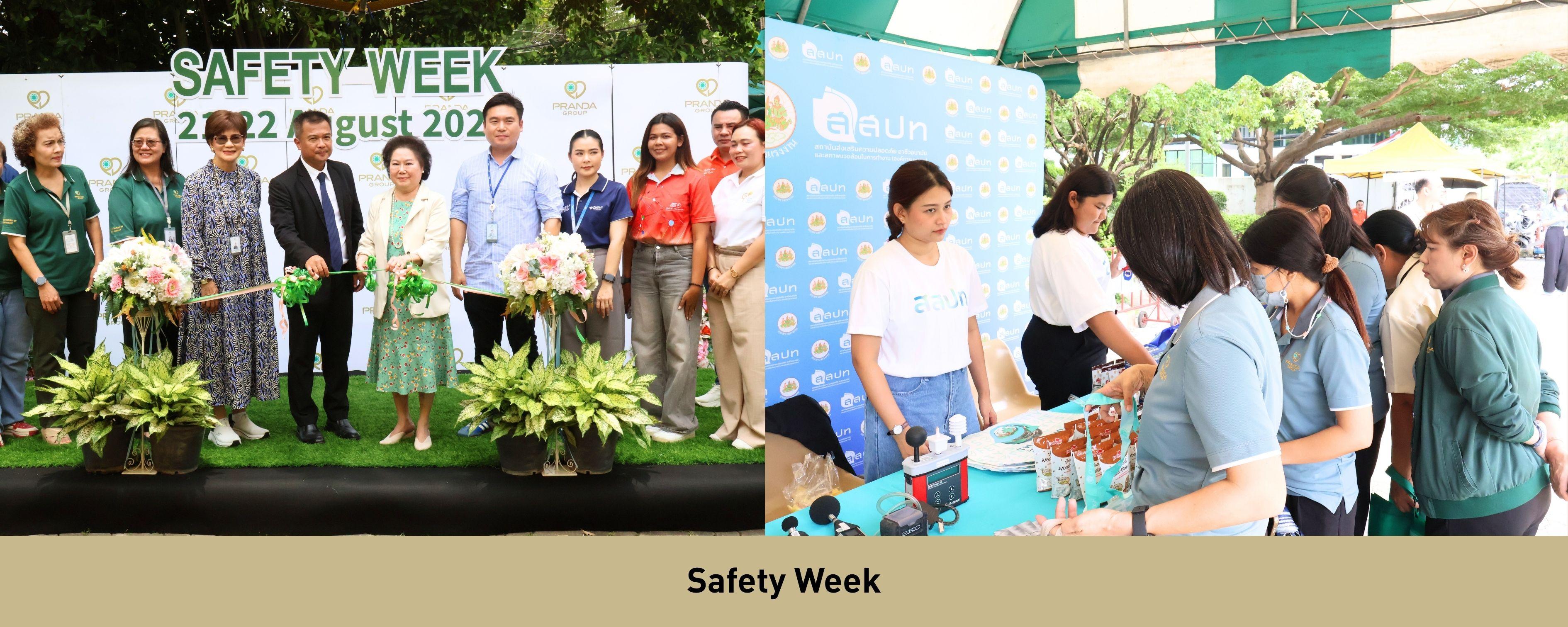
7S Workplace Organization Program
Objective:
To improve workplace organization, cleanliness, and safety.
Implementation:
Monthly internal inspections and annual committee evaluation.
Results:
The Company achieved an overall 7S score of 97% in 2025, reflecting strong employee participation and consistent maintenance of workplace standards.
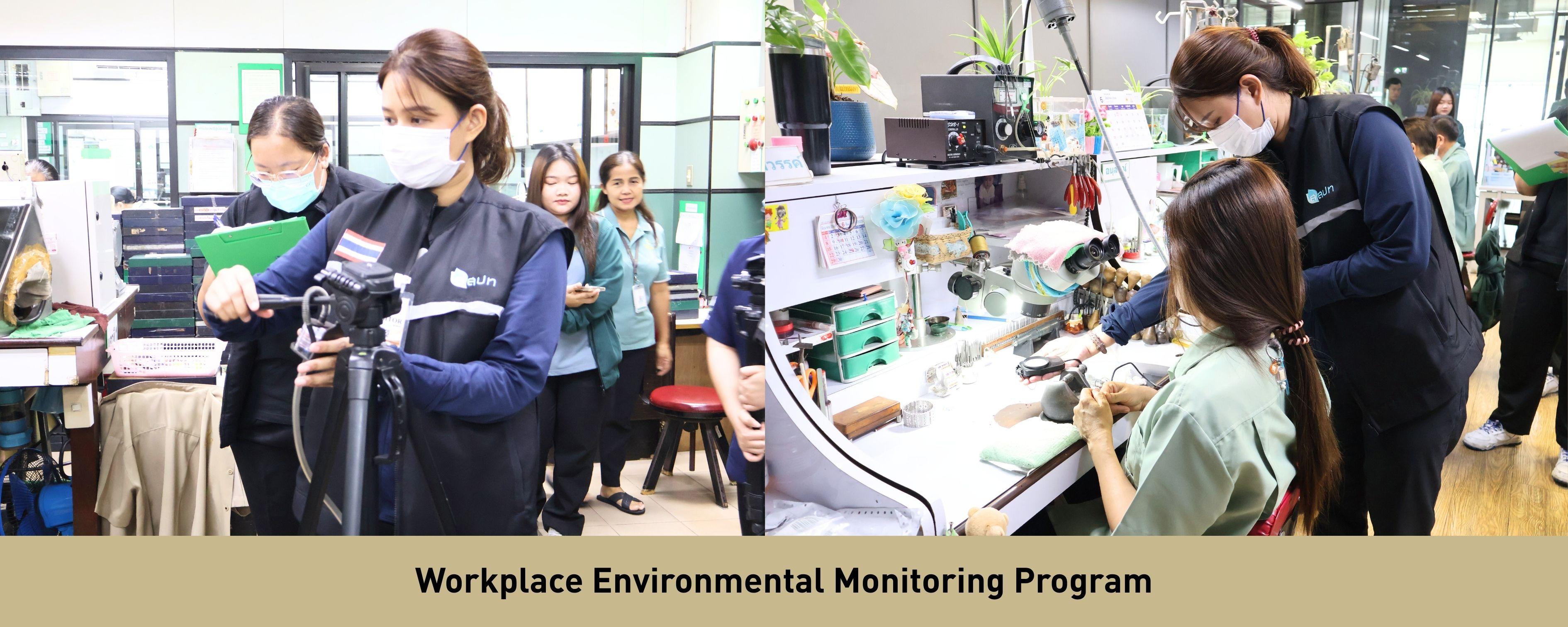
Safety Committee (Safety Officer Committee – SOC)
Objective:
To oversee and monitor occupational health and safety management.
Implementation:
Monthly safety committee meetings and regular safety inspections.
Results:
Committee participation exceeded 50% attendance, with representatives from both management and employees.
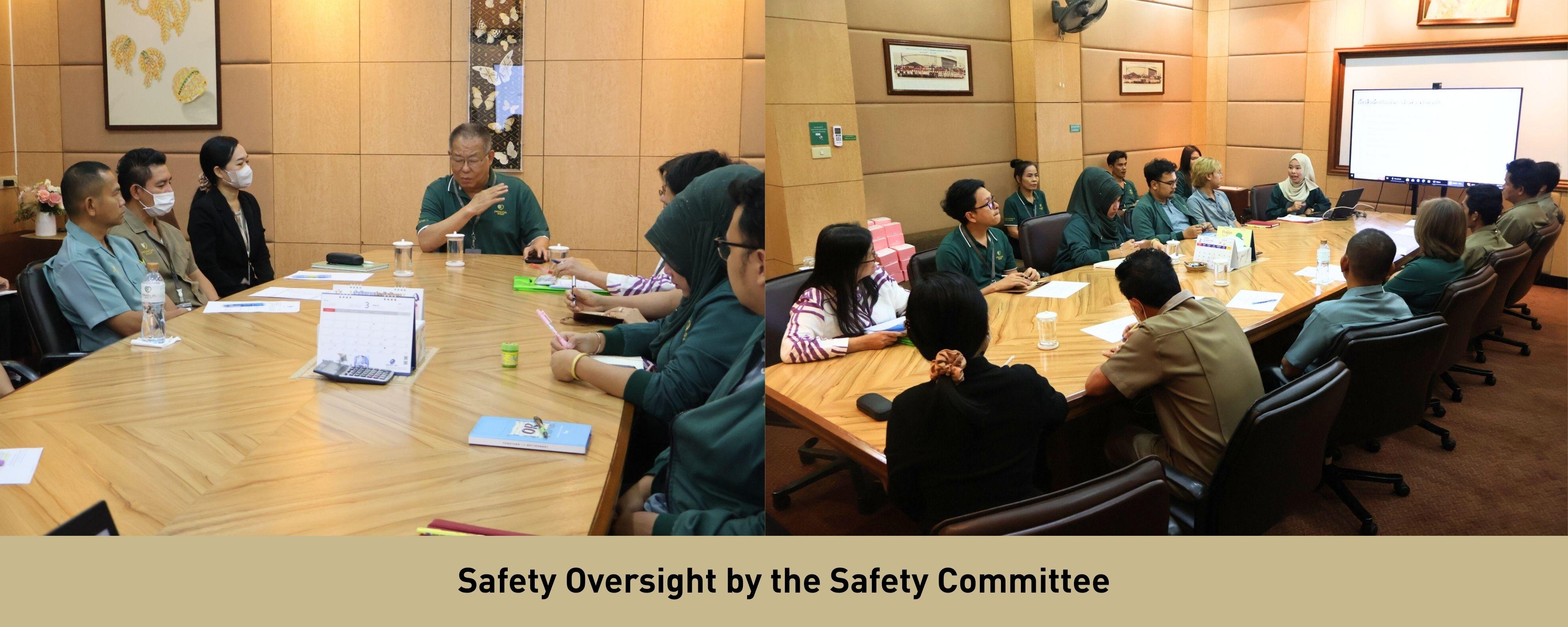
Has Performance Results
Yes
Performance Description
Outstanding Establishment Award for Labour Relations and Welfare
The Company received the National Outstanding Establishment Award for Labour Relations and Welfare for 2025. The Bangkok Head Office has received the award continuously for 14 consecutive years, while the Nakhon Ratchasima branch has received the Honorary Award for 16 consecutive years. This recognition reflects the Company’s strong commitment to employee care, the provision of appropriate welfare benefits, and the continuous improvement of employees’ quality of life, alongside the sustainable development of the organization.
Customer Management — Overview
Introduction
The Company conducts its business with transparency, adheres to ethical principles, and respects the rights of customers and consumers. It places strong emphasis on product and service quality, safety, and customer satisfaction. In addition, the Company has established channels for receiving feedback and complaints in order to continuously improve its products and services.
Customers — Plan & Guidelines
Has a Customer Management Plan
Yes
Plan Description
The Company systematically manages its responsibilities toward customers and consumers by adhering to the principles of good corporate governance, transparency, and business ethics in order to build trust, satisfaction, and long-term relationships with customers.
Business Operations in Accordance with International Standards and Sustainability Frameworks
The Company conducts its business in accordance with relevant international standards, including ISO 9001:2015, ISO 14001:2015, and the Responsible Jewellery Council (RJC Code of Practices – COP 29). It also operates in alignment with ESG frameworks and supports the United Nations Sustainable Development Goals (SDGs) to enhance product quality, safety, and responsibility throughout the value chain.
Transparent and Accessible Customer Communication
The Company communicates information to customers accurately, clearly, and responsibly through various channels such as its website and online media. Appropriate disclosure practices are established to support consumer decision-making based on complete, transparent, and verifiable information.
Feedback and Complaint Management System
The Company provides formal channels for receiving customer feedback, suggestions, and complaints through telephone, email, and its website. A systematic recording, monitoring, and analysis process is in place to ensure that corrective actions and responses to customers are handled transparently, fairly, and in a verifiable manner.
Customer Satisfaction Assessment
The Company conducts an annual customer satisfaction assessment among its Top 20 customers. The results are used to analyze trends, expectations, and key customer concerns, which help improve operational processes and continuously enhance the quality of products and services. This enables the Company to respond to customer needs more accurately and effectively.
Training and Employee Development
The Company systematically develops and enhances employee capabilities through continuous training in areas such as ethics, consumer protection, and operational standards to support the delivery of value and trust to stakeholders.
Reporting and Monitoring
The Company prepares reports on customer satisfaction and its performance in customer and consumer responsibility to present to management and relevant stakeholders. These reports are also used as inputs for reviewing plans and continuously improving management effectiveness.
Plan Document Link
https://shorturl.asia/y8wmQ
Plan Areas
| Plan Area |
|---|
| Responsible production and services for customers |
| Development of customer satisfaction and customer relationship |
| Protection of customer personal information |
Customers — Satisfaction Results
Introduction
The Company places the highest importance on customer satisfaction and is committed to developing sustainable relationships. The annual satisfaction survey of the TOP 20 customers is the main tool for collecting data and using it to improve products and services.
Contacting customers is the heart of customer management. The company has provided various channels for customers to communicate and receive responses in a timely manner. In addition, the company emphasizes on timely delivery of products with competitive prices to achieve maximum customer satisfaction and is committed to understanding the real needs of customers in order to provide quality services and products that meet customer expectations in every aspect.
Customer Satisfaction Results
| Metric | Current Year | Previous Year | Two Years Ago |
|---|---|---|---|
| Evaluation results of customer satisfaction | 1 | 1 | 1 |
Customers — Targets
Has Set Customer Targets
Yes
Targets
| Indicator | Target Areas | Base Year | Base Year — Description | Target Year | Target Year — Description |
|---|---|---|---|---|---|
| Customer satisfaction rate | 3007 · Description: Responsible production and services for customers · 3008 · Description: Communication of product and service impacts to customers/consumers · 3009 · Description: Development of customer satisfaction and customer relationship · 3010 · Description: Consumer data privacy and protection | 2,024 | The top 20 customer satisfaction rates are at least 90%. | 2,025 | By 2025, the top 20 companies will have a customer satisfaction rate of 90%. |
Customers — Performance & Outcomes
Introduction
The Company is committed to continuously developing products and services to provide the best experience to customers. In 2025, the Company received a customer satisfaction assessment result of 83.68%., which reflects the trust and confidence that customers have in the quality of products and services. In addition, the Company places importance on comments and suggestions from customers in order to improve and develop the most efficient operating methods, responding to customer needs appropriately and quickly.
In order to be in line with market trends and customer needs, the Company has participated in major jewelry exhibitions in each region around the world, which are important opportunities to meet and exchange ideas with key customers continuously. Participating in these events helps the Company gain insights into market trends and consumer behavior, leading to the development of products that can effectively meet the needs of the target group, as well as helping to strengthen relationships with customers and create business opportunities on an international level.
The company continues to focus on sustainable development by analyzing data from customer satisfaction surveys and suggestions to improve operational processes for greater efficiency and build strategic partnerships with partners around the world to achieve stable mutual growth.
Has Performance Results
No
Community & Social — Overview
Introduction
The Company integrates community and social responsibility into its business operations by systematically managing social impacts. This includes consideration of risks, opportunities, and long-term value created for stakeholders throughout the value chain.
The Company leverages its knowledge, expertise, and organizational resources to support community and social development with clear objectives, enabling monitoring and evaluation of outcomes. These initiatives aim to strengthen capabilities, improve quality of life, and reduce social risks that may affect the continuity of business operations.
Community and social initiatives are implemented under a structured process of policy formulation, monitoring, and regular performance reviews. This ensures that social investments generate tangible outcomes and support the creation of sustainable long-term value.
Community & Social — Plan & Guidelines
Introduction
The Company is committed to sustainable community development alongside its business operations. We continuously implement community and social responsibility projects covering education, career development, vocational skills promotion for the disabled, and community assistance projects to create long-term positive impacts that promote social well-being.
Has a Community & Social Plan
Yes
Plan Description
The Company has established community and social responsibility initiatives through three key programs as follows:
1.Education and Career Development Promotion Program
The Company integrates community and social development with its human capital development strategy and business continuity. This is implemented through an education and career development program under the dual education system, aiming to create positive social impacts, mitigate the risk of skilled labor shortages, and generate long-term shared value with stakeholders.
The program supports educational opportunities for Thai youth nationwide through collaboration with educational institutions, including Kanchanapisek College of Goldsmith, Suranaree Technical College, and other related institutions, to systematically develop skilled workforce capabilities in the gem and jewelry industry.
The Company places strong emphasis on enhancing professional skills by providing practical training in jewelry craftsmanship. Training is delivered by highly experienced master craftsmen and certified trainers who have completed a 30-hour instructor training program in accordance with the standards of the Office of Vocational Education Commission. This ensures quality, professional standards, and alignment with labor market demands.
The program aims to:
Develop a capable workforce with skills aligned with industry needs
Reduce long-term risks related to skilled labor shortages
Enhance youth work readiness and reduce post-employment training requirements
Foster early engagement with the Company and support long-term employee retention
This initiative reflects the Company’s role in systematically managing social impacts while supporting sustainable economic and social value creation throughout the value chain.
Vocational Skills Development Program for Persons with Disabilities
The Company implements a vocational skills development program for persons with disabilities to create equal employment opportunities, enhance workforce potential, and support the economic participation of vulnerable groups. This initiative forms part of the Company’s long-term sustainable workforce development strategy.
The Company collaborates with schools for the deaf and related educational institutions to develop sign language curricula and appropriate learning materials. This helps prepare participants with specialized vocational skills, enabling them to effectively transition into further training and development opportunities with the Company after graduation.
The program also plays an important role in fostering an organizational culture that respects differences and values equality, while encouraging diversity of perspectives. This contributes to stronger problem-solving capabilities, improved work processes, and greater innovation within the organization.
At the same time, the Company is able to develop a skilled workforce that meets specific operational needs, reduce the risk of future labor shortages, and create sustainable economic and social value.
“Pranda Sharing with the Community” Program
The Company implements the “Pranda Sharing with the Community” program to strengthen communities surrounding its operational areas while promoting participation among employees and stakeholders. The program supports long-term sustainable economic and social development.
The Company places importance on supporting educational opportunities for youth and nearby communities in order to enhance learning opportunities and strengthen community potential. It also supports activities organized by foundations, welfare homes, and charitable organizations to help alleviate social challenges and improve the quality of life of vulnerable groups.
The program also contributes to fostering an organizational culture that respects diversity and values equality while encouraging a variety of perspectives that enhance problem-solving capabilities, improve operational processes, and stimulate innovation within the organization.
In addition, the Company participates in supporting religious activities to preserve the cultural and ethical values of Thai society. It also promotes employee volunteer activities such as blood donation campaigns and environmental and community initiatives. These activities help strengthen social responsibility awareness and build stronger relationships between employees and communities.
These initiatives reflect the Company’s commitment to systematically managing social impacts while creating shared value with communities and society, which serves as a fundamental pillar of sustainable business operations in the long term.
Plan Document Link
https://shorturl.asia/sYdTz
Plan Areas
| Plan Area |
|---|
| Employment and professional skill development |
| Education |
| Religion and culture |
| Occupational health, safety, health, and quality of life |
| Disadvantaged and vulnerable groups |
| Reducing inequality and promoting social equality |
Community & Social — Targets
Has Set Community & Social Targets
Yes
Targets
| Indicator | Target Areas | Base Year | Base Year — Description | Target Year | Target Year — Description |
|---|---|---|---|---|---|
| 1. Number of scholarships and/or career development grants awarded (scholarships). 2. Employment ratio of non-disabled employees to disabled employees. 3. Amount of land surrounding the business that has been developed. | 3036 · Description: Employment and professional skill development · 3037 · Description: Education · 3038 · Description: Religion and culture · 3040 · Description: Sports and recreation · 3042 · Description: Disadvantaged and vulnerable groups · 3044 · Description: Reducing inequality | 2,024 | 1. Promoting education and career development: 100 scholarships per year.
2. Employment ratio of non-disabled employees to disabled employees: 70:1.
3. Community involvement in social activities: 15 areas per year. | 2,025 | 1. Promoting education and career development: 100 scholarships per year.
2. Employment ratio of non-disabled employees to disabled employees: 70:1.
3. Community involvement in social activities: 15 areas per year. |
Community & Social — Performance & Outcomes
Introduction
Education and Career Development Promotion Program
The Company is committed to developing and promoting craftsmanship skills in the gem and jewelry industry through a bilateral education program. The program aims to prepare students to enter careers as highly skilled craftsmen and to meet the growing demand for skilled labor in this high-potential industry.
The program’s success is driven by collaboration among three key stakeholders: students, educational institutions, and industry operators. It focuses on developing stable career pathways while supporting Thai youth in becoming qualified professionals in the gem and jewelry industry, which plays an important role in driving the sustainable growth of the industry.
National-Level Achievement of the Program
The Pranda bilateral Education Program in Nakhon Ratchasima won first place in a jewelry design competition in the Northeastern region. The Pranda bilateral Education Program (Nakhon Ratchasima branch), in collaboration with Suranaree Technical College, once again demonstrated its success by sending students to participate in the Jewelry Design Skills Competition at the 34th Academic Conference of the Future Vocational Education Organization of Thailand (Northeastern Region). The event was held from January 7–9, 2025, at Khon Kaen Vocational College, Khon Kaen Province.
In this competition, Mr. Wuttisak Khansaen, a third-year vocational certificate student participating in the dual education program, won first prize in the Jewelry and Gem Design Skills category. This achievement reflects the Company’s commitment to enhancing youth potential and supporting the development of future professionals in the gem and jewelry industry.
Vocational Skills Development Program for Persons with Disabilities
The Company places importance on promoting career opportunities for persons with disabilities to create equality and enhance their ability to pursue meaningful employment. As part of this effort, the Company has implemented a short-term vocational education program in the field of gem and jewelry craftsmanship for persons with hearing impairments.
The program is carried out in collaboration with leading educational institutions, including Kanchanapisek College of Goldsmith, Nakhon Pathom School for the Deaf, and Ratchasuda College of Mahidol University.
Through this collaboration, the Company has contributed to the development of sign language curricula and specialized teaching materials, enabling hearing-impaired participants to effectively develop jewelry craftsmanship skills. Upon successful completion of the program, participants are offered opportunities to work with the Company as jewelry craftsmen.
In addition, the Company has expanded employment opportunities for persons with disabilities in other career paths beyond jewelry-related roles. This initiative promotes inclusive participation in the labor market and supports equal career opportunities across various professions under the concept of inclusive and sustainable coexistence.
“Pranda Sharing with the Community” Program
“Sharing with Society” Activity
The Company conducts its business alongside initiatives that create shared value for society, guided by the concept of “Sharing for Society.” This approach promotes public consciousness and a culture of generosity within the organization while supporting sustainable improvements in the quality of life of communities surrounding its operations.
In 2025, the Pranda volunteer group organized activities to donate supplies and educational materials to support educational opportunities for children and youth in communities surrounding the Company’s operations in both Bangkok and Nakhon Ratchasima Province. The donations covered 16 locations, including schools, child development centers, and nearby communities, as follows:
Child Development Centers: Ban Thap Chang, Nong Muang, Ban Lalom Mai Pattana, Ban Simum, Nong Bua Sala, Tha Cha Lhung, Ban Nong Sala Subdistrict Administrative Organization, and Ang Nong Naen
Schools: Kut Jok Noi School, Ban Nong Ta Khong School, Nong Bua Sala School, Phoi Ploy Anusorn School, and Siriratthanathorn School
Communities and Local Agencies: Nong Rawiang Subdistrict Administrative Organization, Thong Bai Community, and Bang Na Metropolitan Police Station
These activities reflect the Company’s commitment to contributing to community and social development by supporting education and improving the quality of life of youth, while promoting a culture of sharing and employee participation—an important foundation for building a supportive and sustainable society.
“Old Calendars for a Cause” Activity
The Company has continued the “Old Calendars for a Cause” campaign for the seventh consecutive year to promote efficient resource use while creating social value. In 2025, the Company collected 650 used desk calendars and donated them to the Educational Technology Center for the Blind under the Thailand Foundation for the Blind in the Royal Patronage of Her Majesty the Queen.
The calendars were used to produce Braille learning materials, supporting educational opportunities for persons with visual impairments.
This activity reflects the Company’s commitment to promoting equal opportunities by supporting access to education and skill development for persons with disabilities, enabling them to live and work in society with dignity.
Additionally, the activity contributes to environmental protection by promoting the reuse of materials, reducing waste and greenhouse gas emissions by approximately 259.67 kilograms of carbon dioxide equivalent (kgCO2e). This aligns with the Company’s commitment to efficient resource utilization and long-term sustainability.
The success of the initiative was made possible through the collaboration of management and employees who actively participated in collecting and donating used calendars, creating shared value in both social and environmental dimensions.
Blood Donation Activity
The Company’s headquarters and the Nakhon Ratchasima branch regularly organize blood donation activities in collaboration with the National Blood Service of the Thai Red Cross Society. These activities are conducted annually to encourage employee participation in helping others while supporting the availability of blood supplies for patients and medical emergencies.
In 2025, the activity received strong participation from employees, with 324 donors contributing a total of 302 units of blood, equivalent to approximately 120,800 cc.
This initiative reflects the Company’s organizational culture that promotes volunteerism and social contribution among employees while reinforcing the Company’s commitment to responsible business practices that support public health and improve community well-being.
Religious Support and Cultural Preservation
The Company conducts its business alongside initiatives that promote religious and cultural values. It places importance on supporting Buddhism and preserving the cultural traditions of Thai society by participating in activities that strengthen relationships between the organization and surrounding communities.
In 2025, the Company’s employee volunteers participated in religious activities at several temples, including Wat Phong Ploy Anusorn in Bangkok, Wat Bot Woradit in Ang Thong Province, and Wat Nong Bua Sala in Nakhon Ratchasima Province.
These activities play an important role in encouraging employee participation in preserving cultural values while supporting the role of religion as an important foundation of society, ultimately contributing to the well-being and strength of communities.
Has Performance Results
No
Other Social Management
Introduction
Supplier Management
The Company systematically manages its relationships with suppliers under the principles of good corporate governance, transparency, and business ethics. It sets clear expectations for suppliers to comply with applicable laws, labor standards, environmental requirements, and human rights principles, as well as the requirements of the Responsible Jewellery Council (RJC) and the Supplier Code of Conduct, in order to support sustainable supply chain management.
Plan & Outcomes — Description
Supplier Management
The Company aims to strengthen responsible collaboration with suppliers throughout the supply chain in order to enhance operational standards and manage risks related to procurement and business operations. The key approaches are as follows:
Sustainable Supplier Assessment and Development
The Company implements supplier assessment and development programs based on the Responsible Jewellery Council (RJC) Code of Practices (COP) and the Environmental, Social, and Governance (ESG) framework. This initiative aims to elevate suppliers’ business practices in line with established requirements and relevant international standards.
Enhancing Supplier Understanding and Capabilities
Training sessions on Responsible Sourcing and Human Rights Due Diligence are organized to enhance suppliers’ understanding of human rights issues, responsible sourcing practices, and supply chain risk management.
Supplier Self-Assessment
The Company has developed a Supplier Self-Assessment Form to collect information, analyze risks, and monitor compliance with ESG requirements and the Supplier Code of Conduct.
Monitoring and Improving Supplier Operational Standards
The Company has developed a supplier database system and a process to monitor Corrective Action Plans (CAP). This system supports the monitoring of supplier performance, encourages continuous improvement, and enhances transparency and accountability throughout the supply chain.
Performance Results
94.29% of suppliers have acknowledged and agreed to comply with the Company’s Code of Business Conduct.
88.27% of key suppliers have completed the RJC self-assessment.
The satisfaction score among key suppliers was 90.03%.
There were 0 cases of complaints regarding fair business practices.
The Company remains committed to continuously improving its supplier management approach in order to strengthen a responsible and sustainable supply chain.
Law Violation Incidents
Introduction
In 2025, the Company had no incidents related to violations of laws, regulations and human rights.
Law Violation Incidents
| Metric | Current Year | Previous Year | Two Years Ago |
|---|---|---|---|
| The total number of cases or incidents of significant violations of laws or regulations regarding social and human rights (Cases) | 0 | 0 | 0 |
| The total number of cases or incidents that cause significant labor disputes (Cases) | 0 | 0 | 0 |
| The total number of cases or complaints related to consumer rights violations (Cases) | 0 | 0 | 0 |
| The total number of cases or complaints related to partner rights violations (Cases) | 0 | 0 | 0 |
| The total number of cases or incidents that cause disputes with the community/society (Cases) | 0 | 0 | 0 |
| The total number of cases or incidents related to cyber security or customer data breaches (Cases) | 0 | 0 | 0 |
| The total number of cases or incidents related to safety and occupational health at work (Cases) | 0 | 0 | 0 |